
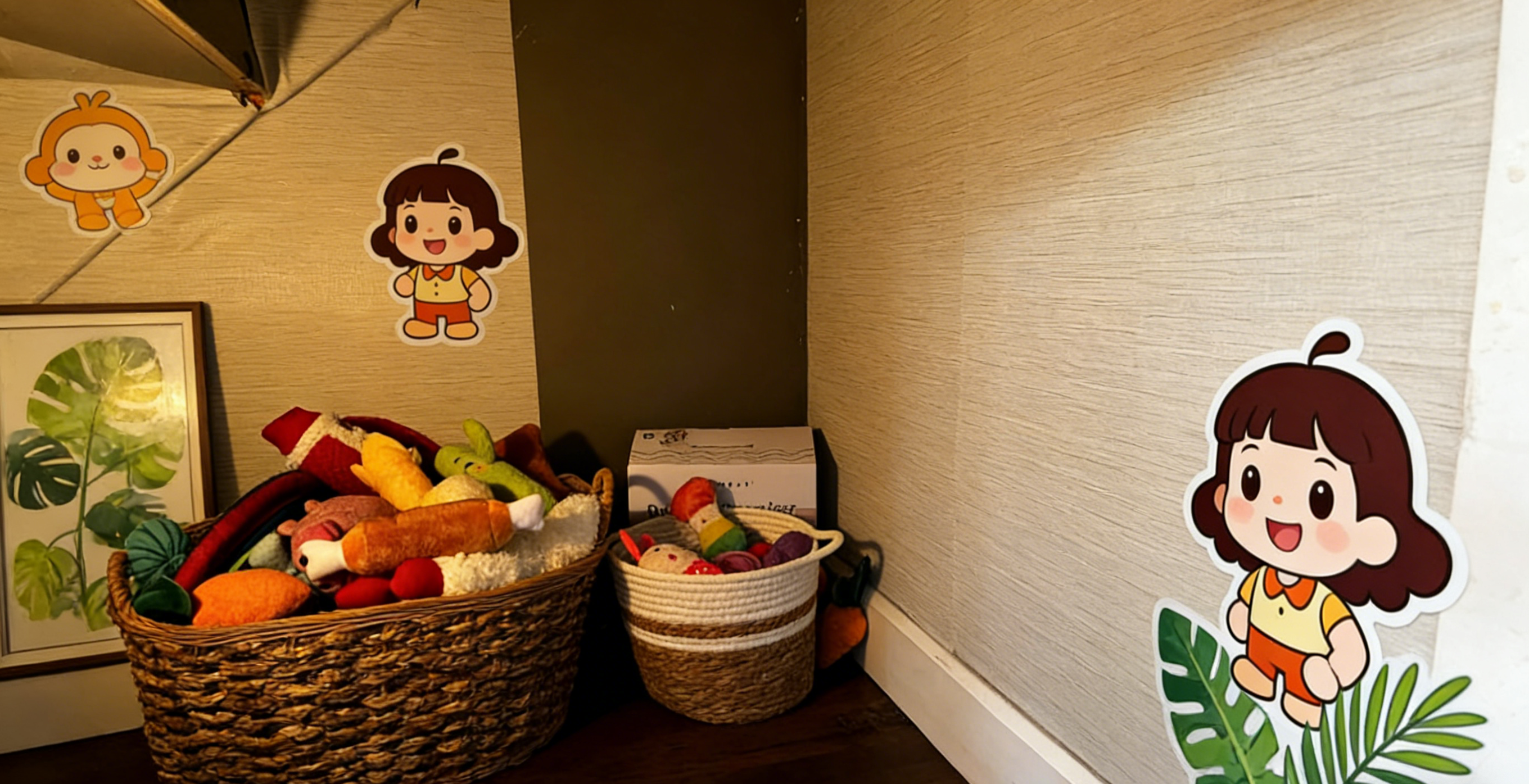
How to Remove Wall Decals Without Damaging Paint
A Zero-Experience, High-Confidence Guide (Built for Renters, Beginners, and “I Don’t Want to Mess This Up” People)
If you’re nervous about removing wall decals, you’re not “overthinking.”
You’re responding to a very real situation: the cost of being wrong feels bigger than the benefit of being done.
That’s normal human psychology—especially when the wall paint is unknown, the rental deposit matters, or you’ve never done this before.
So this guide is designed around one goal:
Make the safest choice the easiest choice.
No jargon. No “just peel it off.”
Instead, you’ll get a step-by-step removal method with built-in safety checks, plus a calm troubleshooting plan for every beginner surprise.
What “Safe Removal” Actually Means (So You Know When You’re Doing It Right)
A wall decal is “removing safely” when:
-
The decal lifts with steady, low effort (not a fight).
-
The wall surface stays smooth and intact (no paint flakes coming up).
-
Any leftover stickiness can be removed with gentle steps (not aggressive scrubbing).
If your removal looks like that, you’re doing it correctly—even if it’s slow.
Before You Start: The 3 Rules That Prevent Most Damage
These rules are not “tips.” They’re your safety system.
Rule 1 — Slow beats strong.
Fast pulling creates sudden force spikes. Force spikes pull paint.
Rule 2 — Angle matters more than effort.
A low-angle peel is like rolling tape off glass. A high-angle peel is like lifting paint upward.
Rule 3 — Resistance is information, not a challenge.
If it resists, your job is not to “win.”
Your job is to pause → warm → lower angle → peel smaller.
If you only follow these three rules, you’re already operating like a pro.
Tools (Beginner-Safe, Wall-Safe)
You do not need a toolbox.
Must-have
-
Hair dryer (low/medium)
-
Microfiber cloth (or a soft T-shirt)
-
Painter’s tape (blue tape)
-
Warm water + mild dish soap
-
A plastic card (old gift card) or plastic scraper
Helpful (not required)
-
A second dry cloth
-
Cooking oil (for stubborn residue)
-
“Paint-safe adhesive remover” (only if labeled safe for painted walls—test first)
-
Step stool (if the decal is high—safety > speed)
Never use (high risk)
-
Metal razor blade (easy to gouge paint/drywall)
-
Strong solvents (acetone/paint thinner)
-
Rough scrub pad + pressure (can burnish or peel paint)
Step 0 (2 Minutes): The Wall Reality Check
This step prevents the “I didn’t expect that” moment.
Stand close to the wall and do these quick checks:
Check A — Is the paint weak?
Rub the wall gently with a dry cloth.
If you see chalky dust or color on the cloth, treat the wall as fragile.
What it means:
Fragile paint needs slower removal + smaller sections.
Check B — Is the wall textured?
If the wall feels bumpy (orange-peel) or gritty (sand texture), removal takes more patience.
What it means:
Texture creates tiny air pockets and uneven contact. You’ll peel in smaller bites.
Check C — Was the wall painted “recently”?
If you don’t know, assume it might be. Paint can feel dry but still be soft underneath.
What it means:
You’ll rely on the test patch before committing.
If any check looks risky:
Use the Extra-Gentle Method (still easy—just smaller and slower).
Step 1: The Test Patch (Your Confidence Builder)
This is the most beginner-friendly thing you can do, because it removes uncertainty.
Where to test
Pick a hidden area:
-
Behind a dresser
-
Near a corner
-
Low on the wall
How to test (exact steps)
-
Hair dryer on low/medium
-
Warm the decal edge for 30–60 seconds (keep the dryer moving)
-
Lift only 1–2 inches of the decal
-
Peel slowly at a low angle (you’ll learn the angle next)
What you’re looking for
✅ The decal lifts, paint stays perfect → proceed
⚠️ Paint starts lifting or feels “grabby” → stop and switch to Extra-Gentle Method
Why this matters psychologically:
Beginners don’t fail because they’re incapable; they fail because they act without feedback.
The test patch gives you feedback early—before risk gets expensive.
Step 2: Warm the Decal (Make the Adhesive Behave)
Most paint damage happens because the adhesive is cold/stiff and releases unevenly.
How to warm correctly
-
Low/medium heat
-
About 6 inches (15 cm) away
-
Keep moving (don’t “cook” one spot)
-
Warm 30–60 seconds per small section
What it should feel like
The decal should feel slightly more flexible.
It should not be hot enough to hurt your hand.
If your room is cold, consider warming the room a bit first.
Cold rooms make everything harder.
Step 3: Peel the Right Way (Angle Is the Whole Game)
This is where beginners accidentally damage paint—because no one taught them the angle.
The safest peel angle: 15–30 degrees
Imagine your decal is a ribbon.
You want to peel it so the ribbon stays close to the wall, almost rolling off.
✅ Good: decal is nearly parallel to the wall
❌ Bad: pulling straight out like opening a door (90 degrees)
The safest direction: back over itself
Peel back over itself (folding the removed part back), not away from the wall.
Why it works:
Low-angle peeling reduces “lift force” on the paint layer.
It’s like rolling a label off a bottle instead of yanking it.
Step 4: Remove in Small Sections (This Is How You Stay in Control)
Beginners often try to remove the whole decal in one pull.
That creates the perfect conditions for:
-
tearing
-
paint lift
-
panic pulling
Do this instead
-
Warm a small section
-
Peel 2–6 inches
-
Warm the next section
-
Repeat
Your “Stop Signal”
If you feel resistance increase:
Stop → warm longer → lower angle → peel smaller.
That’s not slow. That’s skill.
Extra-Gentle Method (For Fragile Walls, Matte Paint, Texture, or Any Doubt)
Use this method if:
-
matte/flat paint
-
textured wall
-
test patch showed paint lifting
-
chalky/older paint
Extra-gentle rules
-
Warm longer (60–90 seconds)
-
Peel in tiny bites (1–2 inches)
-
Keep angle as low as possible
-
Expect it to take longer (slow = safe)
If it tears into pieces:
That can happen. It’s not your fault.
Just keep warming and remove piece by piece.
Step 5: Corners + Thin Details (Where Most People Slip)
Corners lift first because they’re small and easy to rush.
The safe corner routine
-
Warm the corner longer than you think you need
-
Lift gently using:
-
painter’s tape trick (press tape onto corner and pull tape back to lift edge), or
-
plastic card (slide under edge gently)
-
-
Peel low-angle, slow
Important:
Do not scratch at the wall. Scratching is permanent; slow peeling is reversible.
Step 6: Sticky Residue Cleanup (The Gentle Ladder)
Residue doesn’t mean your wall is ruined. It means you need a method.
Rule: start gentle, step up only if needed.
Level 1 — Warm soapy water
-
Press onto residue 30–60 seconds
-
Wipe gently
Level 2 — Heat + wipe
Warm lightly, then wipe again.
Heat softens glue so it releases.
Level 3 — Tiny drop of cooking oil (spot only)
-
One small drop on residue
-
Wait 5–10 minutes
-
Wipe gently
-
Wash with soapy water to remove oil
Level 4 — Paint-safe adhesive remover (spot test first)
Only if it says safe for painted walls. Test in a hidden area.
Beginner mistake to avoid: scrubbing hard.
Scrubbing creates friction damage and can lift paint. Patience wins.
Beginner Surprises (And Exactly What to Do)
This section exists because “unexpected” is what makes people lose confidence.
Surprise 1: “It’s tearing into little strips.”
Why: cold room, stiff adhesive, texture, thin shapes.
Fix: warm longer + peel smaller bites.
Surprise 2: “The wall color looks different after removal.”
Often it’s contrast: the decal protected part of the wall from dust/sunlight.
Fix: gently wipe the entire area with mild soap + water and let it dry.
It often blends over time.
Surprise 3: “The wall feels sticky even after wiping.”
That means residue remains.
Fix: move up one level in the ladder (heat → oil → paint-safe remover).
Surprise 4: “Paint is lifting in a tiny spot.”
Stop pulling immediately.
Switch to Extra-Gentle Method.
If a tiny chip happened, it’s usually fixable with a small touch-up.
Tiny Touch-Up (If You Got a Small Paint Chip)
If a small chip happened, you don’t need to panic-repair the whole wall.
-
Let the wall dry
-
If there’s a raised edge, smooth it gently (fingertip or very light sanding)
-
Optional: tiny spackle if needed
-
Touch-up paint with a small brush
Most chips look big because sharp edges catch the light.
A careful touch-up usually disappears.
Why We Write Guides Like This (Human Care + Skill Transfer)
Great home décor isn’t only about what you buy.
It’s also about how confident you feel using it.
JIFFDIFF peel-and-stick wall decals are designed to be beginner-friendly:
easy to install, adjustable during placement, and removable when you’re ready to change.
And we write guides like this because we want you to feel:
“I can do this. I know what good looks like. I can choose better next time.”
That’s what quality should do—it should upgrade your wall and your confidence.
Make You a Wall Expert: What “Good Decals” Feel Like (Real-Life Standards)
A decal can look pretty online. What matters is how it behaves on your wall.
Signs of good-quality decals (beginner-friendly standards)
-
When warmed, it lifts smoothly (not brittle or crumbly)
-
It doesn’t leave heavy glue everywhere
-
Edges stay clean during removal (not tearing instantly)
-
The film feels sturdy enough to handle without stretching
-
Instructions include safety steps (test patch, low-angle peel) because the brand respects beginners
Red flags (what low-quality often feels like)
-
Ultra-thin film that stretches or tears easily
-
Strong chemical smell + messy glue
-
Tears instantly even after warming
-
No clear guidance on removal (brands that ignore removal usually ignore your wall)
Next Time You Buy: The 10 Questions (Now With Standards)
If you want to shop like a pro, here’s the decision system—with clear standards.
-
Wall texture?
Smooth vs light texture vs heavy texture (finger test) -
Paint finish?
Flashlight test: matte = no shine; satin = slight glow; gloss = shiny -
Recently painted?
If within 30 days or unknown → treat as recent and test patch -
Room cold/humid?
Cold hands on wall / hoodie indoors = too cool; damp feel = wait until dry -
Focal piece or full wall?
Focal = easier/safer; full wall = more planning/time -
Test first?
If renting, matte, textured, or unknown paint → yes -
Matched/symmetrical look?
If you’d notice tiny differences → plan and buy together -
Tools ready?
Hair dryer + tape + cloth + plastic card + mild soap -
Main viewing spot?
Doorway/sofa/bed—judge layout from where you actually live -
Will you remove before move-out?
If renting: assume yes; choose removable, beginner-friendly materials
This checklist turns “I’m not sure” into “I know what to do.”
Shop the Look (Bottom-of-Post Buying Guide)
-
Browse all Peel & Stick Wall Decals → JIFFDIFF Wall Decals Collection
-
Planning a matched set? → Color Consistency: Why You Should Buy Decals in One Order
-
Want to test first? → Should I Order Samples or Test Sections Before Committing?
%0AIf%20you%E2%80%99re%20nervous%20about%20removing%20wall%20decals,%20you%E2%80%99re%20not%20%E2%80%9Coverthinking.%E2%80%9DYou%E2%80%99re%20res...)
Leave a comment
This site is protected by hCaptcha and the hCaptcha Privacy Policy and Terms of Service apply.