
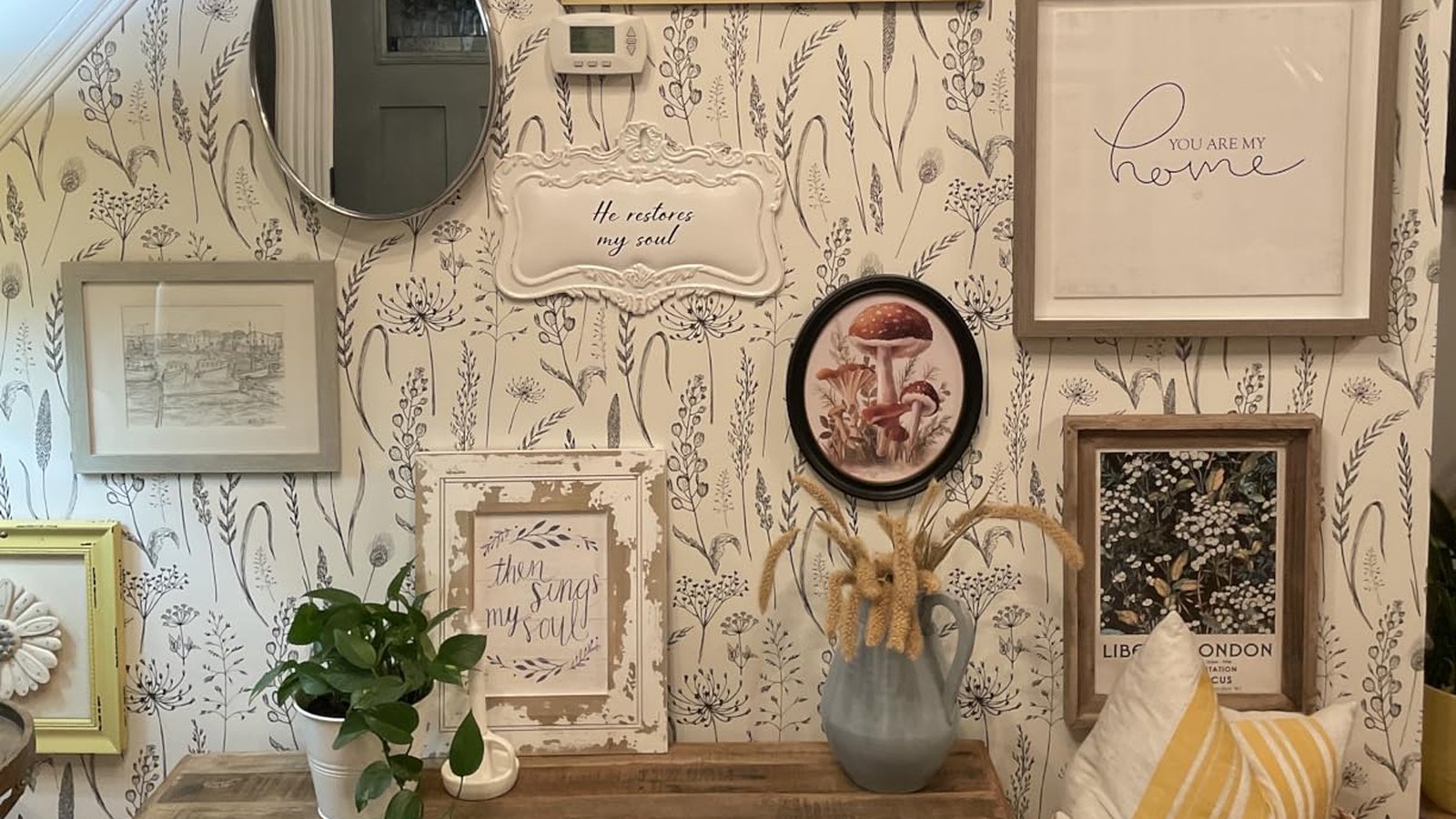
How to Apply Peel-and-Stick Wall Decals Without Bubbles
A Calm, Pro Method (Even If You’ve Never Done This Before)
Peel-and-stick wall decals are one of the fastest ways to refresh a space—especially for renters and DIYers who want a clean finish without paint or permanent commitment. JIFFDIFF wall decals are designed to be repositionable, removable, and renter-friendly, which means you can adjust placement as you go.
But if you’ve ever seen bubbles pop up mid-install (or the next morning), you already know the truth:
A bubble-free finish isn’t “luck.” It’s process.
This guide gives you a repeatable method used in professional vinyl application: the right prep, the right temperature, the right pressure, and the right sequence—plus simple fixes if a bubble sneaks in.
Why Bubbles Happen (In One Sentence)
Bubbles happen when air (or moisture) gets trapped because the decal is laid down too quickly, the surface isn’t truly clean/dry, or the adhesive isn’t in its ideal temperature range.
What You’ll Need (Simple Tool Kit)
You don’t need special equipment—just the right basics:
-
Microfiber cloth (or lint-free cloth)
-
Isopropyl (rubbing) alcohol for cleaning (avoid ammonia-based cleaners)
-
Squeegee / scraper tool (or a credit card wrapped in a soft cloth)
-
Painter’s tape (for the hinge method)
-
Measuring tape + pencil (or removable pencil)
-
A fine pin/needle (only for stubborn micro-bubbles at the end)
-
Optional: Hair dryer on low (for gentle warming—not blasting)
Step 0: The Two “Hidden” Conditions That Decide Your Result
1) Temperature matters more than people think
For most pressure-sensitive adhesive films, a common best-practice application range is about 50–90°F (10–32°C). Too cold and the adhesive can feel stiff; too hot and it can feel overly tacky and harder to control.
Quick rule: If your room feels chilly, warm it up for 30–60 minutes before installing.
2) Fresh paint needs curing time
If your wall was recently painted, bubbles and edge lifting become more likely because paint can keep curing for weeks. Many decal professionals recommend waiting several weeks after painting (often 3–4 weeks for best reliability), especially for smaller cut decals or detailed designs.
If you can’t wait: test one small decal in a hidden corner first.
Step 1: Prep the Wall Like a Pro (This Prevents Most Bubbles)
Bubbles love dust and invisible oils.
-
Wipe the area with a dry microfiber cloth first.
-
Then wipe with isopropyl alcohol (not an ammonia-based cleaner).
-
Let it fully dry (a minute or two).
-
Don’t touch the wall with your hands afterward—skin oils matter.
Pro tip: Clean right before you apply. Waiting too long invites dust back onto the surface.
Step 2: “Hinge Method” Alignment (So You Don’t Reposition 10 Times)
Repositioning is possible (and JIFFDIFF makes it easier) —but too much repositioning can introduce dust and reduce your smooth finish.
Hinge method (simple version):
-
Hold the decal up where you want it.
-
Use painter’s tape across the top edge to create a “hinge.”
-
Step back 6–8 feet, confirm placement, and take a photo (photos reveal crookedness fast).
This reduces decision stress and prevents the “move it 1 inch… no, 0.5 inch…” spiral.
Step 3: Apply Slowly in Sections (The Bubble-Free Core Technique)
Here’s the technique professionals repeat:
The principle
Start in the center and push outward with overlapping strokes, so air escapes toward the edges.
The method
-
Lift the decal (it’s held by the painter’s tape hinge).
-
Peel the backing only a few inches at first.
-
Lightly tack that top section onto the wall.
-
Use your squeegee (or wrapped card) and press with firm, even strokes.
-
As you smooth, peel more backing gradually—don’t drop the whole decal at once.
Work in manageable chunks: many installers recommend working in smaller sections rather than trying to flatten a large piece in one go.

Step 4: Pressure + Stroke Pattern (What “Pro Smoothing” Actually Means)
Use this stroke pattern:
-
Place the squeegee near the center of the section
-
Push outward toward an edge
-
Slightly overlap the next stroke
-
Repeat until that section is smooth
This is the same “center-out” bubble prevention logic used in other adhesive film applications.
Step 5: Large Decals (Big Pieces Need a Different Setup)
If your decal is large (like a statement arch or wide scene), the trick is control:
-
Get a helper if you can
-
Use the hinge method
-
Peel backing gradually
-
Smooth slowly with consistent pressure
Example of a large focal decal people often install as a statement piece: Arch Tropical Garden Scene (34.6" × 64.6")
If you prefer a calmer, wide scene style, something like Underwater Scene (39" × 17") is easier to manage while still creating a strong visual impact.
Step 6: If a Bubble Appears—Do This (Don’t Panic)
Here’s the truth: bubbles are usually fixable.
Bubble Fix Ladder (use the gentlest fix first)
Fix #1 — Push it to the edge
Use your squeegee and push the bubble outward in small strokes.
Fix #2 — Lift and re-lay (best while the adhesive is still fresh)
If the bubble is caused by dust or a wrinkle, gently lift that section and smooth again.
Fix #3 — Micro pin release (only for stubborn tiny bubbles)
If a tiny bubble won’t move, make a very small pin hole and press the air out, then smooth flat.
Fix #4 — Gentle warmth (optional)
A little warmth can help relax wrinkles in some films—keep it gentle and controlled.
Step 7: Aftercare (So It Stays Smooth)
-
Avoid scrubbing or heavy touching for 24–48 hours so the adhesive can settle and bond.
-
Keep the room within a comfortable temperature range (avoid sudden cold drafts right after install).
The “Economic Psychology” Trick That Improves Results
Use an If–Then Plan (Implementation Intention)
When people rush DIY installs, it’s usually not because they don’t care—it’s because they’re trying to avoid mistakes and “get it over with.”
A proven self-regulation tool in behavioral science is the if–then plan (“implementation intention”): you decide in advance what you’ll do when a predictable obstacle appears.
Use this simple plan:
-
If I see a bubble forming, then I stop immediately, lift that section, and smooth again—I don’t press through it.
That one sentence prevents the most common “I tried to force it flat and it got worse” moment.
Troubleshooting (Fast Answers)
Problem: Bubbles keep appearing
-
Likely cause: dusty wall, cold room, or applying too fast
-
Fix: re-clean, warm the room, apply in smaller sections
Problem: Wrinkles
-
Likely cause: backing peeled too quickly, decal stretched
-
Fix: lift gently, re-lay, smooth with slower strokes; consider gentle warmth
Problem: Edges lift later
-
Likely cause: textured paint, oils, humidity, fresh paint not cured
-
Fix: clean edges, press firmly, keep environment stable
Shop the Look (JIFFDIFF Quick Buying Guide)
If you want an easy wall upgrade with a clean, bubble-free finish, start here:
-
Browse JIFFDIFF Peel-and-Stick Wall Decals
-
Choose a statement focal piece like Arch Tropical Garden Scene
-
Or a calmer wide scene like Underwater Scene
-
For a larger themed layout, try Marine Animals (59.8" × 29.5")
If your wall depends on a matched “set” look, it’s also smart to plan and buy in one order for consistency
%0APeel-and-stick%20wall%20decals%20are%20one%20of%20the%20fastest%20ways%20to%20refresh%20a%20space%E2%80%94especially%20for%20renters%20and%20DIYers%20who%20want%20a%20clean%20finish%20withou...)
Leave a comment
This site is protected by hCaptcha and the hCaptcha Privacy Policy and Terms of Service apply.