

Texture, Not Print: The Wallpaper Trend That Makes Flat Walls Look Expensive
You know the feeling. You painted the wall. You hung the art. You even added the lamp everyone recommended. And still — the room looks flat. Not messy, not unfinished, just… flat. Like someone pressed “mute” on the whole space.
Here’s the uncomfortable truth the design world has been circling all year: the problem usually isn’t your furniture or your color choice. It’s that your walls are visually silent. Smooth paint reflects light evenly and prints — even beautiful ones — read as flat images glued to a surface. What the most polished rooms in Europe and the US have right now isn’t more pattern. It’s texture.
The 2027 trend forecasts are saying it out loud. Major wallpaper houses have named “luxury faux textures” — plaster, stone, marble, concrete — as a defining direction, and faux grasscloth keeps topping seasonal edit lists on both sides of the Atlantic. The reasoning is simple: texture creates quiet luxury without shouting color.
The catch? Real texture has always been expensive, messy, and — if you rent — completely off the table. Until now. Textured peel and stick wallpaper lets you get the depth of limewash, linen, and grasscloth in an afternoon, with no paste, no pros, and no damage when you leave. We’ll show you exactly how it works and which JIFFDIFF textures to start with.
Why Texture Beat Pattern This Season
Open any trend report for 2026–2027 and you’ll see the same shift. After years of bold prints and dopamine brights, interiors are moving toward warm neutrals — clay, plaster, ochre, oatmeal — carried by surface instead of pattern. Designers call it quiet luxury; we call it walls that finally look finished.
There’s real physics behind the aesthetic. A printed pattern sits on the surface of the paper, so light hits it evenly and the eye reads it as flat — no matter how beautiful the design is. Texture works differently. Every ridge, weave, and variation catches light at a slightly different angle, which is why a textured wall changes character throughout the day. Morning sun skims across it one way; evening lamplight pulls out shadows you didn’t know were there.
That’s why interior photographers shoot texture with raking side light — the shadows are the whole point. And it’s why textured wallpaper photographs so well for listing photos, rental listings, and, honestly, your Instagram.
The other driver is fatigue. After a decade of accent walls covered in loud geometric prints, a lot of us are simply tired of walls that look printed. Texture offers visual interest without committing to a motif you might regret in eight months. Grasscloth, linen, plaster — these are materials that never date.
The Problem With “Real” Texture
If texture is so wonderful, why doesn’t everyone have it? Because the authentic versions come with serious friction:
- Limewash and plaster finishes require skilled applicators, multiple coats, and a budget that often starts in the low thousands for a single room. One bad application and you’re sanding walls back to bare drywall.
- Real grasscloth is gorgeous but delicate — it’s installed with paste, shows every seam, can’t be wiped clean, and absolutely cannot come with you when you move.
- Stone and concrete effects are heavy, permanent, and completely out of reach for renters and anyone who changes their mind seasonally.
- Renters face the hardest version of the problem: the walls that would benefit most from texture are usually the ones you’re contractually forbidden from touching.
Textured wallpaper solves all four — if you pick the right kind. Traditional paste-the-wall textured wallpaper still means commitment, mess, and potential landlord drama. That’s why we built the JIFFDIFF collection around peel and stick textured wallpaper: all of the dimensional depth, none of the permanence.

What Makes Peel and Stick Texture Actually Work
Not all texture is equal, so let’s be specific about what you should look for — and what JIFFDIFF’s textured designs deliver:
Depth you can see from across the room. The best textured wallpapers use embossed surfaces and woven-look constructions that create genuine shadow play under side light. Run your hand along JIFFDIFF’s Woven Fabric Texture Peel and Stick Wallpaper and you’ll feel the weave-inspired relief — that’s what separates texture from a photo of texture.
Imperfection coverage. Here’s a benefit nobody advertises: textured wallpaper hides flaws. Fine hairline cracks, patchy touch-up paint, slight unevenness in old plaster — a woven or linen-look surface swallows them all. Flat paint magnifies every imperfection; texture makes them disappear.
A matte, natural finish. Cheap wallpaper announces itself with shine. JIFFDIFF’s textured designs use matte finishes that read as material — linen, grass, plaster — not as printed plastic. Under lamplight, the surface looks tactile rather than glossy.
Cleanability. Unlike real grasscloth, which stains if you look at it wrong, quality peel and stick textured wallpaper wipes down with a damp cloth — a genuine advantage in hallways, kitchens, and homes with small children or pets.
Reversibility. The renter dealbreaker, solved. When your lease ends, peel slowly from a corner at a low angle and the panel comes away cleanly — no scraping, no steam, no deposit anxiety. And because panels are removable, you can take your textured wall with you to the next apartment.
Where Texture Works Hardest: The Forgotten Rooms
Here’s an insider tip borrowed from the best styling edits this season: you don’t need to texture your living room to transform your home. The “secondary spaces” — the ones you pass through daily but never decorate — benefit most, because texture does its best work in small rooms with strong light angles.
- The entryway. First impression, small wall area, usually one roll or two. A woven texture here sets the tone for the whole house.
- The hallway. Side light from doorways and windows rakes across textured walls all day — this is where plaster and linen looks genuinely glow.
- The powder room. Small, windowless rooms often feel flat and institutional. A deep texture adds the intimacy that paint can’t.
- The laundry room. The most neglected room in the house becomes the one you show off.
- The home office. With video calls now permanent, the wall behind your desk is effectively your professional backdrop. A linen or grasscloth look reads as considered and calm on camera.

Before and After: The Texture Difference
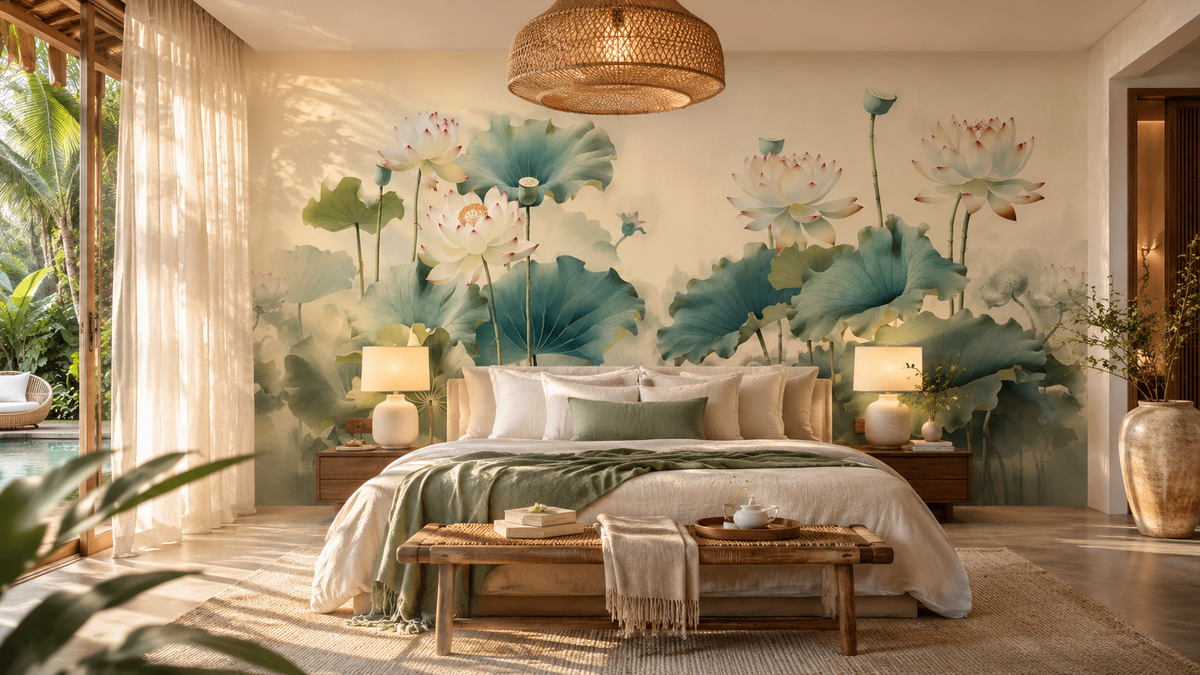
Picture two identical bedrooms. Both have oatmeal bedding, oak nightstands, warm bulbs. In room one, the walls are standard eggshell paint — the light just sits on the surface, and the styling feels like it’s floating in white noise. In room two, the bed wall carries a woven linen texture: suddenly the same furniture looks curated, the light has dimension, and the whole room photographs like a design magazine spread.
Nothing changed except the wall. That’s the quiet power of texture — it doesn’t compete with your furnishings, it elevates them. And because JIFFDIFF’s textured designs lean into warm neutrals, they pair with almost any existing décor, from Scandinavian minimal to cottage cozy.
Shop the Texture Edit
Ready to give your flat walls a voice? Start with these favorites from the JIFFDIFF textured collection:
- Woven Grasscloth Texture Peel and Stick Wallpaper — the classic sisal-look weave that brings organic warmth to entryways and bedrooms. This is the one to buy if you’ve been saving real grasscloth inspo photos for “someday.”
- Woven Fabric Texture Peel and Stick Wallpaper — a tactile weave-inspired relief in a versatile neutral, perfect for the wall behind your bed or your desk backdrop.
- Industrial-Style Metal and Concrete Wallpaper — the concrete and metal look from the 2027 forecast, minus the actual cement. Ideal for home offices, lofts, and anyone whose aesthetic lives between “minimal” and “moody.”
- 3D Foam Wood Slat Peel and Stick Wallpaper — dimensional wood-slat paneling that adds true architectural depth to TV walls and hallways.
Not sure which texture suits your light? Browse the full Grasscloth & Linen Texture collection or the complete By Textures edit to compare weaves, plaster looks, and dimensional panels side by side.
Your walls have been silent long enough. Pick one texture, one wall, one afternoon — and hear the difference.

Leave a comment
This site is protected by hCaptcha and the hCaptcha Privacy Policy and Terms of Service apply.