
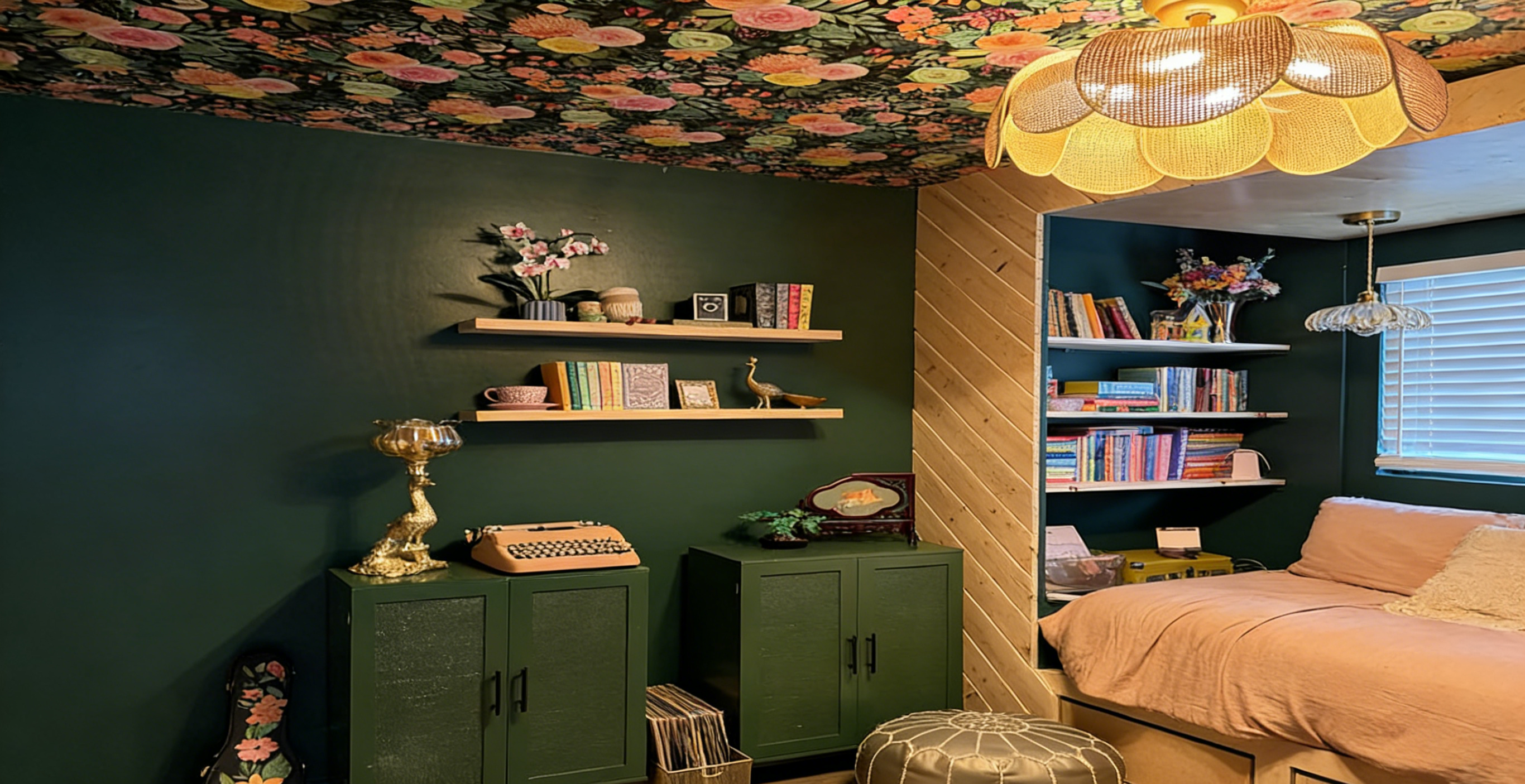
¿Papel pintado en el techo? El truco que usan los diseñadores en habitaciones pequeñas
La mayoría de la gente cree que el papel tapiz va en las paredes.
Pero los diseñadores de interiores a menudo hacen algo inesperado:
colocan papel tapiz en el techo.
En el mundo del diseño, el techo es conocido como «la quinta pared».
Y en las habitaciones pequeñas, decorar esta superficie olvidada puede cambiar drásticamente cómo se siente un espacio.
Un techo bajo puede parecer más alto.
Una habitación pequeña puede sentirse más estilizada e intencional.
Y un rincón olvidado puede convertirse de repente en la parte más interesante del espacio.
Una vez que notas este truco de diseño, empezarás a verlo en todas partes.
¿Qué es el papel tapiz para techos?
El papel tapiz para techos significa simplemente aplicar papel tapiz al techo en lugar de (o además de) las paredes.
Los diseñadores de interiores suelen usar esta técnica para:
• añadir interés visual
• crear un punto focal
• hacer que un espacio pequeño parezca más alto
• aportar equilibrio a habitaciones minimalistas
Debido a que los techos suelen ser blancos y lisos, incluso un patrón sutil puede transformar por completo la atmósfera de la habitación.
Por qué el papel tapiz para techos funciona tan bien en habitaciones pequeñas
Las habitaciones pequeñas a menudo se sienten estrechas porque todo sucede al nivel de la vista.
Los muebles, el arte, las estanterías y la decoración compiten en la misma zona visual.
Cuando se añade papel tapiz al techo, la mirada se dirige naturalmente hacia arriba.
Este simple cambio modifica cómo se percibe la habitación.
En lugar de sentirse encerrado, el espacio de repente se siente:
• más alto
• con más capas
• diseñado de manera más intencional
Los diseñadores de interiores usan esta técnica frecuentemente en:
-
aseos
-
pasillos estrechos
-
lavaderos
-
rincones de lectura
-
dormitorios pequeños
Estos espacios son los que más se benefician porque suelen carecer de grandes elementos decorativos.

Los mejores patrones de papel tapiz para techos en espacios pequeños
No todos los diseños de papel tapiz funcionan bien en el techo.
Los diseñadores tienden a elegir patrones que guían la mirada suavemente en lugar de abrumar el espacio.
Aquí hay algunos de los estilos más efectivos.
Patrones repetitivos pequeños
Los motivos florales diminutos, los puntos o los motivos delicados añaden textura sin que el techo se sienta pesado.
Son especialmente efectivos en aseos y armarios.
Diseños geométricos suaves
Los patrones geométricos crean ritmo y movimiento en el techo.
Funcionan bien en interiores modernos porque se sienten estructurados pero sutiles.
Estampados metálicos o que reflejan la luz
Los diseños con acentos metálicos reflejan la luz y hacen que los techos parezcan más brillantes y altos.
Esto es particularmente útil en habitaciones con poca luz natural.
Patrones inspirados en la naturaleza
Las hojas, las nubes y los estampados florales añaden suavidad a la habitación.
Estos patrones a menudo hacen que un techo se sienta más abierto y relajado.
La regla de diseño simple que siguen los profesionales
Los diseñadores de interiores rara vez decoran los techos al azar.
Una regla de equilibrio simple ayuda a mantener la cohesión de la habitación.
Si las paredes son lisas → el techo puede ser llamativo.
Si las paredes ya tienen patrones → el techo debe mantenerse sutil.
Esto evita que el diseño se sienta caótico.
Otro truco común es la armonía de colores.
El papel tapiz del techo a menudo incluye al menos un color ya presente en la habitación, ya sea en los muebles, textiles o pintura.
Esto ayuda a que todo se sienta conectado.
Habitaciones donde el papel tapiz para techos causa mayor impacto
Algunos espacios se benefician más del papel tapiz para techos que otros.
Estas son las habitaciones donde los diseñadores lo usan con más frecuencia.
Aseos
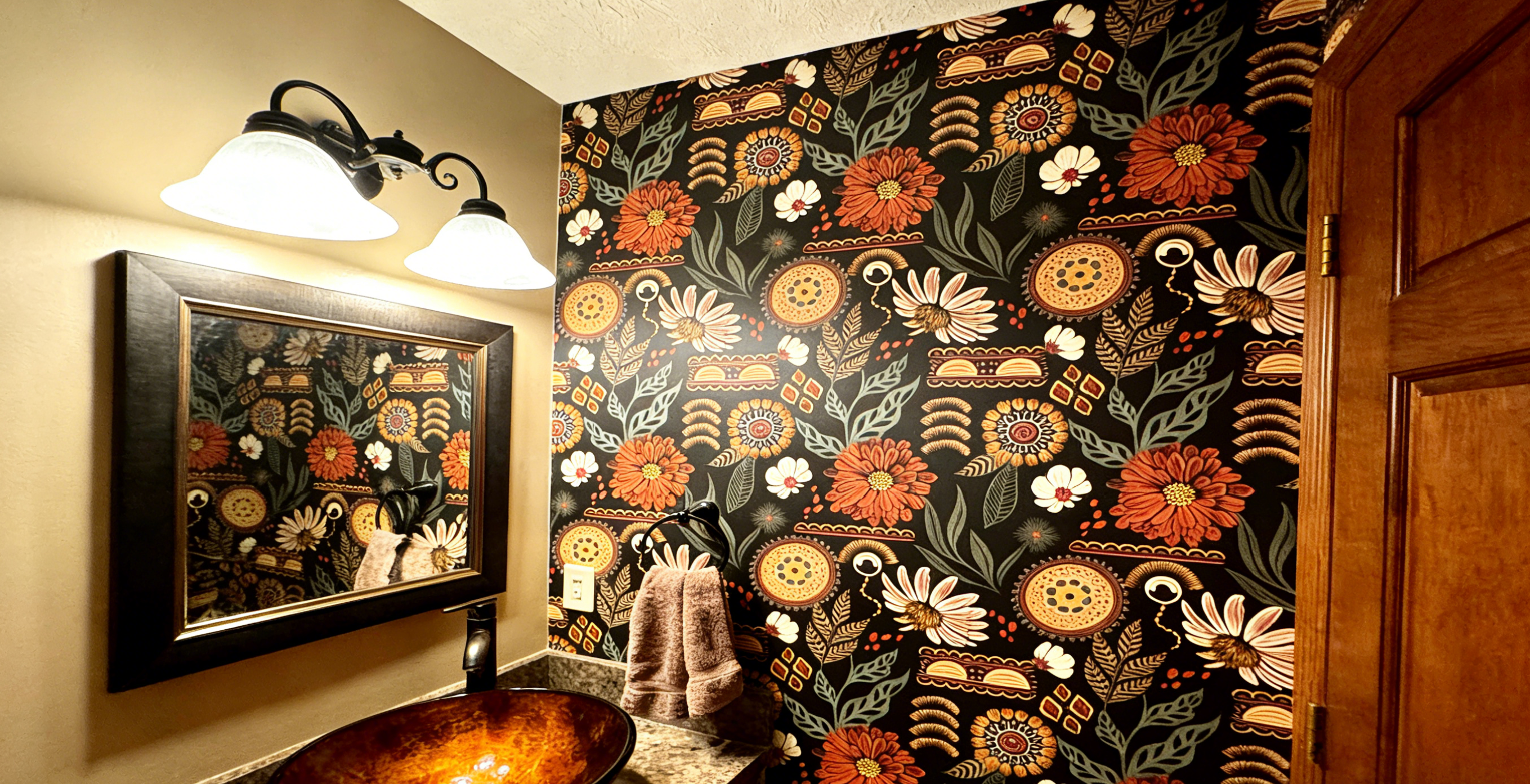
Los baños pequeños son ideales para decisiones de diseño atrevidas.
Los invitados miran naturalmente a su alrededor, lo que convierte al techo en un punto destacado inesperado.
Entradas
La entrada establece el tono para toda la casa.
Un techo con patrón añade carácter y personalidad de inmediato.
Rincones de lectura
El papel tapiz sobre una silla o banco acogedor crea una atmósfera íntima.
Puede hacer que el espacio se sienta como un refugio dedicado.
Habitaciones infantiles
Los patrones en el techo introducen imaginación sin abrumar las paredes.
Las nubes, estrellas o diseños lúdicos funcionan especialmente bien aquí.
Pasillos
Los pasillos a menudo se sienten vacíos o de transición.
Un techo con patrón añade movimiento e interés visual.

¿Es difícil instalar papel tapiz en el techo?
Muchos propietarios asumen que el papel tapiz en el techo es complicado.
En realidad, el proceso es similar a la instalación en paredes.
Los factores clave son:
• una superficie lisa
• adhesivo adecuado o respaldo autoadhesivo
• alineación cuidadosa del patrón
Debido a que los techos suelen ser más pequeños que las paredes, la instalación puede ser, de hecho, más rápida que un proyecto de habitación completa.
Por qué el papel tapiz para techos se está volviendo más popular
En los últimos años, los diseñadores han empezado a usar papel tapiz en los techos con más frecuencia.
Hay algunas razones detrás de este cambio.
Primero, los materiales modernos de papel tapiz son más fáciles de instalar y quitar.
Segundo, los propietarios se sienten más cómodos experimentando con pequeños elementos de diseño.
Y finalmente, las redes sociales han hecho que la gente sea más consciente de las ideas creativas de diseño de interiores.
El techo ya no es solo una superficie en blanco.
Se está convirtiendo en una oportunidad para la expresión de diseño.
El pequeño cambio de diseño que transforma una habitación
El gran diseño de interiores suele venir de ver espacios familiares de una manera nueva.
En lugar de tratar el techo como un espacio vacío, los diseñadores lo usan para añadir profundidad y carácter.
Especialmente en habitaciones pequeñas, este cambio sutil puede marcar una diferencia dramática.
La habitación no se vuelve más grande.
Pero se siente más grande, más equilibrada y diseñada con mayor atención.
Y a veces eso es todo lo que necesita un espacio.
Consejos rápidos de diseño si quieres probar el papel tapiz en el techo
Si estás considerando esta idea, empieza con estas sencillas pautas:
• elige colores más claros para techos muy bajos
• mantén patrones pequeños en habitaciones diminutas
• coordina con los colores existentes de la habitación
• prueba primero en un área pequeña
Incluso un diseño sutil puede hacer que el techo se sienta como una parte intencional de la habitación.
Por qué los diseñadores lo llaman la «quinta pared»
Las paredes dan forma a una habitación.
Los suelos la cimentan.
Pero los techos la completan.
Una vez que empiezas a pensar en el techo como la quinta pared, se abre una superficie de diseño completamente nueva.
Y a veces, las decisiones de diseño más hermosas son las que la gente rara vez piensa en probar.

Dejar un comentario
Este sitio está protegido por hCaptcha y se aplican la Política de privacidad de hCaptcha y los Términos del servicio.