¿Cuánto aumenta realmente el papel pintado adhesivo el precio de venta de una propiedad?
El papel pintado hace mucho más que cubrir una pared: renueva discretamente la atmósfera de un espacio.
— JIFFDIFF
La pregunta que a todo decorador de interiores (home stager) le hacen al menos una vez a la semana es: "¿Esto realmente funciona? ¿Poner papel pintado en esta pared cambiará de verdad el precio de venta?". La respuesta honesta solía ser cualitativa: "sí, ayuda". En 2026, los datos han madurado lo suficiente como para que los decoradores puedan responder a la pregunta con números. Números concretos. De fuentes oficiales. Desglosados por rango de precio de vivienda, por tipo de habitación y por nivel de inversión en staging. Este artículo contiene esos datos: las cifras reales detrás de lo que el papel pintado autoadhesivo aporta realmente al precio de venta de una propiedad.
Para los decoradores, estos datos son el argumento que convence a los vendedores indecisos. Para los vendedores, es el cálculo que justifica la inversión. Para los agentes inmobiliarios, es la razón para recomendar el staging antes de publicar el anuncio. Analizaremos los datos de investigación nacional de la NAR y la RESA, desglosaremos el aumento de precio por rango de valor de la vivienda, mostraremos qué habitaciones ofrecen realmente un retorno de la inversión (ROI) (y cuáles no), y documentaremos el coste real del papel pintado autoadhesivo frente al incremento del precio de venta que genera. Este es el caso a favor del papel pintado en el staging basado en números; no se requiere ningún argumento estético.

Parte 1 · Los datos nacionales: lo que el staging realmente aporta
¿Qué muestra la investigación más reciente sobre el efecto del staging en el precio de venta?
Los datos más creíbles sobre el ROI del staging provienen de dos fuentes: el Informe sobre Staging de 2025 de la Asociación Nacional de Agentes Inmobiliarios (NAR, por sus siglas en inglés), que encuestó a 1.266 agentes inmobiliarios en activo, y el seguimiento de rendimiento trimestral de la Real Estate Staging Association (RESA). Ambos apuntan a la misma conclusión: el staging ofrece un aumento cuantificable en el precio de venta y reduce el tiempo en el mercado, pero son las cifras específicas detrás de la conclusión las que los decoradores deben entender y citar.
29% de los agentes inmobiliarios informan que el staging conduce a un aumento del precio del 1-10% Perfil de Staging de la NAR 2025
109% ratio medio de precio de venta frente a precio de lista en viviendas con staging Datos de seguimiento de la RESA del 3.er trimestre de 2025
83% de los agentes de compradores dicen que el staging ayuda a los clientes a visualizar la vivienda NAR 2025
19 días tiempo medio en el mercado para las propiedades con staging frente a un 33-73% más de tiempo sin él
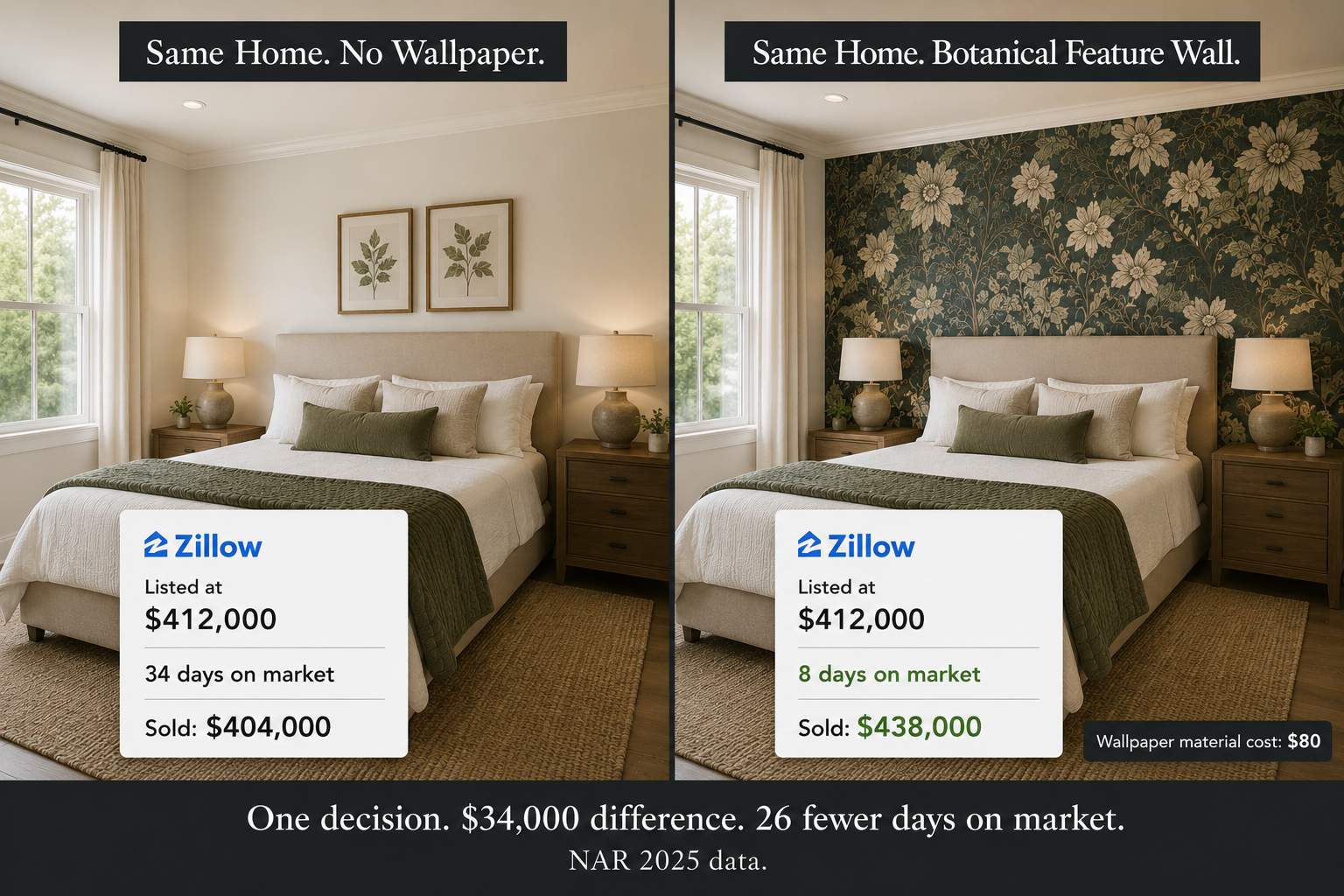
La investigación subyacente está documentada en el Perfil de Staging de la NAR 2025 — la fuente más citada del sector. Dos puntos de datos de ese informe son los más importantes para los decoradores que presentan el argumento del papel pintado a los vendedores: el 19% de los agentes inmobiliarios informa que las ofertas aumentaron entre un 1 y un 5% debido al staging, y otro 10% informa de un salto del 6 al 10%. En una vivienda valorada en la mediana de EE. UU. de 419.300 dólares, eso se traduce en un precio de venta incremental de 4.193 a 41.930 dólares, mucho más allá del coste marginal de cualquier intervención de staging, incluida la instalación de papel pintado en una pared de acento.
Por qué estos datos son importantes específicamente para el argumento del papel pintado
Los datos generales de staging prueban el caso. Los datos específicos sobre el papel pintado demuestran por qué es la intervención individual de mayor influencia dentro del staging. El papel pintado es el elemento de staging de menor coste que transforma visiblemente la fotografía. Es la intervención que cambia la foto del anuncio, el activo único que decide si un comprador hace clic en "programar una visita" o pasa de largo.
Llevando esto a una conversación con el vendedor: la intervención de staging que ofrece la mayor diferenciación visual en la fotografía del anuncio (el papel pintado) cuesta entre 30 y 120 dólares por pared en material. El aumento del precio de venta por el staging en una casa con un precio medio oscila entre 4.193 y 41.930 dólares. Incluso en el extremo inferior del rango, el ROI de una instalación de papel pintado por sí sola (excluyendo otros costes de staging) supera las 35 a 350 veces. Esto no es terreno de argumentos estéticos. Esto son matemáticas.

Parte 2 · Aumento de precio por rango de valor de la vivienda
¿Cuánto precio de venta añade el staging en cantidades reales en dólares?
Los porcentajes generales son útiles en la conversación. Las cantidades específicas en dólares son las que realmente cierran la decisión del vendedor. La siguiente tabla aplica los rangos de datos de la NAR a los tramos de valor de la vivienda, desde el nivel de entrada hasta el de lujo, con el coste del material del papel pintado autoadhesivo fijado para su comparación.
|
Precio de la vivienda |
Conservador (1%) |
Mediana (3-5%) |
Fuerte (8-10%) |
|
250.000 $ |
+2.500 $ |
+7.500 $ – 12.500 $ |
+20.000 $ – 25.000 $ |
|
419.300 $ (mediana) |
+4.193 $ |
+12.579 $ – 20.965 $ |
+33.544 $ – 41.930 $ |
|
600.000 $ |
+6.000 $ |
+18.000 $ – 30.000 $ |
+48.000 $ – 60.000 $ |
|
850.000 $ |
+8.500 $ |
+25.500 $ – 42.500 $ |
+68.000 $ – 85.000 $ |
|
1.200.000 $ |
+12.000 $ |
+36.000 $ – 60.000 $ |
+96.000 $ – 120.000 $ |
|
Coste papel pintado |
30 $ – 120 $ |
30 $ – 120 $ |
30 $ – 120 $ |
Lo que muestra realmente esta tabla
Las matemáticas se mantienen en todos los niveles de precios de viviendas. En la vivienda de nivel de entrada de menor precio en el mercado estadounidense, una modesta inversión en staging que incluya papel pintado en una pared de acento genera un mínimo de 2.500 dólares en precio de venta incremental, 20 veces el coste máximo del papel pintado autoadhesivo. En una vivienda de lujo de gama media, esa cifra alcanza más de 60.000 dólares con un staging eficaz. El coste del papel pintado se mantiene constante. El retorno escala con el valor de la vivienda.
Este es el argumento que cambia la resistencia del vendedor. Cuando el vendedor de una vivienda de 850.000 dólares considera una inversión en material de 120 dólares frente a un rango de ganancia en el precio de venta de 8.500 a 85.000 dólares, el cálculo ajustado al riesgo se vuelve obvio. La instalación de papel pintado en la pared de acento del dormitorio principal no es una cuestión de decoración. Es una cuestión de coste-beneficio con una relación inusualmente favorable.
Punto de conversación del decorador para vendedores indecisos: "Los datos de staging de la NAR muestran que las viviendas en su rango de precio se venden por entre 8.500 y 42.500 dólares adicionales cuando se aplica staging eficazmente, siendo el papel pintado autoadhesivo una de las intervenciones visuales de mayor influencia disponibles. El papel pintado para la pared de acento de su dormitorio cuesta 60 dólares en material. Si el staging ofrece el extremo inferior del rango de datos de la NAR, su retorno por esos 60 dólares es de 141 veces. Si ofrece el rango medio, es de más de 400 veces". Este es el lenguaje que convierte la vacilación en permiso.

Parte 3 · Qué habitaciones ofrecen realmente ROI en papel pintado
¿Dónde se debe instalar el papel pintado autoadhesivo para obtener el máximo impacto en el anuncio?
No todas las habitaciones ofrecen el mismo ROI en la instalación de papel pintado. El Perfil de Staging de 2025 de la NAR incluye datos específicos sobre la prioridad del comprador por habitación, lo que muestra a qué habitaciones dan más importancia los compradores a la hora de verlas con staging, lo que se traduce directamente en qué habitaciones merecen la inversión en papel pintado.
|
Habitación |
Prioridad del comprador |
Impacto del papel pintado |
Puntuación ROI |
|
Sala de estar |
91 % — máxima prioridad |
Pared de acento con textura |
★★★★★ |
|
Dormitorio principal |
83 % — crítico |
Mural protagonista detrás de la cama |
★★★★★ |
|
Comedor |
69 % — alto |
Pared de acento botánica |
★★★★☆ |
|
Cocina |
68 % — alto |
Acento en el salpicadero |
★★★★☆ |
|
Baño principal |
48 % — moderado |
Pared de acento fuera de la ducha |
★★★★☆ |
|
Aseo |
No encuestado — pero |
Revestimiento completo (pequeño) |
★★★★★ |
|
Entrada / vestíbulo |
Primera impresión |
Papel pintado llamativo |
★★★★☆ |
|
Oficina en casa |
Baja prioridad en el anuncio |
Saltar para el ROI de staging |
★★☆☆☆ |
Las tres habitaciones donde el papel pintado ofrece el mayor ROI
• Dormitorio principal (83% prioridad del comprador). La pared detrás de la cama es el ángulo más fotografiado en cualquier anuncio. Un papel pintado botánico o atmosférico y temperamental transforma la foto de la habitación de genérica a distintiva. Esta es la instalación de papel pintado de mayor ROI que cualquier decorador puede especificar.
• Sala de estar (prioridad del 91% de los compradores). La sala de estar es la estancia que más les importa ver decorada a los compradores. Un papel pintado adhesivo con textura de lino o tejido de fibra (grasscloth) detrás del sofá añade una profundidad fotográfica que la pintura convencional no puede ofrecer. Dado que las fotografías de la propiedad destacan la sala de estar como la imagen principal del estilo de vida, el papel pintado aquí se potencia en todas las fotos que incluye el anuncio.
• Aseo de cortesía (mecanismo de fotos virales). Los aseos de cortesía suelen recibir poca atención en las conversaciones tradicionales sobre staging, pero están sobrerrepresentados en las redes sociales. Un papel pintado botánico o de estilo heritage llamativo —o cubrir incluso el techo— en un aseo genera ese factor sorpresa que los invitados fotografían y publican. Para los anuncios dirigidos a perfiles de compradores interesados en el diseño, la pared decorativa en el aseo es desproporcionadamente efectiva.
Parte 4 · El cálculo del coste real — El papel pintado adhesivo como partida de staging
¿Cómo se compara el papel pintado adhesivo con otras intervenciones de staging en cuanto a rentabilidad por dólar invertido?
El staging conlleva múltiples partidas: alquiler de muebles, fotografía profesional, estilismo decorativo, pintura, reparaciones menores. El papel pintado adhesivo ocupa un lugar específico en ese presupuesto: es la intervención de menor coste, mayor impacto visual y más fácil ejecución disponible.
Comparación de costes entre partidas comunes de staging
• Alquiler de muebles (paquete de staging): $1,500–$5,000+ al mes, generalmente de 1 a 3 meses = $1,500–$15,000
• Fotografía profesional para el anuncio: $300–$800 por sesión
• Refresco de pintura (paredes de acento): $150–$400 por pared de acento (mano de obra + material) + 24–48 horas de tiempo de secado
• Papel pintado adhesivo (pared de acento): $30–$120 por material de pared + 2–3 horas de instalación DIY, sin tiempo de espera para secado
La comparación importante: la pintura no ofrece ninguna ventaja sobre el papel pintado adhesivo para el staging. Pertenecen a la misma categoría de impacto visual. El coste es similar cuando se comparan paredes de acento. Pero el papel pintado aporta patrón (la señal visual que realmente se muestra en la foto del anuncio), mientras que la pintura aporta color (que en fotografía se ve plano). Para la diferenciación específica en las fotos del anuncio, el papel pintado es la intervención más efectiva a un coste similar o inferior.
Caso de estudio real — Retorno de Inversión (ROI) comercial aplicado a la lógica del staging
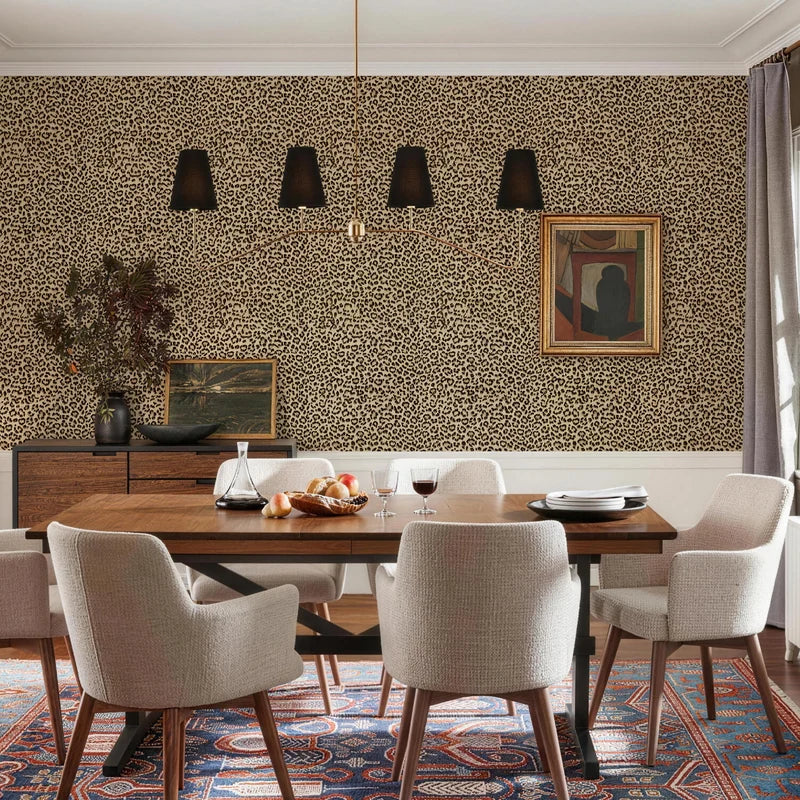
Los datos de ROI real más citados sobre el papel pintado en aplicaciones comerciales provienen de un salón de belleza de Phoenix que instaló un mural adhesivo con estampado de leopardo en su pared principal. El coste del material fue de $340. En 8 semanas: las visitas sin cita previa aumentaron de ~180 a ~247 (+37%), las menciones en Instagram pasaron de 3–5 por semana a 28–35 por semana (+560%), y los ingresos mensuales crecieron de $11,160 a $19,513, un aumento de $8,353 al mes. El ROI total sobre la inversión de $340 en material: 24.5 veces en 8 semanas.
Para el staging residencial, el mecanismo es idéntico: una pared decorativa distintiva se ve diferente en las fotografías. Las fotos que destacan generan un comportamiento de navegación distinto. Ese comportamiento de navegación se traduce en un mayor volumen de ofertas. El ROI residencial se refleja en el precio de venta y en el tiempo en el mercado, más que en ingresos recurrentes, pero la cadena causal subyacente es la misma que en el caso comercial, con una diferencia estructural importante: las transacciones inmobiliarias residenciales tienen valores mucho más altos por evento, lo que significa que la justificación matemática para usar papel pintado en el staging es más sólida, no más débil.
Parte 5 · Adquisición de papel pintado para obtener el máximo ROI en staging
¿Qué producto de papel pintado cumple realmente con los datos de ROI de staging?
Los datos de ROI de staging anteriores dependen de que el papel pintado luzca lo suficientemente bien en las fotografías del anuncio como para influir en la respuesta del comprador. Un papel pintado fino, con soporte de papel que se curva en los bordes o se desvanece bajo la iluminación del staging, no proporciona la transformación fotográfica que los datos sugieren. La especificación del papel pintado importa.
El programa JIFFDIFF para profesionales del staging — Diseñado para el rendimiento en fotos de anuncios
• Sustrato de vinilo con soporte textil (0.25 mm+): la profundidad dimensional se ve de alta calidad en las imágenes del anuncio; no se curvará, no formará burbujas ni se despegará en los bordes durante el tiempo que dure el staging.
• Envío de muestras físicas en 48 horas: ajustado a los calendarios de las sesiones fotográficas; muestras a escala de producción (no retazos) enviadas a su estudio o a la propiedad decorada.
• Disponibilidad de rollos individuales en Amazon Prime: entrega de 2 a 4 días para refrescos de staging urgentes; no se requiere cuenta B2B para proyectos únicos.
• Producción con lotes bloqueados para múltiples propiedades: para gestores de propiedades o carteras de staging que actualizan varios anuncios, una tolerancia de color ΔE ≤ 2.0 garantiza la consistencia en todas las propiedades.
• Más de 100 nuevas referencias mensuales en todas las tendencias relevantes de staging: biofílico maximalista, degradado atmosférico, heritage, textura táctil; las tendencias actuales de 2026 en stock.
• Retirada sin dañar la pintura después de 30+ días: soporta la aplicación temporal de staging sin dejar costes de reparación al cierre de la venta.
En JIFFDIFF, creemos que un papel pintado hace más que cubrir una pared: renueva discretamente la atmósfera de un espacio. Para los profesionales del staging, esa convicción se traduce en una realidad comercial concreta: la pared que usted especifique hoy puede cambiar el precio de venta mañana. Comenzamos con la creencia de que los espacios hermosos no deben ser costosos, complicados o inalcanzables. Para el staging, esto significa un producto de grado comercial a un coste accesible para el consumidor, validación por rollo individual antes de comprometer toda la cartera, y la consistencia de lotes que hace viable el staging de múltiples propiedades. Con una decisión sobre el papel adhesivo, todo un anuncio puede empezar a venderse de manera diferente. Eso no es una reclamación de marketing, son los datos de la NAR hablando.
Parte 6 · Preguntas frecuentes — Respuestas específicas que ahorran tiempo
Preguntas frecuentes: ROI del papel pintado adhesivo en el staging
Basado en Reddit (r/HomeStaging, r/realestate, r/HomeImprovement, r/realestateinvesting) y las consultas de mayor volumen en Google sobre el ROI del staging y el papel del papel pintado en el rendimiento de los anuncios inmobiliarios.
P: ¿Añadir papel pintado adhesivo realmente aumenta el precio de venta de una vivienda?
Sí; los datos de la NAR de 2025 muestran que el 29% de los agentes inmobiliarios informan que el staging (incluyendo el papel pintado en paredes de acento) genera un aumento del precio del 1 al 10%; en una vivienda media en EE. UU. de $419,300, eso supone un incremento en el precio de venta de entre $4,193 y $41,930 frente a un coste típico de material de $30–$120 por pared de acento, lo que se traduce en rangos de ROI de 35 a 1,300 veces la inversión en papel pintado específicamente.
P: ¿Cuánto valor añadido aporta el staging al precio de venta de una vivienda normalmente?
El informe de la NAR de 2025 sobre el "Profile of Home Staging" indica que el 19% de los agentes de ventas observaron un aumento del precio del 1 al 5%, y el 10% observó un aumento del 6 al 10%; el seguimiento del RESA en el tercer trimestre de 2025 muestra que las casas decoradas lograron una relación de precio de venta-lista del 109% con un tiempo medio en el mercado de 19 días, frente al 33–73% más de tiempo para los anuncios sin staging.
P: ¿En qué habitaciones debería instalar papel pintado adhesivo para obtener el máximo ROI en staging?
Sala de estar (91% de prioridad del comprador según la NAR), dormitorio principal (83% de prioridad; la pared tras el cabecero es el ángulo más fotografiado en cualquier anuncio) y aseo de cortesía (mecanismo de foto viral para compradores interesados en diseño) ofrecen el mayor ROI; la oficina en casa y los dormitorios de invitados son de baja prioridad para la inversión en staging.
P: ¿Cuánto cuesta el papel pintado adhesivo para el staging de una pared de acento?
El coste del material por pared de acento oscila entre $30 y $120 según el tamaño de la pared y la calidad del producto; el sustrato de vinilo de alta calidad con soporte textil proporciona el rendimiento en fotos de anuncios que presuponen los datos de ROI de staging. El producto económico de papel fino a menudo se curva o se desvanece con la iluminación del staging, socavando el impacto visual del que depende el aumento del precio de venta.
P: ¿Cuál es el ROI total del papel pintado como inversión en staging?
Aplicado a los rangos de datos de la NAR: en una casa media de $419,300, $60 en material de papel pintado frente a $4,193–$41,930 de aumento en el precio de venta equivale a un ROI de 70 a 700 veces; en una casa de $850,000, la misma inversión en papel frente a un aumento de $8,500–$85,000 equivale a un ROI de 140 a 1,400 veces; significativamente más fuerte que casi cualquier otra partida individual de staging.
P: ¿Es seguro usar papel pintado adhesivo en una casa que se venderá pronto?
Sí, cuando se usa vinilo con soporte textil y adhesivo acrílico sensible a la presión (PSA) de grado comercial; el producto se retira limpiamente del panel de yeso pintado y curado (30+ días después de pintar) sin levantar la pintura ni dejar residuos al momento del cierre. La línea con soporte textil de JIFFDIFF está especificada con protocolos de retirada aptos para staging.
P: ¿Con cuánto tiempo de antelación al anuncio debo instalar el papel pintado adhesivo para el staging?
Instalar de 2 a 7 días antes de la sesión de fotos del anuncio para permitir que el adhesivo cure completamente; la entrega de JIFFDIFF mediante Amazon Prime en 2 a 4 días, más una instalación DIY de 2 a 3 horas, significa que el tiempo total desde la decisión hasta estar listo para el anuncio es de menos de una semana, ajustándose a los calendarios rápidos de staging.
P: ¿Debo usar papel pintado adhesivo o pintura para las paredes de acento de staging?
Papel pintado. Específicamente para la fotografía de anuncios, el papel pintado aporta un patrón que se percibe como intención de diseño, mientras que la pintura aporta un color que se ve plano en las imágenes. El coste del papel pintado por pared de acento es similar al coste de mano de obra de pintura, sin el tiempo de curado de 24 a 48 horas que requiere la pintura entre habitaciones.
%20le%20hacen%20al%20menos%20una...)
Dejar un comentario
Este sitio está protegido por hCaptcha y se aplican la Política de privacidad de hCaptcha y los Términos del servicio.