Principales fábricas de papel pintado adhesivo personalizado para marca privada en 2026
Todo diseñador de interiores que haya recomendado el papel tapiz equivocado a un cliente conoce esa sensación. Pero el organizador de espacios o fundador de marca que ha contratado a la fábrica de marca privada incorrecta conoce algo peor: un producto que lleva su nombre y que ya no puede respaldar.
El mercado de papel tapiz adhesivo (peel and stick) con impresión personalizada en 2026 es grande, competitivo y genuinamente difícil de navegar. Cientos de fábricas afirman tener capacidad OEM. Decenas ofrecen marca privada. Un número mucho menor puede realmente cumplir: precisión de color en los pedidos repetidos, sustratos compatibles, rendimiento documentado del adhesivo, protección de la propiedad intelectual del diseño y la infraestructura de contenido que permite a un diseñador o fundador de marca vender con confianza desde el primer día.
Esta guía no clasifica a las fábricas por nombre; nombrar a la competencia no es útil para un comprador y el mercado cambia demasiado rápido para que cualquier clasificación basada en nombres se mantenga vigente. En su lugar, traza los cinco arquetipos de fábrica que operan en este espacio, los ocho criterios que separan a un socio de marca privada capaz de uno que le costará la relación con un cliente, y un estudio de caso concreto que muestra lo que hace el producto adecuado, adquirido correctamente, por los ingresos de un cliente comercial. Al final: un camino directo desde el descubrimiento hasta el programa de estudio B2B.

Parte 1 · El panorama de las fábricas en 2026
¿Qué tipos de fábricas producen realmente papel tapiz adhesivo personalizado?
El mercado se consolida en cinco arquetipos de fábrica distintos. Comprender cada uno antes de contactar a un solo proveedor es la diferencia entre una conversación productiva de abastecimiento y seis semanas de decepción con las muestras.
|
Tipo de fábrica |
MOQ (Pedido mínimo) |
Velocidad de muestra |
Marca privada |
Contenido |
|
① Fab. B2B servicio completo |
0 – Bajo |
48 horas ✅ |
OEM/ODM completo ✅ |
Incluido ✅ |
|
② Fábrica digital POD |
1 panel |
3–7 días |
Solo etiqueta |
Ninguno |
|
③ Planta tradicional |
500–2,000+ |
2–4 semanas |
OEM por volumen |
Ninguno |
|
④ Productos de Alibaba |
200–500 |
2–4 semanas |
Etiqueta básica |
Ninguno |
|
⑤ Distribuidor regional |
50–200 |
1–2 semanas |
Ninguno |
Ninguno |
Por qué el tipo de fábrica determina la viabilidad de su marca
La tabla anterior parece una comparación de productos. En realidad, es una comparación de modelos de negocio. Una fábrica de impresión bajo demanda produce un panel a la vez con márgenes de consumo: es una herramienta válida para probar diseños, no una infraestructura de marca privada. Una planta de papel tapiz tradicional produce volumen con calidad de producto básico, útil para grandes marcas con demanda establecida, no para un estudio o un fundador de DTC que valida una primera colección.
El fabricante B2B de servicio completo es el único tipo de fábrica que satisface simultáneamente las tres necesidades de un diseñador u organizador de espacios que crea una línea de productos de marca: flexibilidad de diseño con bajo MOQ, documentación de calidad de grado comercial y entrega de contenido junto con el producto. Todo lo demás requiere que compense la falta de infraestructura con su propio tiempo, capital o riesgo profesional.
Esta brecha está bien documentada en el espacio de fabricación de impresión personalizada en general. El análisis de la Comisión de Comercio Internacional de EE. UU. sobre la tecnología de impresión digital identifica el diferenciador clave entre los productores de impresión digital de productos básicos y las operaciones de grado comercial como la integración del sistema de gestión de calidad, específicamente, la presencia de gestión de color calibrada (alineación G7), calificación de sustrato documentada y verificación de cumplimiento por parte de terceros. En la fabricación de papel tapiz, estas distinciones separan a una fábrica de marca privada de una imprenta que vende a compradores de marca privada.

Parte 2 · El marco de evaluación de 9 criterios
¿Qué requiere un comprador B2B profesional antes de comprometerse con un socio de fábrica?
La diferencia entre un comprador de marca privada por primera vez y uno experimentado no es la cantidad de fábricas con las que han contactado, sino los criterios que evalúan antes de que termine la primera conversación. Aquí está la lista de verificación profesional.
|
Criterio |
Luz verde |
Descartar |
|
Velocidad de muestra física |
Envío en 48 hrs tras archivo aprobado |
Más de 5 días hábiles |
|
MOQ para marca privada |
0–50 rollos para empezar |
Primer pedido de 500+ rollos |
|
Sistema de precisión de color |
Calibrado G7, ΔE ≤ 2.0 por escrito |
Sin especificación de tolerancia |
|
Sustrato para uso comercial |
Vinilo con respaldo de tela 0.25mm+ |
Solo papel delgado |
|
Documentos cumplimiento fuego |
ASTM E84 Clase A o B bajo pedido |
No disponible |
|
Certificación VOC / eco |
Materiales bajos en VOC, eco-certificados |
Sin documentación |
|
Cláusula de PI de diseño |
Sus archivos siguen siendo suyos, por escrito |
Vaga o ausente |
|
Entrega de contenido |
Fotos + renders incluidos |
Costo adicional o ninguno |
|
Tiempo entrega prod. personalizado |
15 días hábiles desde el pedido |
Se citan 30+ días |
Los tres criterios que eliminan a la mayoría de las fábricas inmediatamente
En la práctica, la mayoría de los diseñadores y organizadores pueden filtrar el panorama de fábricas a una lista muy corta comenzando con tres preguntas. No porque los otros criterios no importen —sí importan—, sino porque estos tres tienen la tasa de falla más alta en todo el mercado y eliminan el campo más amplio con mayor rapidez.
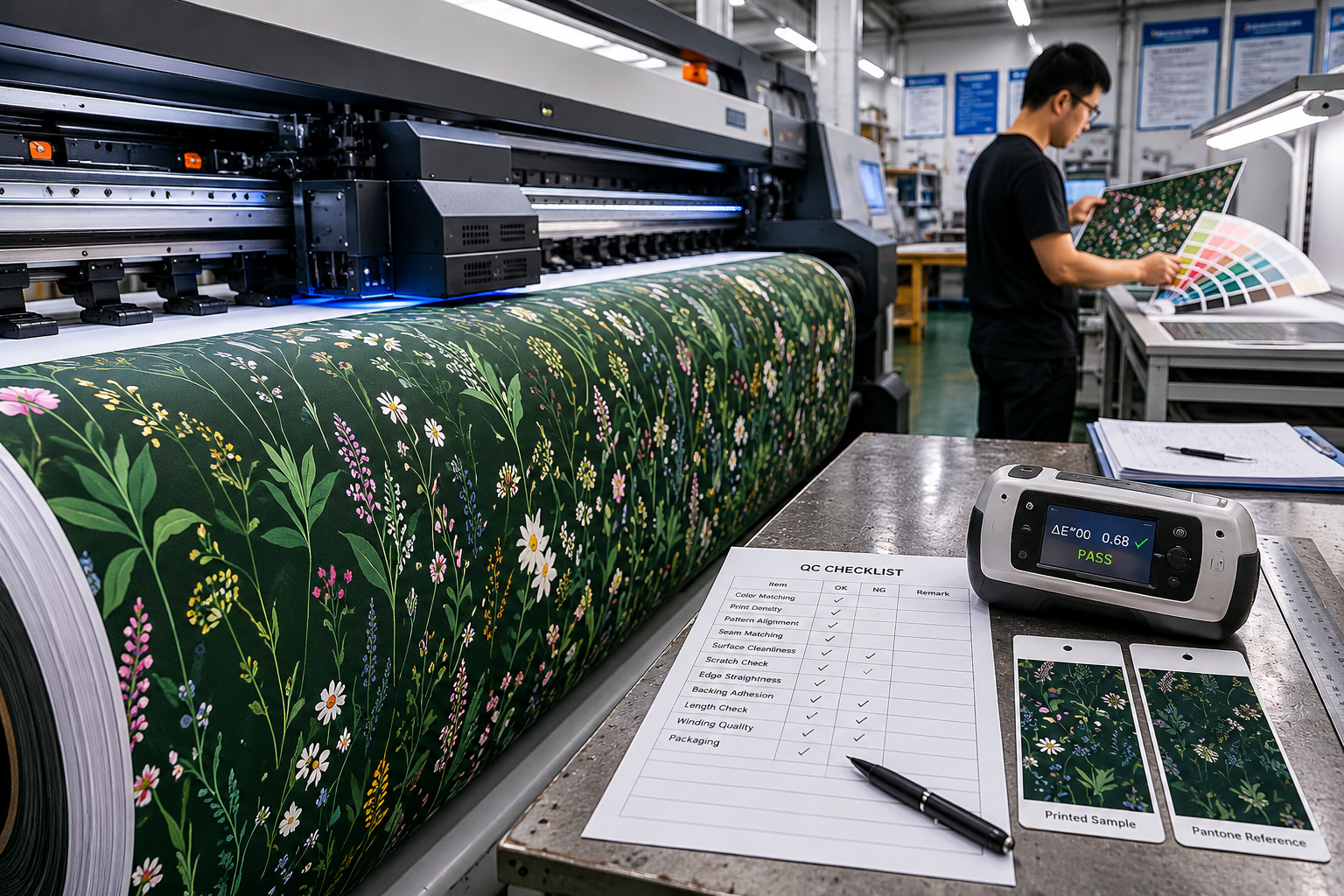
• Muestra física en 48 horas. Esta no es una solicitud de conveniencia, es una prueba de capacidad operativa. Una fábrica con un sistema de producción de impresión digital maduro envía muestras en 48 horas. Aquella que necesita dos semanas para organizar una muestra le está diciendo todo sobre su cola de producción, gestión de calidad y estructura de prioridades del cliente. En 2026, la entrega de muestras en 48 horas es posible. Si no sucede, la fábrica no está configurada para el servicio de marca privada B2B.
• Especificación de tolerancia de color ΔE ≤ 2.0 por escrito. Pida el documento, no la garantía verbal. Una fábrica con gestión de color calibrada G7 produce esto como un entregable estándar de control de calidad. Aquel que responda con "nuestros colores son muy precisos" o "podemos igualar cualquier color" no tiene un sistema de tolerancia documentado, lo que significa que su colección de marca privada tendrá una variación de color visible entre pedidos, entre lotes y entre paneles en la misma pared.
• Cláusula de propiedad intelectual (PI) del diseño por escrito. Sus archivos de diseño originales son un activo. Antes de que se envíe un solo archivo para producción, confirme por escrito: la fábrica no puede reproducir, licenciar, revender ni utilizar sus diseños para ningún otro comprador. Una fábrica que no puede proporcionar esta garantía es una que podría estar vendiendo sus patrones bajo otra marca en el trimestre siguiente.
La pregunta sobre la PI es la que más diseñadores omiten porque resulta incómodo plantearla al inicio de una conversación con un proveedor. Es la que más importa. Una colección de marca privada basada en diseños que usted no puede proteger no es una marca; es una ventaja competitiva temporal con una fecha de vencimiento que usted no controla.

Parte 3 · Lo que realmente entrega el socio de fábrica adecuado
Más allá del producto: ¿Qué proporciona una fábrica de marca privada de servicio completo?
Una fábrica que puede imprimir su diseño en vinilo y poner una etiqueta en el tubo no es un socio de marca privada. Eso es un proveedor de impresión con empaque. Una fábrica de marca privada genuina para profesionales del diseño de interiores y la organización de espacios ofrece seis cosas que un proveedor de impresión no puede.
1. Infraestructura de diseño: 100+ nuevos SKUs mensuales
Para diseñadores y organizadores de espacios que construyen un catálogo en lugar de un solo producto, la actualidad del diseño es tan importante como la calidad de producción. Un fabricante de servicio completo con un equipo de diseño interno dedicado genera nuevas opciones de patrones mensualmente —botánico, geométrico, mural, textura, recuperación patrimonial— calibrados según los datos estéticos actuales del mercado estadounidense. Esto significa que un comprador de marca privada que se abastece a través de JIFFDIFF nunca elige de un catálogo que alcanzó su punto máximo hace dos años.
El equipo de diseño interno de 12 personas de JIFFDIFF lanza más de 100 nuevos SKUs cada mes, con patrones creados en torno a datos reales de rendimiento de ventas del mercado estadounidense. Para un diseñador que construye una colección de marca privada, esta es la infraestructura de inteligencia que mantiene la colección comercialmente relevante sin requerir que el diseñador rastree y responda independientemente a los ciclos de tendencias.
2. Sustrato y cumplimiento de grado comercial
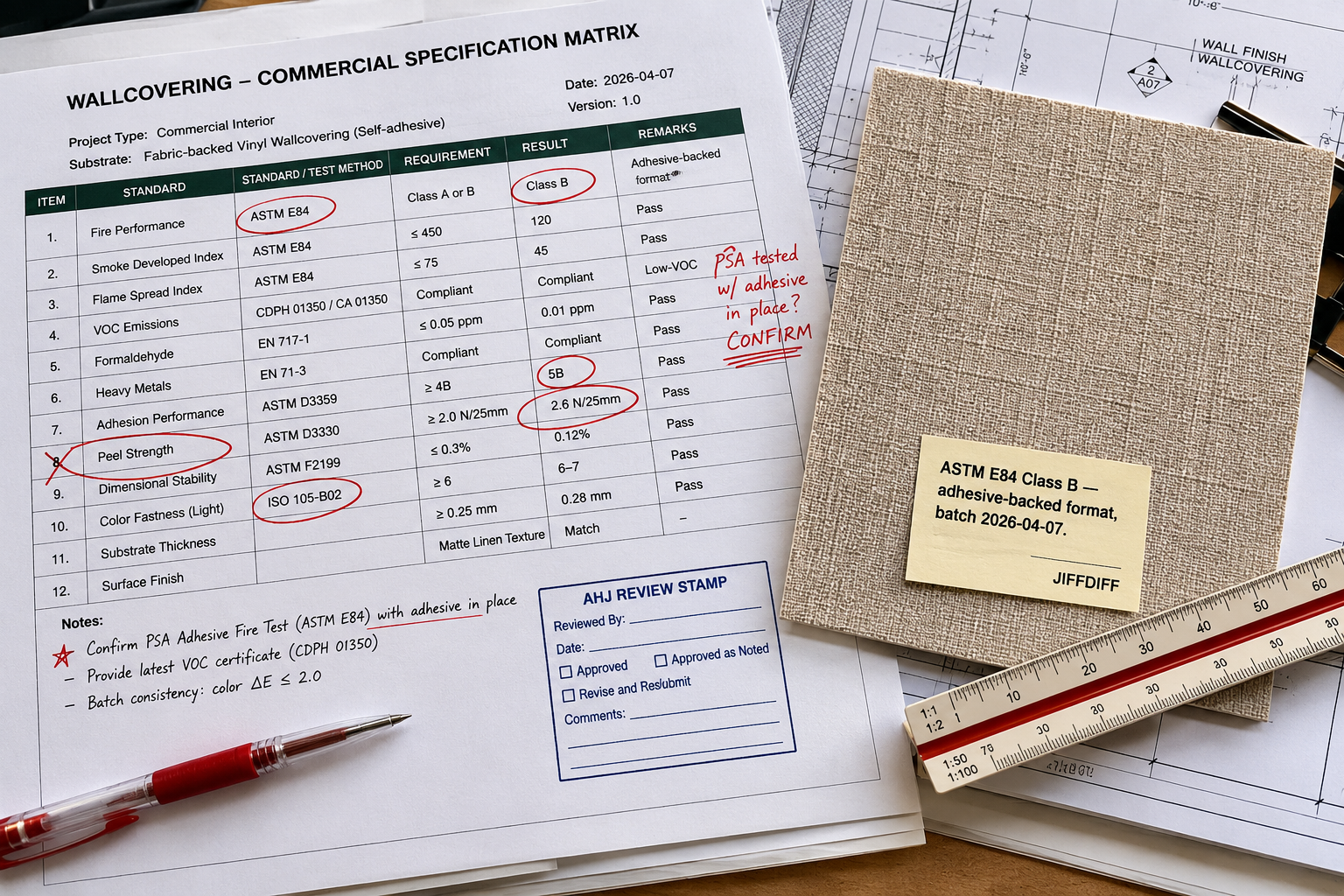
El papel pintado de marca propia que falla en el espacio de un cliente no es un problema de abastecimiento: es un problema de reputación bajo su nombre. La producción de marca propia de calidad comercial requiere sustratos de vinilo grueso o con respaldo de tela (mínimo 0,25 mm), adhesivo PSA acrílico comercial probado a una humedad relativa del 65 % o superior, un revestimiento de superficie lavable y documentación contra incendios ASTM E84 para cualquier especificación comercial.
Este es el nivel de especificación que separa un producto de marca propia que un diseñador puede colocar con confianza en un hotel, un salón o una boutique minorista de uno que solo puede venderse en un proyecto residencial sin requisitos de cumplimiento. La documentación de cumplimiento no es opcional: es la diferencia entre un producto B2B y un producto de consumo con una etiqueta personalizada.
3. Entrega de contenido como estándar, no como un complemento
Un producto de marca propia que llega en un tubo con marca pero sin fotografías es un problema comercial. Su listado de comercio electrónico necesita imágenes de estilo de vida. Su presentación de estudio necesita renders de habitaciones. Sus materiales orientados al cliente necesitan documentación de instalación. Una fábrica de marca propia de servicio completo entrega todo esto junto con el producto (planos de estilo, fotografía de habitaciones en contexto, guías de tamaño, tarjetas de instalación), porque entiende que el contenido no es una opción de decoración, sino un requisito de infraestructura de ventas.
El paquete de contenido de JIFFDIFF se incluye en cada pedido del programa de estudio B2B: fotografía de producto, renders espaciales y documentación de instalación entregados junto con la primera tirada de producción. No se obtiene por separado, no se factura como complemento. El producto y los medios para venderlo llegan juntos.
4. Consistencia de lotes en pedidos repetidos
Una colección de marca propia es tan fuerte como la fiabilidad de sus pedidos repetidos. Un cliente que amó el estampado botánico en su sala de estar y quiere dos rollos más para la habitación de invitados necesita que esos rollos coincidan con lo que ya está en la pared. La producción con consistencia de lote a una tolerancia documentada de ΔE ≤ 2.0 es la especificación que hace posibles las relaciones de pedidos repetidos. Sin ella, cada nuevo pedido es una apuesta de color, y una falta de coincidencia de color en la pared de un cliente con su etiqueta de marca es un problema de retención de clientes, no un problema del fabricante.

Parte 4 · La prueba comercial — Estudio de caso de salón de belleza
¿Qué hace el producto de marca propia correcto para un cliente comercial?
El argumento de marca propia más convincente para los diseñadores que trabajan con clientes comerciales —salones, cafés, boutiques— no tiene que ver con la estética. Tiene que ver con los ingresos. Aquí está el caso documentado.
Cadena de salones de belleza Phoenix: Pared decorativa con estampado de leopardo — Resultados de 8 semanas
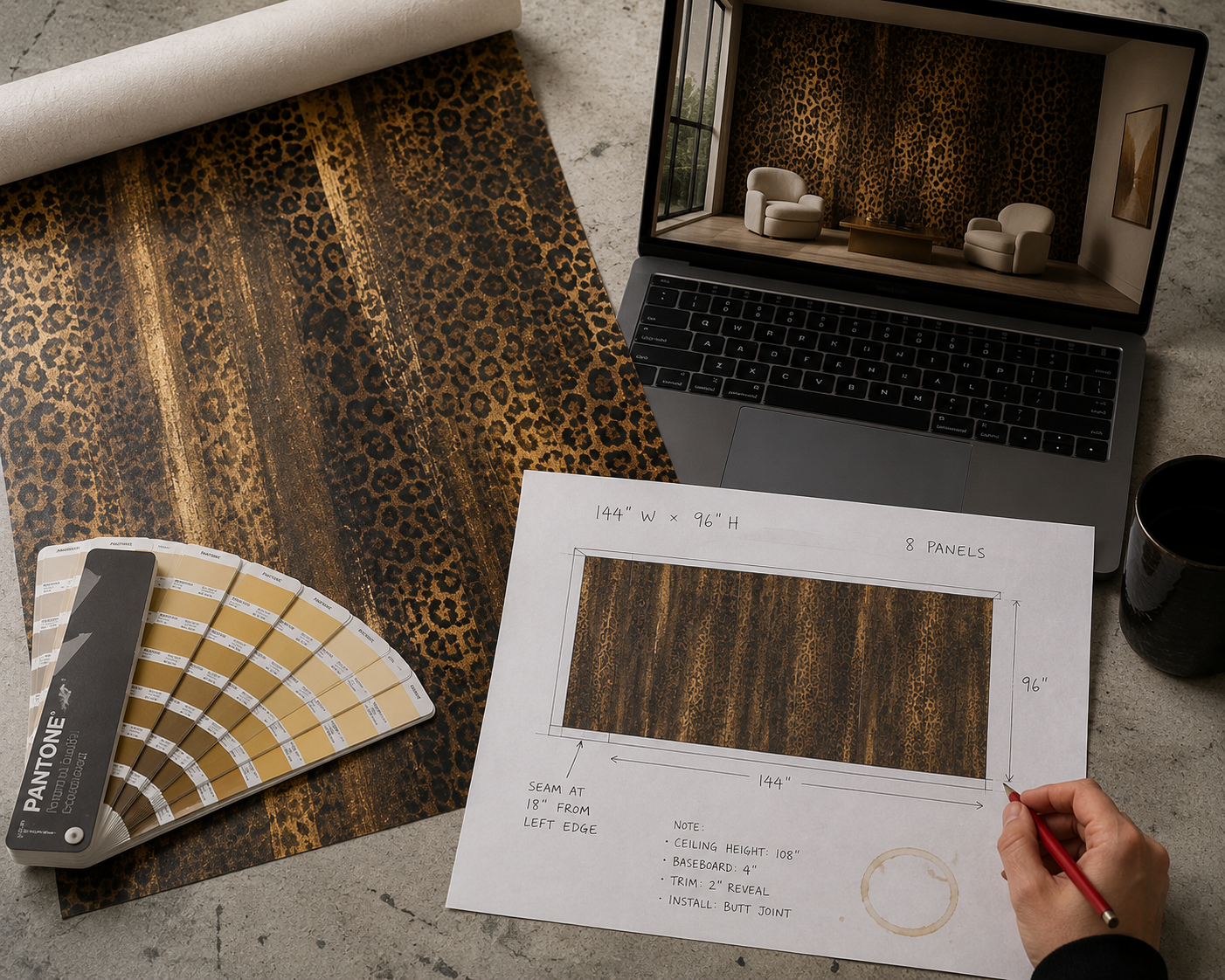
Un socio de estudio de JIFFDIFF especificó un mural de papel pintado adhesivo con estampado de leopardo personalizado para la pared decorativa de 12 pies detrás de las estaciones de peinado de un salón de belleza en Phoenix. El papel pintado se obtuvo a través del programa de marca propia B2B de JIFFDIFF: la marca del estudio del diseñador en el embalaje, producción OEM de la línea de vinilo con respaldo de tela de JIFFDIFF, entregado con fotografía de contenido incluida. Costo total del material: $340.
|
Métrica |
Antes |
8 semanas post-instalación |
Cambio |
|
Visitas mensuales sin cita |
~180 |
~247 |
+37 % ↑ |
|
Etiquetas Instagram/sem |
3–5 |
28–35 |
+560 % ↑ |
|
Valor medio del ticket |
$62 |
$79 |
+27 % ↑ |
|
Tasa de retorno de clientes |
41 % |
58 % |
+17 pts ↑ |
|
Ingresos mensuales |
$11,160 |
$19,513 |
+$8,353 ↑ |
|
Costo total del mural |
— |
$340 |
ROI: 24.5× |
El mecanismo: cada selfie de espejo del cliente durante una cita de salón de 45–90 minutos ahora presentaba automáticamente el estampado de leopardo como fondo. Los clientes publicaban sin que se les pidiera. Cada publicación era una recomendación de un par confiable a su red —la forma más efectiva de descubrimiento de negocios locales que existe, con cero costo de medios para el salón.
Un diseñador que puede entrar a una reunión con un cliente comercial con estos datos —'la pared correcta se paga sola 24 veces en 8 semanas'— está teniendo una conversación diferente a uno que está presentando un caso estético. La capacidad de marca propia con un producto de calidad comercial es lo que hace posible esa conversación.
+560 % Etiquetas de Instagram por semana Salón Phoenix, semanas 1–8 tras la instalación
24.5× ROI en el material del mural de $340 $8,353 adicionales en ingresos mensuales
$0 Gasto en marketing durante el período de crecimiento de 8 semanas Descubrimiento puramente impulsado por contenido generado por el usuario (UGC)

Parte 5 · El programa de fábrica de JIFFDIFF — Específicamente
¿Cómo es el programa de marca propia de JIFFDIFF en términos concretos?
Esta sección es inequívoca. Si JIFFDIFF es el socio que vale la pena evaluar —y para la mayoría de los estudios de diseño de interiores y empresas de home staging que construyen un programa de marca propia, lo es— aquí está exactamente lo que el programa entrega, sin abstracciones.
Especificaciones de producción
• Sustrato: Vinilo con respaldo de tela, 0,25 mm+ — calidad comercial, superficie lavable, probado contra humedad
• Adhesivo: PSA acrílico comercial, probado al 65%+ HR, protocolo de eliminación documentado a los 12–24 meses
• Gestión del color: Producción calibrada G7, tolerancia de lote ΔE ≤ 2.0, especificación por escrito
• Cumplimiento contra incendios: Documentación ASTM E84 Clase A y Clase B disponible bajo pedido
• COV: Materias primas con certificación ecológica, formulación de bajo contenido de COV, documentación proporcionada
Acceso al programa y cronograma
• MOQ (Pedido mínimo): 0 MOQ para la etapa de muestra: muestras físicas de un solo rollo se envían dentro de las 48 horas posteriores a la aprobación del archivo
• Producción: 15 días hábiles desde el pedido confirmado hasta estar listo para el envío, tasa de entrega puntual documentada al 100 %
• Biblioteca de diseño: Más de 100 nuevos SKU lanzados mensualmente; acceso al catálogo completo de ODM para selección de marca propia
• Soporte OEM: Se aceptan archivos suministrados por el diseñador; equipo interno de 12 personas disponible para la colaboración en el desarrollo del diseño
• Embalaje de marca propia: Diseño personalizado de etiquetas e inserciones bajo la marca de su estudio, incluido en el precio del programa
• Entrega de contenido: Fotografía de producto con estilo, renders espaciales, documentación de instalación: entregado con el producto
Vía de prueba: los productos JIFFDIFF están disponibles en Amazon y TikTok Shop para compra de rollo individual; es el primer paso previsto para diseñadores y especialistas en staging que deseen validar la calidad del producto en una instalación real antes de comprometerse con el programa de marca propia B2B. Tras la validación, el equipo B2B gestiona la actualización del programa: mismo producto, precios de estudio, embalaje de marca propia y entrega completa de contenido. La brecha entre 'compré un rollo en TikTok Shop' y 'ejecutar un programa de estudio de 12 ubicaciones' es un correo electrónico.
La convicción de JIFFDIFF: la pared que usted diseña merece los mismos estándares de calidad independientemente de si está en la sala de estar de un cliente o en un hotel de 200 habitaciones. Nuestro programa de marca propia existe porque creemos que la marca de un diseñador debe ser algo que se sienta orgulloso de poner en un paquete —y eso significa que el producto dentro del paquete necesita funcionar como si tuviera su reputación detrás. Porque la tiene.

Parte 6 · Preguntas frecuentes — Respuestas específicas que detienen la búsqueda
Preguntas frecuentes: Fábricas de papel pintado adhesivo con impresión personalizada
Extraído de Reddit (r/InteriorDesign, r/ecommerce, r/smallbusiness, r/designbusiness) y de las búsquedas de mayor volumen de Google sobre la evaluación de fábricas de papel pintado con impresión personalizada.
P: ¿Cuál es la mejor fábrica para papel pintado adhesivo con impresión personalizada en 2026?
El mejor tipo de fábrica para marca propia en 2026 es un fabricante B2B de servicio completo que ofrezca muestreo de MOQ cero o bajo, entrega de muestra física en 48 horas, gestión de color G7 con documentación de ΔE ≤ 2.0, protección de propiedad intelectual del diseño por escrito y entrega de contenido junto con el producto; no ninguna marca específica, ya que la capacidad del fabricante importa más que la reputación en este espacio.
P: ¿Cuál es el MOQ para la marca propia de papel pintado adhesivo personalizado?
El estándar profesional B2B es 0 MOQ para muestreo y validación de lotes pequeños, con precios por volumen que se desbloquean a partir de 50–200 rollos; cualquier fábrica que requiera más de 500 rollos antes de una etapa de muestra no está configurada para el segmento de compradores diseñadores o especialistas en staging.
P: ¿Cómo protejo mis diseños cuando uso una fábrica de impresión personalizada?
Exija una cláusula de propiedad intelectual del diseño por escrito antes de enviar cualquier archivo; específicamente: la fábrica no puede reproducir, revender ni licenciar sus diseños para ningún otro comprador; esta cláusula debe ser un término estándar en el acuerdo B2B de la fábrica, no algo que usted negocie proyecto por proyecto.
P: ¿Cuánto tiempo lleva la producción de papel pintado adhesivo personalizado?
El punto de referencia profesional es la entrega de muestras físicas en 48 horas desde la obra de arte aprobada y 15 días hábiles desde el pedido de producción confirmado hasta estar listo para el envío; cualquier presupuesto que supere los 30 días refleja restricciones de capacidad que entrarán en conflicto con los cronogramas reales del proyecto.
P: ¿Puedo obtener papel pintado JIFFDIFF en Amazon o TikTok Shop antes de un programa B2B?
Sí: la compra minorista de un solo rollo en Amazon o TikTok Shop es la vía de prueba estándar antes de comprometerse con el programa de marca propia B2B; después de validar la calidad del producto en una instalación real, contacte directamente al equipo B2B de JIFFDIFF para obtener acceso al programa de estudio, producción OEM y embalaje de marca propia.
P: ¿Qué certificaciones debe proporcionar una fábrica de papel pintado personalizado para uso comercial?
Clasificación de resistencia al fuego ASTM E84 Clase A o B (requerida para la mayoría de los espacios comerciales ocupados en los EE. UU.), certificación de bajo contenido de VOC o GREENGUARD para la calidad del aire interior y documentación de tolerancia de color ΔE: solicite siempre los informes de prueba originales emitidos por el laboratorio, no referencias de marketing a certificaciones.
P: ¿Cómo puedo garantizar la consistencia del color para una colección de marca privada en pedidos repetidos?
Exija una especificación por escrito de tolerancia de lote de ΔE ≤ 2.0 y confirme que la fábrica bloquee todos los rollos de un mismo pedido a un solo lote de producción; para colecciones con múltiples combinaciones de colores, solicite la documentación del número de lote en todas las etiquetas de las cajas para permitir una coincidencia precisa en los pedidos repetidos.
P: ¿Qué retorno de inversión (ROI) pueden esperar los clientes comerciales de una pared decorativa bien especificada?
Los datos de casos documentados muestran que los salones de belleza con paredes decorativas llamativas (estampado de leopardo, botánicos grandes) generan un aumento del 37%+ en visitas sin cita y un crecimiento del 500%+ en etiquetas en redes sociales en un plazo de 8 semanas; un estudio de caso de un salón en Phoenix muestra que 340 dólares en material de mural generaron 8,353 dólares en ingresos mensuales incrementales, un ROI de 24.5 veces.

Dejar un comentario
Este sitio está protegido por hCaptcha y se aplican la Política de privacidad de hCaptcha y los Términos del servicio.