
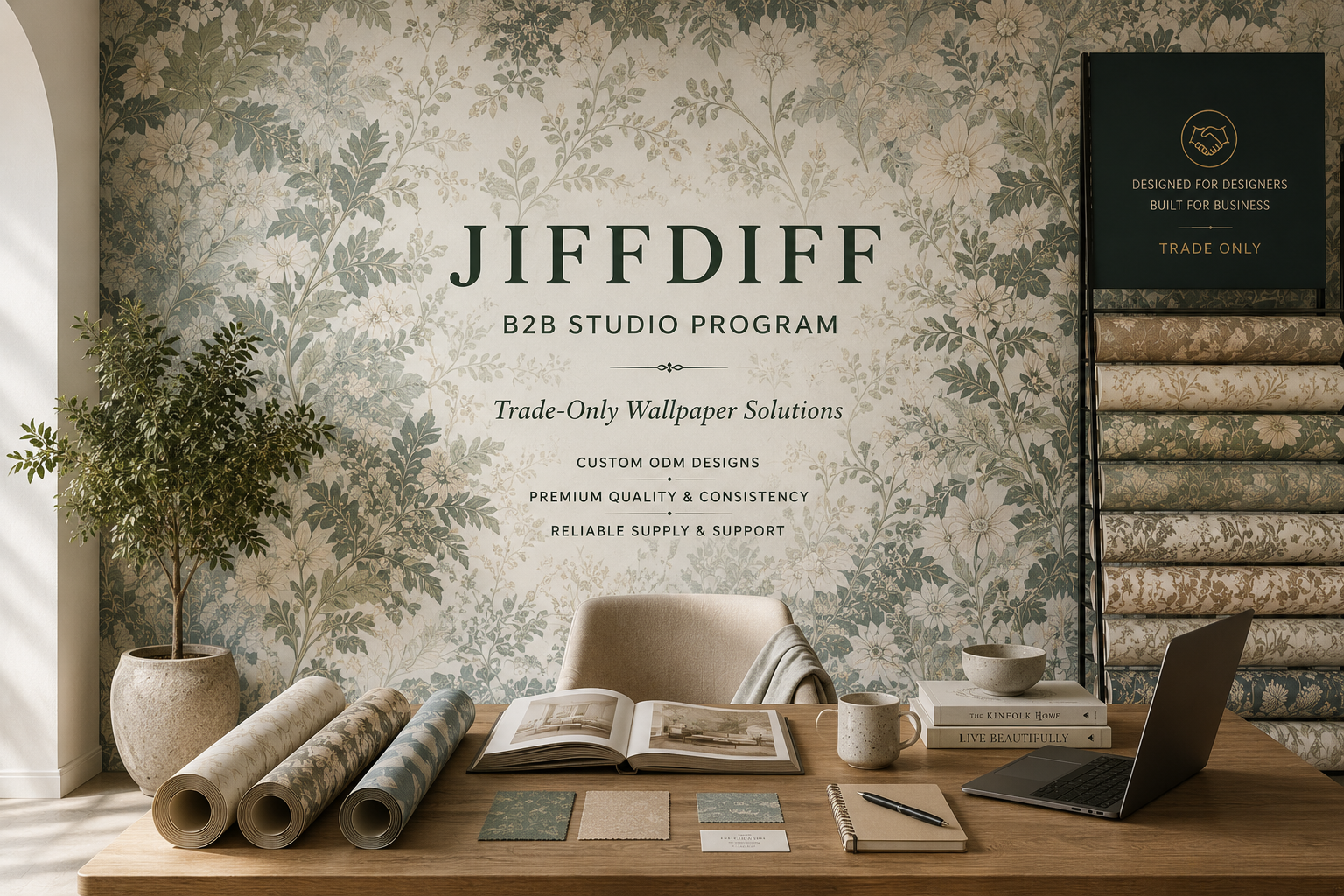
Die besten selbstklebenden Tapetenmarken für das Jahr 2026: Ein Einkaufsführer für Einzelhändler und Online-Vertreiber
Eine Tapete überdeckt mehr als nur eine Wand – sie erneuert subtil die Atmosphäre eines Raumes.
— JIFFDIFF
Jeder Einkäufer im Einzelhandel und Online-Händler, der 2026 selbstklebende Tapeten auf Lager hat, trifft eine risikoreichere Entscheidung, als es die Kategorie vermuten lässt. Der globale Tapetenmarkt wird in diesem Jahr voraussichtlich 13,6 Milliarden US-Dollar erreichen, wobei selbstklebende Tapeten das am schnellsten wachsende Segment sind – sie werden voraussichtlich von 2,5 Milliarden US-Dollar im Jahr 2023 auf 4,8 Milliarden US-Dollar im Jahr 2032 nahezu verdoppelt. Die Marken, die Sie jetzt auswählen, bestimmen Ihre Regalrelevanz für die nächsten 18–36 Monate: welche Muster auf Ihren Produktseiten gut fotografiert sind, welche Lieferanten bei Nachbestellungen stets zuverlässig liefern, welche Partner mit Ihnen skalieren, wenn Ihre Kategorie wächst, und welche Sie nach einem Trendzyklus mit totem Bestand zurücklassen.
Dieser Leitfaden ist keine namentliche Markenbewertung – diese veralten in einem so dynamischen Markt innerhalb weniger Monate. Stattdessen werden die fünf Markenarchetypen beschrieben, die 2026 im Einzelhandel und Vertrieb tätig sind, die neun Bestandsaufnahmekriterien, die eine wachsende Kategorie von einem stagnierenden SKU-Pool trennen, und ein Prüfrahmen, mit dem Sie jede Tapetenmarke – einschließlich der neuen, von denen Sie noch nichts gehört haben – anhand der betrieblichen Standards bewerten können, die Ihr Unternehmen tatsächlich benötigt.
Speziell für Amazon- und Shopify-Verkäufer, Wayfair-Katalogmanager, Einkäufer im Boutique-Einzelhandel und Online-Händler geschrieben, die intelligente Beschaffungsentscheidungen in einer Kategorie treffen möchten, in der die meisten Käufer noch blind agieren.

Teil 1 · Der Markt 2026 – Warum Bestandsentscheidungen wichtiger denn je sind
Was passiert eigentlich im Einzelhandelsbereich für selbstklebende Tapeten?
Bevor Sie Marken zum Verkauf bewerten, ist das Gesamtbild wichtig. Die Kategorie der selbstklebenden Tapeten im Jahr 2026 ist kein Trend – sie ist eine strukturelle Veränderung in der Art und Weise, wie Menschen dekorieren. Angetrieben durch die Demografie der Mieter (Generation Z und Millennials in langfristigen Mietverhältnissen), die DIY-Kultur, den Social Commerce auf TikTok und Instagram sowie die Reifung der Technologie für entfernbare Klebstoffe, hat sich die Kategorie von einer Neuheit zu einem Mainstream-Einrichtungsgegenstand entwickelt.
13,6 Mrd. USD globaler Tapetenmarkt 2026 prognostiziert 16,8 Mrd. USD bis 2031
2,5 Mrd. USD → 4,8 Mrd. USD Wachstum des Segments selbstklebender Tapeten (2023–2032) 6,5 % CAGR – schnellstes in der Kategorie
32 % Anteil von Vinylsubstraten am globalen Tapetenmarkt das dominierende Material für den Einzelhandel
+1.150 % Google-Suchwachstum für „Tapetenwandbilder“ (2025) treibt die Nachfrage nach Angeboten im Jahr 2026 an
Für Einkäufer im Einzelhandel ist die Konsequenz direkt: Der Wettbewerb um Regalflächen und Angebotsplätze verschärft sich. Marken, die 2022 gut abschnitten, sind möglicherweise nicht die Marken, die 2026 gut abschneiden. Gemäß den Beschaffungsrichtlinien der U.S. Small Business Administration – der maßgeblichen Bundesressource für Beschaffungsentscheidungen – sollten Einkäufer Lieferanten nach Konsistenz der Lieferung, finanzieller Stabilität, Skalierbarkeit bei Käuferwachstum und dokumentierter Qualitätskontrolle bewerten, anstatt sich allein auf Preis oder Markenbekanntheit zu verlassen. In einer so schnelllebigen Kategorie ist die Lieferantenbeziehung hinter der Marke wichtiger als der Markenname im Katalog.
Teil 2 · Die 5 Marken-Archetypen – Was jeder einzelne tatsächlich liefert
Welche Art von Tapetenmarke sollten Sie auf Lager haben?
Anstatt spezifische Marken zu nennen, die 2027 möglicherweise nicht mehr existieren, finden Sie hier die strukturelle Karte der fünf Markenarchetypen, die 2026 in den Einzelhandels- und Vertriebskanälen tätig sind. Jeder hat ein unterschiedliches wirtschaftliches Profil, eine unterschiedliche Kundenbasis und ein unterschiedliches Risikomuster.
|
Marken-Archetyp |
MOQ |
Umschlagshäufigkeit |
Margenpotenzial |
Lagerrisiko |
|
① Full-Service B2B Hersteller |
0–Niedrig |
Hoch ✅ |
32–55% ✅ |
Niedrig |
|
② Premium-Designer-Marke |
100+ |
Mittel-Hoch |
20–35% |
Mittel |
|
③ Mittelklasse-Einzelhandel |
50–200 |
Hoch |
25–40% |
Mittel |
|
④ Print-on-Demand |
1+ |
Mittel |
8–18% |
Niedrig-Mittel |
|
⑤ Massenware-Großhandel |
500+ |
Niedrig-Mittel |
15–25% |
Hoch ❌ |
01 Full-Service B2B Hersteller-Marken
Die Infrastrukturmarke. Skaliert mit Ihnen, nicht gegen Sie.
Dies sind Marken, die direkt von Herstellern mit vollständiger vertikaler Integration betrieben werden – Design, Produktion, Content-Bereitstellung und B2B-Programminfrastruktur in einem operativen System. Das entscheidende Merkmal: 0 MOQ-Zugang für Käufer, um neue SKUs ohne übermäßige Verpflichtungen zu testen, über 100 neue Designs, die monatlich auf den Markt kommen, um den Katalog aktuell zu halten, chargenkonsistente Produktion für Nachbestellungen und Content-Bereitstellung (Lifestyle-Fotografie, Raum-Renderings, Installationsdokumentation), die zusammen mit den Produktbestellungen enthalten ist.
Für Einzelhändler und Online-Distributoren löst dieser Archetyp das strukturelle Problem, das die meisten anderen verursachen. Die Marke führen, 10 SKUs mit Einzelrollen-Validierung testen, die 3–5 am schnellsten verkaufenden identifizieren, Bestellungen für diese skalieren, vierteljährlich mit neuen Designs aus dem Monatskatalog aktualisieren. Das Abverkaufsrisiko ist auf SKU-Ebene begrenzt. Die Margenmöglichkeit ist die stärkste in der Kategorie – 32–55 % netto sind für Käufer erzielbar, die auf Volumenpreisen mit Inhaltsbereitstellung arbeiten.
• Am besten geeignet für: Amazon/Shopify-Verkäufer, Wayfair-Katalogmanager, mittelgroße Einzelhändler, Boutique-Distributoren
• Hauptvorteil: Skaliert ohne Bestandsrisiko – Einzelrollen-Validierung vor Volumenbindung, Content-Infrastruktur inklusive
• Achten Sie auf: Marken, die diese Position beanspruchen, sollten die untenstehende 9-Punkte-Checkliste bestehen – viele behaupten, wenige liefern
Dies ist die JIFFDIFF-Position. Fast 20 Jahre US-Markterfahrung, ein 12-köpfiges internes Designteam, das monatlich über 100 neue SKUs auf den Markt bringt, 0 MOQ im Musterstadium, 48-Stunden-Muster, 15-Tage-Sonderproduktion mit 100 % dokumentierter pünktlicher Lieferung, Chargenkonsistenz von ΔE ≤ 2,0 und Bereitstellung von Inhaltspaketen als Standard für B2B-Einzelhandels- und Vertriebskunden. Wir bitten Einzelhändler nicht, ein Risiko einzugehen, bevor sie validiert haben. Wir bieten ihnen den Testpfad, der in das Programm integriert ist.
02 Premium-Designer-Marken
Starke Story. Kleinerer Katalog. Höherer Preis.
Dies sind die von Designern geführten Boutique-Marken – erkennbare Namen in Designpublikationen, mit starker künstlerischer Leitung, Premium-Preisen (60–95 USD/Rolle im Einzelhandel) und typischerweise kuratierten Katalogen von 50–200 SKUs. Sie wecken Kundenwünsche durch redaktionelle Positionierung und schneiden in der Regel gut auf Einzelhandelslisten ab, wo die Markengeschichte die Kaufentscheidung stärker beeinflusst als die Stückkosten.
Für Einkäufer im Einzelhandel ist der Kompromiss real: höherer Abverkauf pro SKU aufgrund der Markenbekanntheit, aber höhere Stückkosten drücken die Marge, geringere SKU-Geschwindigkeit aufgrund des Premium-Preises und höhere Mindestmengen (typischerweise über 100 Rollen pro SKU) im Vergleich zu direkten Herstelleralternativen. Am besten als 1–2 strategische SKUs auf Lager halten, die die Gesamtpositionierung des Katalogs aufwerten, nicht als Volumenrückgrat.
• Am besten geeignet für: Einzelhändler im Premiumsegment, designorientierte Boutiquen, Katalogmanager, die High-End-SKUs als anspruchsvolle Anker nutzen
• Achten Sie auf: Eingeschränkte Anpassungsmöglichkeiten, langsamere Katalogaktualisierung, höhere Mindestmengen, Rückgabe- und Schadensrichtlinien, die der Marke zugutekommen
03 Mittelständische Handelsmarken
Breiter Katalog. Solide Qualität. Das Arbeitstier der Kategorie.
Dies sind die bekannten Marken des Mittelstands, die in Baumärkten, Massenmarktkatalogen und mittelständischen E-Commerce-Kanälen zu finden sind. Die Einzelhandelspreise liegen typischerweise bei 28–58 USD/Rolle, breite Kataloge (300+ SKUs) und eine operative Konsistenz, die für den Großhandel funktioniert. Die Marken unterscheiden sich nicht durch ihre ästhetische Erzählung, sondern durch die Zuverlässigkeit der Lieferung in großem Maßstab.
Für Einkäufer im Einzelhandel ist dieser Archetyp die sichere Grundsatzentscheidung. Die SKU-Leistung ist basierend auf Kategoriedaten vorhersehbar. Nachbestellungsfristen sind dokumentiert. Rückgaberichtlinien sind kundenfreundlich. Die Einschränkungen: Das Design ist moderat, Anpassungen sind selten verfügbar, und die Marke hat nicht die Social-Commerce-Geschwindigkeit, die selbstklebende Tapeten zu einer hoch engagierten Kategorie auf TikTok und Instagram macht.
• Am besten geeignet für: Großvolumige Einzelhandelskataloge, Massenmarkt-Distributoren, Omnichannel-Verkäufer, die eine vorhersehbare Versorgung benötigen
• Achten Sie auf: Margenkompression, da konkurrierende Verkäufer die gleichen SKUs führen – die Differenzierung muss aus der Angebotspräsentation kommen, nicht aus der Produktexklusivität
04 Print-on-Demand-Plattformen
Kein Lagerbestand. Weniger Kontrolle. Nur zum Testen nützlich.
POD-Plattformen produzieren einzelne Rollen auf Abruf – keine Lagerbestandsbindung, kein MOQ, direkter Versand an Ihre Kunden. Für Online-Händler und Shopify-Betreiber, die maßgeschneiderte Designs oder spezialisierte Nischen ohne Kapitalrisiko testen, ist POD wirklich nützlich. Für den Aufbau eines ernsthaften Einzelhandelskatalogs mit nachhaltiger Marge zeigen sich die Einschränkungen jedoch schnell.
Die strukturellen Einschränkungen: Versandgeschwindigkeiten (typischerweise 5–10 Tage) beeinträchtigen die Konversionsrate, da 78 % der Kunden die Lieferzeit vor dem Kauf überprüfen; die Stückkosten absorbieren den Großteil der Margenmöglichkeiten (8–18 % netto sind typisch); die Chargenkonsistenz bei Nachbestellungen ist nicht gegeben; die Content-Bereitstellung ist minimal. Für einen Einzelhändler oder Distributor, der einen echten Katalog aufbaut, ist POD ein Testkanal, kein Lagerhaltungs-Kanal.
• Am besten geeignet für: Nischenspezifische Design-Tests, DTC-Stores mit Einzeldesign, Einzelhändler, die Konzepte vor der Verpflichtung validieren
• Achten Sie auf: Margenverfall, Konversionsverluste durch langsamen Versand, Chargeninkonsistenz, die sich negativ auf Bewertungen auswirkt
05 Massenware-Großhandel (Alibaba / Massenimport)
Niedrigste Stückkosten. Höchste versteckte Kosten. Ohne QC-Kapazität vermeiden.
Direkte Beschaffung bei Übersee-Massenwarenfabriken über Alibaba und ähnliche B2B-Marktplätze. Die Stückkosten können bei großen Mengen 3–12 US-Dollar pro Rolle betragen, was verlockend klingt, bis die operativen Realitäten zum Vorschein kommen: MOQs von über 500 Rollen, 2–4 Wochen Musterlaufzeiten, 4–8 Wochen Produktion und Versand, Chargeninkonsistenz ohne dokumentierte Kontrollen, keine Content-Infrastruktur, keine Private-Label-Unterstützung und Qualitätsvariabilität, die eine interne Qualitätskontrolle erfordert.
Für die meisten Einzelhändler und Online-Vertreiber verursacht dieser Archetyp mehr Kosten, als er einspart. Die Ausnahme: Großabnehmer mit internen Qualitätskontrollteams, die betriebliche Lücken schließen können und eine Margentoleranz für 5–15 % Ausschuss bei eingehenden Lieferungen haben. Für alle anderen verschwinden die scheinbaren Kosteneinsparungen in Lieferverzögerungen, Rücksendungen und unverkäuflichem Lagerbestand.
Das Risikomuster für Archetyp #5: Ein Käufer bestellt 500 Rollen zu 4 $/Rolle, insgesamt 2.000 $, mit der Erwartung, sie zu je 40 $ zu verkaufen, was einen Umsatz von 20.000 $ und eine Bruttomarge von 90 % ergibt. Realität: 400 $ Versandkosten, 300 $ für abgelehnte beschädigte Rollen, 6 Wochen gebundenes Betriebskapital, 800 $ Rücksendungen aufgrund inkonsistenter Farben in der Charge, Anzeigenkosten zur Abverkürzung von langsam drehenden SKUs. Die Nettomarge landet bei 15–25 %. Der Markenruf trägt die Kosten für jedes Qualitätsproblem, das auf Amazon- oder Shopify-Bewertungen auftaucht.

Teil 3 · Die 9-Punkte-Checkliste für die Lagerhaltung
Was sollten Sie mit jeder Tapetenmarke klären, bevor Sie sie auf Lager nehmen?
Das untenstehende Prüfschema ist der praktische Filter für jede in Betracht gezogene Tapetenmarke. Die Kriterien sind nicht nur wünschenswert – sie sind die operativen Standards, die Marken, die Ihr Regalplatz wert sind, von Marken trennen, die Sie Marge und Vertrauen kosten werden, wenn die Kategorie wächst.
|
Lagerhaltungskriterium |
Grünes Licht Antwort |
Abbruch-Antwort |
|
MOQ für den ersten Lagerversuch |
0–50 Rollen pro SKU |
500+ Rollen vor Validierung |
|
Muster-Bearbeitungszeit für Käufer |
48 Stunden physischer Musterversand |
5+ Werktage |
|
Katalog-Aktualisierungszyklus |
100+ neue SKUs monatlich |
Statischer Katalog, nur vierteljährlich |
|
Farbchargen-Konsistenz (Nachbestellungen) |
ΔE ≤ 2.0 dokumentiert, chargengebunden |
Keine schriftliche Spezifikation, „wir versuchen“ |
|
Substratqualität / Haltbarkeit |
Textilunterstütztes Vinyl 0.25mm+, abwaschbar |
Dünnes Papier, keine Spezifikation |
|
Inhaltsbereitstellung für Listings |
Lifestyle-Fotos + Renderings + Installationsanleitungen |
DIY-Fotografie, kein Inhalt |
|
Eigenmarken-/OEM-Verfügbarkeit |
0 MOQ Start, IP schriftlich geschützt |
500+ Rollen Minimum, keine IP-Klausel |
|
Konformitätsdokumentation |
ASTM E84, VOC-Zertifikate auf Anfrage |
Keine Dokumentation verfügbar |
|
Rückgabe-/Schadenspolitik |
Dokumentiertes Ersatzprotokoll |
„Verantwortung des Käufers“ |
Die drei Filter, die die meisten Marken sofort eliminieren
• „Kann ich innerhalb von 48 Stunden ein Einzelrollenmuster zur Bewertung bestellen, ohne MOQ-Verpflichtung?“ Wenn die Antwort ja ist und der Lieferant liefert, haben Sie einen käuferorientierten B2B-Partner. Wenn die Antwort Mustergebühren, mehrmonatige Zeitpläne oder Vorabverpflichtungen beinhaltet, haben Sie einen produktionsorientierten Hersteller, der nicht für Einzelhandels-Lagerabläufe konfiguriert ist. Dieser Filter eliminiert die unteren drei Archetypen sofort.
• „Wie lautet Ihre schriftliche ΔE-Farbtoleranzspezifikation, und wie garantieren Sie die Chargenkonsistenz bei meinen Nachbestellungen?“ Hören Sie genau zu. Eine Marke, die Qualitätsstandards im Einzelhandel erfüllt, hat eine dokumentierte Antwort: ΔE ≤ 2.0, G7-kalibrierte Produktion, chargengebundene Nachbestellungen. Eine Marke, die ohne diese Disziplin arbeitet, gibt eine mündliche Antwort („unsere Farben sind sehr genau“) – was bedeutet, dass Ihre Nachbestellungen nicht mit dem übereinstimmen, was Sie ursprünglich gelagert haben.
• „Was ist in Ihrem B2B-Content-Paket enthalten und wird es zusammen mit Produktbestellungen geliefert?“ Für die Lagerhaltung bei Amazon/Shopify/Wayfair bestimmt die Content-Qualität die Listing-Konversion. Eine Marke, die Lifestyle-Fotografie, Raum-Renderings und Installationsdokumentation mit der Bestellung liefert, erspart Ihnen 500–2.000 $ pro SKU an unabhängigen Fotokosten. Eine Marke, die dies nicht tut, verlagert versteckte Kosten auf Ihr Geschäft.
Teil 4 · Warum JIFFDIFF für Einzelhändler und Vertriebskäufer
Was liefert JIFFDIFF speziell für Bestandsentscheidungen?
JIFFDIFF wurde speziell für den Einzelhandels- und Vertriebskanal entwickelt – nicht von einer Wohnkundenmarke adaptiert. Die operativen Fähigkeiten, die für Einzelhändler und Online-Distributoren wichtig sind:
Die Grundlage für die Einzelhandelslagerhaltung
• 0 MOQ bei anfänglichen SKU-Tests – Testen Sie jedes Design zu Einzelrollenkosten, bevor Sie Lagerbestände festlegen. Identifizieren Sie die Verkaufsleistung mit echten Listing-Daten, nicht mit Prognosen.
• 48-Stunden-Versand physischer Muster – zur Käuferbewertung, für Inhaltsfotografie oder Merchandising-Prüfung vor der Bestandsverpflichtung.
• 100+ neue SKUs monatlich in allen Kategorien – Botanisch, Geometrisch, Wandbilder, Textur, Erbe-Wiederbelebung – kalibriert nach US-Marktverkaufsdaten. Ihr Katalog bleibt aktuell ohne vierteljährliche Aktualisierungszyklen.
• ΔE ≤ 2.0 Farbtoleranz, schriftlich – G7-kalibrierte Produktion mit Chargennummern auf jedem Karton dokumentiert. Nachbestellungen stimmen jedes Mal mit dem überein, was Sie ursprünglich gelagert haben.
• 15-tägige kundenspezifische Produktion – vom bestätigten Auftrag bis zur Versandbereitschaft, mit 100% dokumentierter pünktlicher Lieferung. Reagiert auf saisonale Nachfrage und trendgetriebene Nachbestellzyklen.
Die spezifischen Vorteile für den Einzelhandelskäufer
• Inhaltspaket enthalten – stilisierte Lifestyle-Fotografie, Raum-Renderings, Größenführer, Installationsdokumentation. Direkt einsetzbar für Amazon-Listings, Shopify-Produktseiten oder Katalog-Mailings ohne unabhängige Fotoproduktion.
• Mehrkanalverfügbarkeit – JIFFDIFF auf Amazon zur direkten Käufertestvalidierung, TikTok Shop zur Trendentdeckung, B2B Direct für Bestandsverwaltungskonten. Käufer können zu Einzelhandelspreisen validieren, bevor sie ein B2B-Konto nutzen.
• Private-Label-/OEM-Support – für Distributoren, die Eigenmarken aufbauen, oder Einzelhändler, die exklusive SKUs suchen, 0 MOQ im Musterstadium, IP-Schutz schriftlich.
• ASTM E84 und Konformitätsdokumentation – auf Anfrage für gewerbliche SKUs, einschließlich Auflistungen, die Gastronomie, Einzelhandel und Vertragsspezifikationen unterstützen.
• Öko-zertifizierte Rohstoffe, emissionsarme Formulierung – unterstützt den wachsenden Anteil an Käufern, die die Innenraumluftqualität und Nachhaltigkeitssignale auf Einzelhandelsangeboten priorisieren.
Häufig gestellte Fragen: Lagerhaltung von selbstklebender Tapete für Einzelhandel und Vertrieb
Aus Reddit (r/ecommerce, r/AmazonSeller, r/Shopify, r/smallbusiness, r/Entrepreneur) und Googles meistgesuchten Anfragen zur Lagerhaltung und Lieferantenauswahl von Tapeten im Einzelhandel.
F: Welches sind die besten selbstklebenden Tapetenmarken für den Einzelhandel im Jahr 2026?
Full-Service B2B-Herstellermarken, die 0 MOQ-Test, 48-Stunden-Muster, über 100 neue SKUs monatlich, ΔE ≤ 2.0 Chargenkonsistenz und Content-Paketlieferung anbieten, sind die stärkste Wahl für den Einzelhandel – JIFFDIFF ist dieser Archetyp, verfügbar auf Amazon und TikTok Shop zur Testvalidierung vor der B2B-Kontoverbindung.
F: Welchen MOQ sollten Einzelhändler für die Lagerhaltung von selbstklebenden Tapeten erwarten?
Der professionelle B2B-Einzelhandelsstandard ist 0 MOQ für die Mustervalidierung und 10–50 Rollen pro SKU für die anfängliche Volumenlagerung, wobei Volumenpreise bei 100–200 Rollen freigeschaltet werden; Marken, die 500+ Rollen pro SKU vor der Validierung verlangen, sind nicht für Einzelhandels-Lagerabläufe konfiguriert.
F: Wie bewerte ich eine selbstklebende Tapetenmarke, bevor ich sie auf Lager nehme?
Führen Sie die 9-Punkte-Prüfliste durch: MOQ für den Test, Musterbearbeitungszeit, Katalogaktualisierungszyklus, ΔE-Farbtoleranz, Substratqualität, Content-Bereitstellung, Verfügbarkeit von Eigenmarken, Konformitätsdokumentation, Rückgabebedingungen – diese Kriterien trennen Marken, die für den Einzelhandel geeignet sind, von Marken, die für andere Kanäle geeignet sind.
F: Wie hoch ist die typische Gewinnspanne für Einzelhändler, die selbstklebende Tapeten lagern?
Nettomargen von 32–55 % sind erreichbar, wenn über Full-Service-B2B-Herstellermarken mit Inhaltslieferung und Chargenkonsistenz gelagert wird; Commodity-Großhandelsarchetypen liefern typischerweise 15–25 % netto nach operativen Lücken; Print-on-Demand liegt aufgrund der Versand- und Stückkostenstrukturen durchschnittlich bei 8–18 % netto.
F: Wie stellen Einzelhändler die Farbkonsistenz bei Nachbestellungen von Tapeten-SKUs sicher?
Verlangen Sie eine schriftliche ΔE ≤ 2.0 Toleranzspezifikation und eine chargenbezogene Produktion bei Erstbestellungen, wobei Chargennummern auf jedem Karton dokumentiert sind; bei Nachbestellungen bestätigen Sie, dass der Lieferant mit dem ursprünglichen Chargenbezug übereinstimmen kann, anstatt eine neue Produktion von Grund auf zu starten.
F: Wo finden Online-Distributoren selbstklebende Tapeten für die Lagerhaltung?
Full-Service-B2B-Hersteller wie JIFFDIFF bieten direkte Lagerkonten mit 0 MOQ-Test, Inhaltslieferung und chargenkonsistenten Nachbestellungen; Alternativen umfassen Premium-Designer-Marken (begrenzte MOQ-Flexibilität), Mid-Market-Einzelhandelsmarken (vorhersehbare Lieferung, geringere Marge) und POD-Plattformen (nur zum Testen) – jeder Archetyp hat einen definierten Anwendungsfall.
F: Sollte ich Eigenmarken-Tapeten oder Markenprodukte auf Lager nehmen?
Beides – beginnen Sie mit Marken-SKUs eines Full-Service-B2B-Herstellers für validierte Abverkäufe und Content-Infrastruktur, und fügen Sie dann exklusive Eigenmarken-SKUs (mit schriftlichem IP-Schutz) hinzu, sobald Sie die Designrichtungen identifiziert haben, die in Ihrem Kanal am besten abschneiden; JIFFDIFFs Programm unterstützt den Übergang zwischen den Modellen.
F: Welche Dokumentation sollte ich von einem Lieferanten für selbstklebende Tapeten verlangen?
Schriftliche ΔE-Farbtoleranzspezifikation, ASTM E84 Brandschutzdokumentation (für gewerbliche SKUs), niedrige VOC- oder GREENGUARD-Zertifizierung, Substrat-Spezifikationsblätter, Klebstoffleistungsdokumentation, Chargenrückverfolgbarkeitsprotokoll und enthaltene Content-Pakete – fordern Sie all dies an, bevor Sie ein Lagerkonto eröffnen.


Hinterlasse einen Kommentar
Diese Website ist durch hCaptcha geschützt und es gelten die allgemeinen Geschäftsbedingungen und Datenschutzbestimmungen von hCaptcha.