
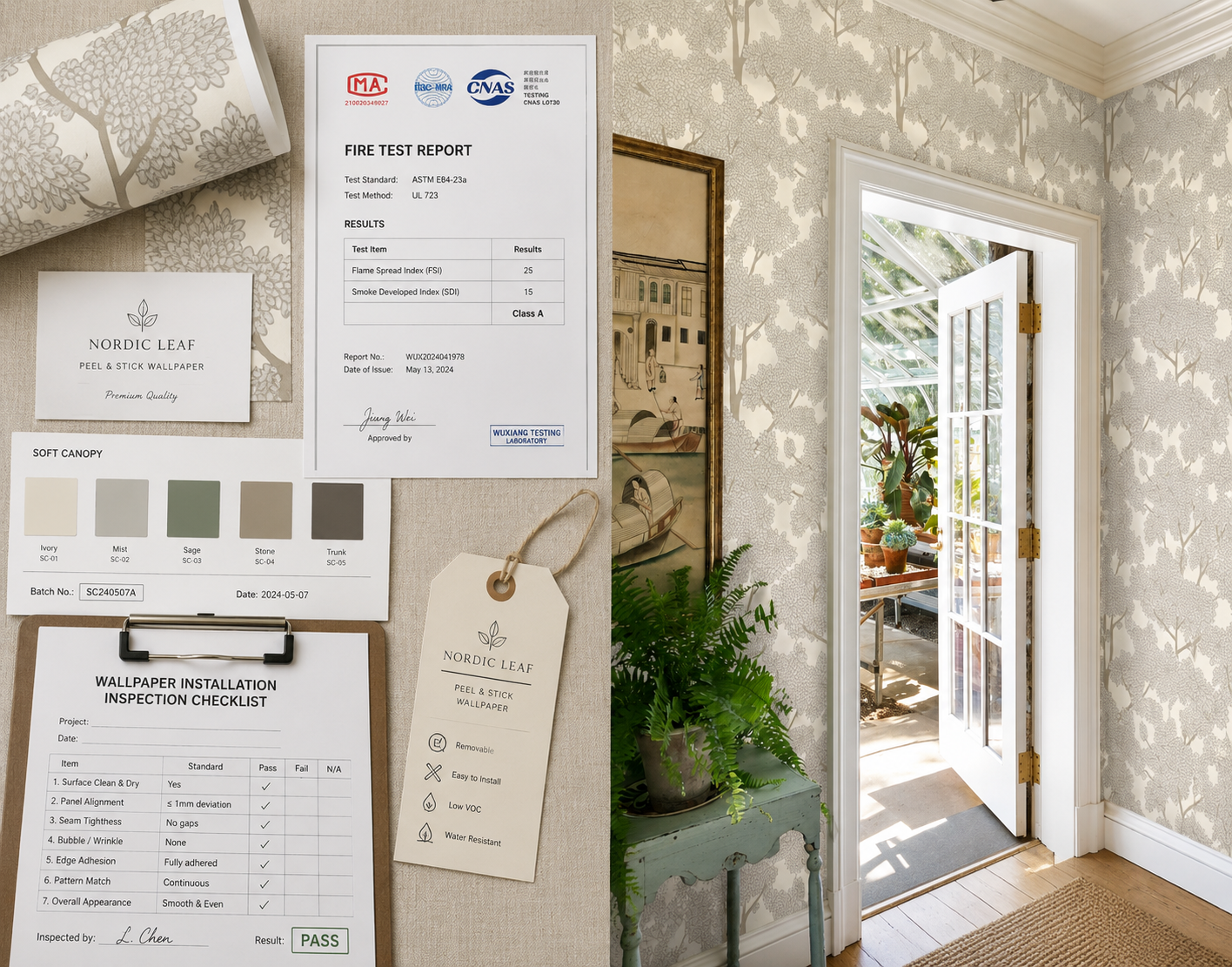
Wie lange hält selbstklebende Tapete wirklich? Ehrliche Antworten von echten Installationen
Das ist die Frage, die sich jeder Käufer stellt, bevor er eine Großbestellung aufgibt – und die Antwort der meisten Lieferanten ist frustrierend vage.
Hier ist die ehrliche Version, basierend auf realen Installationsdaten aus Wohn-, Kurzzeitmiet- und Geschäftsumgebungen: hochwertige selbstklebende Tapeten halten 5 bis 7 Jahre unter normalen Innenraumbedingungen bei ordnungsgemäßer Installation. Budgetprodukte zerfallen in der Regel innerhalb von 1 bis 3 Jahren. Und die wichtigste Variable ist nicht die Tapete selbst – sondern die Klebetechnologie dahinter.
Wenn Sie abziehbare Tapeten für einen Einzelhandelskatalog, ein Airbnb-Portfolio oder ein kommerzielles Renovierungsprogramm beschaffen, ist die Frage der Lebensdauer nicht nur akademischer Natur. Sie wirkt sich direkt auf Ihre Kundenrücklaufquote, Ihren Nachbestellzyklus und letztendlich auf den Ruf Ihrer Marke aus. Dieser Beitrag liefert Ihnen die Zahlen, die Variablen und worauf Sie bei einem Lieferanten achten sollten.
Teil 1 · Die wahren Zahlen
Wie hoch ist die tatsächliche Lebensdauer – nach Produktkategorie?
Die Bandbreite auf dem Markt ist wirklich groß. Nicht alle selbstklebenden Tapeten sind die gleiche Produktkategorie in ähnlicher Verpackung. Hier ist die Aufschlüsselung nach Kategorie, basierend auf aggregierten Installationsdaten und Materialwissenschafts-Benchmarks:
|
Produktkategorie |
Typische Lebensdauer |
Beste Umgebung |
Hauptausfallmodus |
|
Budget / dünnes Papier |
1–3 Jahre |
Räume mit geringem Verkehr, trocken |
Kantenablösung, Farbverblassen |
|
Mittelklasse mit Vinylrücken |
3–5 Jahre |
Wohnzimmer, Büros |
Nahttrennung bei Feuchtigkeit |
|
Premium-Gewebe / dickes Vinyl |
5–7+ Jahre |
Die meisten Innenräume |
Minimal, bei korrekter Vorbereitung |
|
Kommerziell (RunpWell) |
Ziel: 7–10 Jahre |
Miete, Gastgewerbe, Gewerbe |
Nur bei falscher Installation |
Das Wichtigste ist: Der Unterschied zwischen einem 2-Jahres-Produkt und einem 7-Jahres-Produkt liegt nicht primär im Design – sondern in der Klebstoffformulierung, der Substratdicke und der Fertigungsqualität. Eine dünne Papiertapete mit einem generischen Acrylklebstoff löst sich in jeder Umgebung mit moderater Luftfeuchtigkeit innerhalb weniger Monate an den Nähten ab. Ein Produkt mit Vinyl- oder Geweberücken und einem speziell entwickelten Haftklebstoff (PSA) verhält sich grundlegend anders.
Teil 2 · Was die Langlebigkeit tatsächlich bestimmt
Warum halten einige Installationen ein Jahrzehnt, während andere schon nach Monaten versagen?
Dasselbe Produkt kann je nach drei Variablen sehr unterschiedlich funktionieren. B2B-Einkäufer, die in großem Umfang beschaffen, müssen alle drei verstehen – denn die Erfahrung Ihrer Endkunden hängt von jeder einzelnen ab.
Variable 1: Klebstoffsystem
Dies ist der primäre Leistungsfaktor – und derjenige, den die meisten Käufer anhand eines Produktfotos nicht beurteilen können. Haftklebstoffe (PSAs) sind komplexe Polymersysteme, deren Verhalten sich mit Temperatur, Feuchtigkeit und Zeit ändert. Hochwertige PSAs verwenden Acrylpolymerformulierungen, die so entwickelt wurden, dass sie über einen Bereich von Oberflächenbedingungen hinweg haften. Günstigere Klebstoffe verwenden einfachere Formulierungen, die unter Umweltbelastungen schneller abgebaut werden.
Peer-reviewed materialwissenschaftliche Forschung, veröffentlicht in Scientific Reports (Nature Publishing Group) bestätigt, dass die PSA-Leistung sowohl durch Temperatur als auch durch relative Luftfeuchtigkeit messbar beeinflusst wird – insbesondere bei Luftfeuchtigkeitswerten über 65 %, wo die Feuchtigkeitsaufnahme eine Plastifizierung des Klebstoffpolymers verursachen kann, was seine Bindungseigenschaften verändert. Genau deshalb können Produkte, die als "abziehbare Tapeten" vermarktet werden, zwischen einem trockenen Schlafzimmer in Colorado und einem Miami Studio Apartment so unterschiedlich reagieren.
Variable 2: Wandvorbereitung
Der häufigste Installationsfehler ist kein Produktfehler, sondern ein Oberflächenfehler. Selbstklebende Tapeten, die auf staubige, frisch gestrichene (unter 30 Tage), strukturierte oder ausgasende Wände aufgebracht werden, werden unabhängig von der Klebstoffqualität schlechter haften. Der PSA benötigt vollen Kontakt mit einer sauberen, ausgehärteten, glatten Oberfläche, um seine vorgesehene Klebkraft zu erreichen.
Für B2B-Käufer bedeutet dies, dass die von Ihnen bereitgestellten Installationshinweise für Ihre Kunden Teil der Lebensdauerleistung Ihres Produkts sind. Ein Lieferant, der eine klare Installationsdokumentation – Oberflächenvorbereitungsschritte, Aushärtezeiten, Werkzeugempfehlungen – mitliefert, schützt den Ruf Ihres Produkts nachgelagert.
Variable 3: Umgebung
Stabile Innenräume – gemäßigte Räume mit 40-60 % relativer Luftfeuchtigkeit, ohne direkte, anhaltende Sonneneinstrahlung, ohne Nähe zu Wärmequellen – bieten die beste Langlebigkeit. Die Umgebungen, die die Lebensdauer verkürzen:
▸ Hohe Luftfeuchtigkeit: Badezimmer, Küstengrundstücke, schlecht belüftete Räume. Der Klebstoff wird weicher; Kantenablösung beschleunigt sich.
▸ Temperaturwechsel: Räume in der Nähe von HVAC-Lüftungsanlagen, Südzimmer mit saisonaler Sonneneinstrahlung. Wiederholtes Ausdehnen/Zusammenziehen belastet die Nähte.
▸ Direkte Sonneneinstrahlung: UV-Strahlung lässt Tinte verblassen und kann Oberflächenbeschichtungen auf ungeschützten Materialien innerhalb von 12-18 Monaten beschädigen.
▸ Stark frequentierte Bereiche: Treppenhäuser, Flure, Kinderzimmer. Physikalische Abnutzung an Kanten und Ecken ist der Fehlerpunkt, nicht der Klebstoff.
Airbnb- und Mietobjektbetreiber aufgepasst: Ein in einer kontrollierten Umgebung getestetes Produkt verhält sich in einer Immobilie mit 200 Gästenächten pro Jahr anders. Fordern Sie Klebstoffleistungsdaten an, die speziell auf die Bedingungen in Ihren tatsächlichen Immobilien zugeschnitten sind – nicht generische Marketingaussagen über die Lebensdauer.
Teil 3 · Was Sie Ihren Lieferanten zur Lebensdauer fragen sollten
Welche Fragen verraten Ihnen tatsächlich, ob ein Produkt halten wird?
Bei der Bewertung eines Anbieters von selbstklebenden Tapeten hinsichtlich der Haltbarkeit trennen diese Fragen die dokumentierte Leistung von der Marketingsprache:
▸ Welche PSA-Formulierung wird verwendet – Acryl oder Kautschukbasis? Acryl-PSAs übertreffen in der Regel Kautschuk-PSAs in Bezug auf Langzeit-UV- und Temperaturstabilität.
▸ Wurde die Klebstoffleistung bei Feuchtigkeitswerten über 65 % getestet? Wenn nicht, sind die Angaben zur Produktlebensdauer in feuchten Umgebungen Extrapolationen, keine Messungen.
▸ Wie dick und aus welchem Material ist das Substrat? Geweberücken und dicke Vinylsubstrate widerstehen Kantenablösung und physischer Abnutzung deutlich besser als dünnes Papier.
▸ Liefern Sie Installationsdokumentation als Teil des B2B-Pakets? Ein Lieferant, der dies nicht tut, überträgt das Risiko eines Installationsfehlers auf Ihren Kunden und letztendlich auf Ihre Marke.
▸ Wie sieht die Entfernung nach 24 Monaten aus? Nach 36 Monaten? Langzeit-Entfernungsdaten schützen die Wände Ihrer Kunden – und Ihre Nachbestellungsbeziehung.
Die ehrliche Antwort, die wir unseren eigenen B2B-Partnern geben: RunpWell-Produkte sind für eine Lebensdauer von 7–10 Jahren in stabilen Innenräumen ausgelegt, unter Verwendung von natürlichen, ökozertifizierten Rohstoffen, sieben Qualitätskontrollpunkten und einer Installationsdokumentation, die jeder Bestellung beiliegt. Wir versenden physische Muster innerhalb von 48 Stunden, damit Sie die reale Haftung in Ihrer tatsächlichen Anwendungsumgebung testen können – nicht in einem Produktvideo.
FAQs – Was Käufer und Endverbraucher tatsächlich fragen
Top-Fragen zur Haltbarkeit von selbstklebenden Tapeten
Zusammengestellt von Reddit (r/malelivingspace, r/femalelivingspace, r/airbnbhosts, r/DIY) und den meistgesuchten Google-Anfragen zur Lebensdauer von selbstklebenden Tapeten.
F: Wie lange hält selbstklebende Tapete im Badezimmer?
2-4 Jahre sind realistisch in einem regelmäßig dampfenden Badezimmer; wählen Sie feuchtigkeitsbeständige Optionen mit Vinylrücken und betreiben Sie Abluftventilatoren – der Klebstoff zersetzt sich bei über 65 % anhaltender Luftfeuchtigkeit schneller.
F: Bleibt selbstklebende Tapete jahrelang ohne Abzulösen haften?
Ja – hochwertige Vinyl- und stoffkaschierte Produkte mit hochwertigen PSA-Klebstoffen halten consistently 5-7 Jahre auf ordnungsgemäß vorbereiteten glatten Wänden unter normalen Innenraumbedingungen.
F: Beschädigt selbstklebende Tapete die Wände, wenn sie nach mehreren Jahren entfernt wird?
Qualitätsprodukte, die für eine saubere Entfernung entwickelt wurden, sollten sich nach mehreren Jahren Installation ohne Farbschäden lösen; testen Sie immer zuerst eine Ecke und entfernen Sie langsam in einem flachen Winkel – niemals abrupt abziehen.
F: Verblasst selbstklebende Tapete mit der Zeit?
UV-Exposition ist die Hauptursache für das Verblassen – in Räumen mit anhaltender direkter Sonneneinstrahlung ist bei ungeschützten Materialien innerhalb von 12-18 Monaten ein deutliches Verblassen zu erwarten; UV-beschichtete Oberflächenfolien verlängern dies erheblich.
F: Kann ich selbstklebende Tapete langfristig in einer Mietwohnung verwenden?
Ja – es ist eine der praktischsten Anwendungen; richtig auf sauberen, ausgehärteten Wänden angebracht, hält sie mehrere Mietzyklen und lässt sich sauber entfernen, wodurch die Kaution und die Wände des Vermieters geschützt werden.
F: Was lässt selbstklebende Tapete vorzeitig ablösen?
Die häufigsten Ursachen sind: Anbringung auf frisch gestrichenen Wänden (unter 30 Tagen), staubige oder fettige Oberflächen, strukturierte Wände, die die Klebefläche reduzieren, und Umgebungen mit hoher Luftfeuchtigkeit ohne feuchtigkeitsbeständigen Klebstoff.
F: Lohnt sich selbstklebende Tapete im Vergleich zu herkömmlicher Tapete in Bezug auf die Langlebigkeit?
Herkömmliche Kleistertapeten können bei einer einzelnen Anbringung länger halten, aber die Möglichkeit, selbstklebende Tapeten ohne Wandbeschädigung auszutauschen, macht die Gesamtkosten über den Lebenszyklus wettbewerbsfähig – insbesondere für Miet-, Gewerbe- und Markenauffrischungsanwendungen.
Beziehen Sie selbstklebende Tapeten für einen Einzelhandelskatalog, ein Mietportfolio oder ein gewerbliches Renovierungsprogramm?
Kontaktieren Sie das RunpWell B2B-Team – physische Muster in 48 Stunden, vollständige Installationsdokumentation und Produktspezifikationen inklusive, niedrige Mindestbestellmenge zum Start.

Hinterlasse einen Kommentar
Diese Website ist durch hCaptcha geschützt und es gelten die allgemeinen Geschäftsbedingungen und Datenschutzbestimmungen von hCaptcha.