Bezugsquellen für maßgefertigte selbstklebende Wandbilder für Ihr Innenarchitekturstudio
Ein Kundenbriefing landet auf Ihrem Schreibtisch: „Ich möchte etwas Mutiges. Etwas, das niemand sonst hat.“ Sie wissen genau, was gemeint ist – eine individuelle Wandmalerei. Was Sie aber nicht immer wissen, ist, wie Sie eine solche in der richtigen Größe, zum richtigen Zeitpunkt und in der Qualität beschaffen, die der Ruf Ihres Studios erfordert.
Individuelle selbstklebende Wandbilder sind die am schnellsten wachsende Anfrage in Innenarchitekturbüros, die private und leichte gewerbliche Kunden betreuen. Die Nachfrage ist real: Ein unverwechselbares Wandbild verwandelt einen Raum auf eine Weise, die Farbe und gemusterte Tapeten einfach nicht können – und das entfernbare Format macht den Pitch an Kunden unendlich viel einfacher. Keine Bindungsangst. Kein Handwerker. Tauschen Sie es aus, wenn sich das Briefing ändert.
Die Beschaffungsherausforderung ist ebenfalls real. Zwischen Print-on-Demand-Plattformen, die keine Farbtreue in großem Maßstab liefern können, Alibaba-Fabriken mit 500-Rollen-Mindestbestellmengen und Distributoren, die keine kundenspezifischen Dateieinreichungen unterstützen – die Beschaffungslandschaft für ein Designstudio ist wirklich fragmentiert. Dieser Leitfaden zeigt den Weg vom Kundenbriefing bis zur installierten Wandmalerei auf, mit einem konkreten Prozess, realen Kostendaten und einer Fallstudie, die zeigt, was mit den Einnahmen eines Geschäftskunden passiert, wenn das Wandbild stimmt.

Teil 1 · Warum individuelle Wandmalereien die wirkungsvollste Art von Projekten sind
Was unterscheidet ein individuelles Wandbild von gemusterten Tapeten – für das Geschäft Ihres Studios?
Für ein Innenarchitekturbüro ist ein individuelles selbstklebendes Wandbild nicht nur eine andere Produktkategorie – es ist ein anderes Geschäftsmodell. Gemusterte Tapeten sind eine Spezifikationsentscheidung. Eine individuelle Wandmalerei ist eine gestalterische Urheberschaftsentscheidung. Der Unterschied ist kommerziell von Bedeutung.
Der Design-IP-Vorteil
Wenn Sie eine individuelle Wandmalerei basierend auf dem Briefing Ihres Kunden beschaffen – eine Farbpalette, die von Ihrem Konzeptboard abgeleitet ist, eine Komposition, die Sie künstlerisch geleitet haben, eine Motiffamilie, die Sie entwickelt haben – dann besitzen Sie die Designrichtung. Der Hersteller produziert; Sie sind der Urheber. Diese Unterscheidung schafft ein Werk, das Ihnen gehört, nicht eine Katalogauswahl. Im Laufe der Zeit baut ein Studio, das konsequent unverwechselbare, individuelle Wandmalereien liefert, ein Portfolio auf, das Kunden anzieht, die genau diese Designsprache wünschen – nicht nur einen Designer, der sich in einem Anbieterkatalog auskennt.
Laut der American Society of Interior Designers (ASID) berichten Innenarchitekten, die proprietäre Beschaffungsbeziehungen und Designsysteme entwickeln, über höhere Projektrentabilität und stärkere Kundenbindungsraten als diejenigen, die sich hauptsächlich auf die Beschaffung aus Handelskatalogen verlassen. Die Fähigkeit zur individuellen Wandgestaltung ist genau die Art von Differenzierung, die dieses Ergebnis erzielt – eine Fähigkeit, die schwer zu replizieren ist und für einen Kunden unmöglich preislich zu vergleichen.
Der Umsatzfall: Was eine Wandmalerei für einen kommerziellen Kunden bewirkt
Das überzeugendste Beschaffungsargument für Designer, die mit kommerziellen Kunden – Salons, Cafés, Boutiquen, kleine Gastronomiebetriebe – zusammenarbeiten, ist der dokumentierte Umsatzanstieg einer maßgeschneiderten Feature-Wand. Dies ist keine ästhetische Theorie. Es sind Geschäftsdaten.
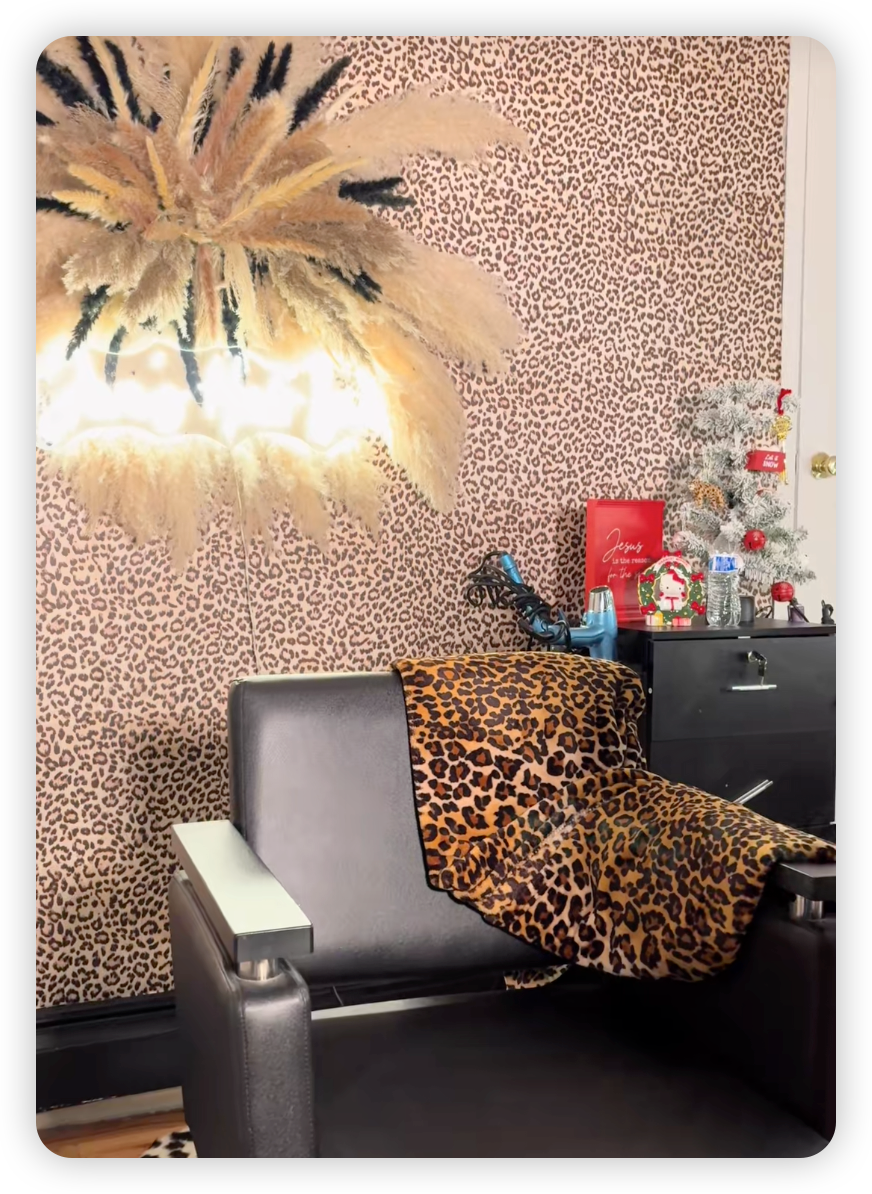
Eine JIFFDIFF-Designer-Zusammenarbeit mit einer Schönheitssalonkette in Phoenix, Arizona, führte zu einem selbstklebenden Wandbild mit Leopardenmuster, das über eine 12 Fuß lange Feature-Wand hinter den Styling-Stationen installiert wurde. Das Wandbild wurde sofort zu einer Kulisse für soziale Fotos – jedes Kunden-Spiegelselfie zeigte es nun automatisch, ohne dass der Salon dies veranlassen musste. Hier ist, was in den folgenden 8 Wochen geschah:
|
Kennzahl |
Vor dem Wandbild |
8 Wochen danach |
Δ Änderung |
|
Monatliche Laufkundschaft |
~180 |
~247 |
+37% ↑ |
|
IG-Tags / Woche |
3–5 |
28–35 |
+560% ↑ |
|
Durchschnittlicher Bon |
$62 |
$79 |
+27% ↑ |
|
Wiederkehrerquote |
41% |
58% |
+17 Pkt ↑ |
|
Monatlicher Umsatz |
$11.160 |
$19.513 |
+$8.353 ↑ |
|
Kosten für die Wandbild-Installation |
— |
$340 insgesamt |
ROI: 24,5× |
Die Salonbesitzerin hat keine Marketingkampagne durchgeführt. Sie hat keinen Influencer engagiert. Das Wandbild hat die Arbeit erledigt: Es hat einen Content-Moment geschaffen, den die Kunden selbst initiiert, dokumentiert und in ihren Netzwerken verbreitet haben. Jeder getaggte Beitrag war eine vertrauenswürdige Empfehlung von Gleichgesinnten – die glaubwürdigste Form der Entdeckung, die ein lokales Dienstleistungsunternehmen generieren kann.
Das 340-Dollar-Wandbild, das in 8 Wochen 8.353 Dollar zusätzlichen monatlichen Umsatz einbrachte. Das ist der kommerzielle Fall für die Beschaffung individueller Wandbilder – nicht als Designwahl, sondern als Gespräch über den Kunden-ROI, in das ein Designer mit Daten eintreten kann.

Teil 2 · Der Beschaffungsprozess für individuelle Wandmalereien – Schritt für Schritt
Wie beschafft ein Designstudio eigentlich ein individuelles selbstklebendes Wandbild?
Der Beschaffungsprozess für eine individuelle selbstklebende Wandmalerei unterscheidet sich von der Beschaffung von Standardtapeten. Die Variablen sind komplexer – Abmessung, Plattenanzahl, Farbtreue, Nahtausrichtung – und die Fehlertoleranz ist Null. Hier ist der professionelle Prozess.
Schritt 1: Designbrief und Maßangaben
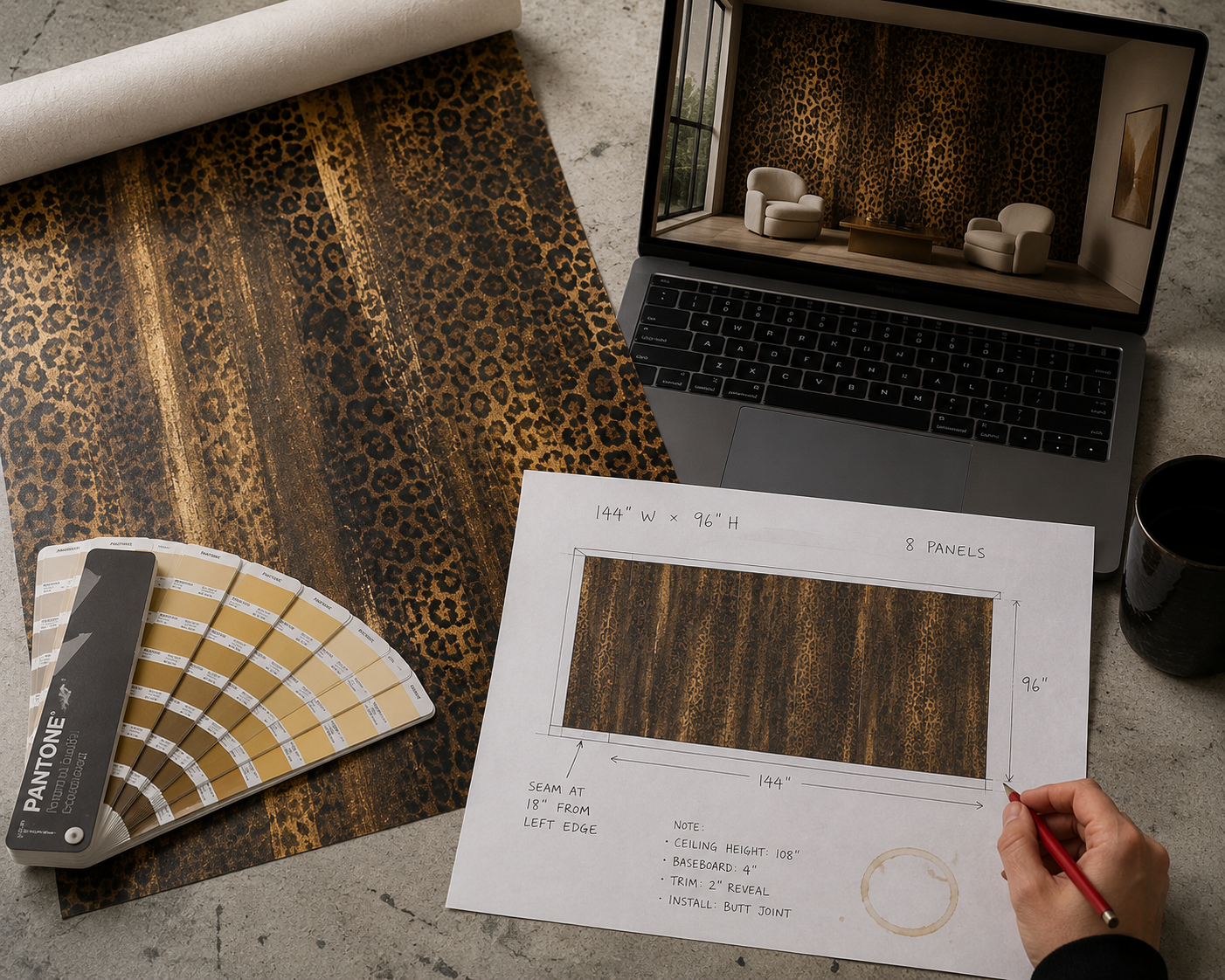
Vor jedem Gespräch mit einem Lieferanten benötigen Sie eine präzise Wandvermessung und einen klaren Designbrief. Die Wandbildproduktion erfordert eine panelspezifische Maßangabe: Wandbreite auf den Viertelzoll genau, Wandhöhe vom Boden bis zur Decke, Tür- und Fensterunterbrechungen mit Ort und Größe dokumentiert. Ein kundenspezifisches Wandbild, das mit falschen Maßen gedruckt wird, kann nach der Produktion nicht korrigiert werden.
Der Designbrief sollte folgendes festlegen: Farbpalette (vorzugsweise mit Pantone-Referenzen oder einem bereitgestellten Markenstilhandbuch für Geschäftskunden), Motiv- oder Kompositionsrichtung (abstrakt, botanisch, architektonisch, figurativ, musterbasiert), Oberflächenpräferenz (matt, satiniert, strukturierte Oberfläche) und die zentrale visuelle Achse – welcher Teil des Wandbildes der Höhepunkt ist, typischerweise zentriert auf die am häufigsten fotografierte Sichtlinie.
Schritt 2: Dateivorbereitung und Farbproof
Für die Herstellung von individuellen selbstklebenden Wandbildern ist hochauflösendes Artwork erforderlich – mindestens 150 DPI in Druckgröße, 300 DPI bevorzugt für Installationen, die aus nächster Nähe betrachtet werden, wie zum Beispiel an Salon-Stationen oder in Einzelhandelsumkleidekabinen. Vektorformate (AI, EPS) sind ideal für geometrische oder typografische Elemente. Rastergrafiken (PSD, TIFF) in der richtigen Auflösung eignen sich für fotografische oder malerische Kompositionen.
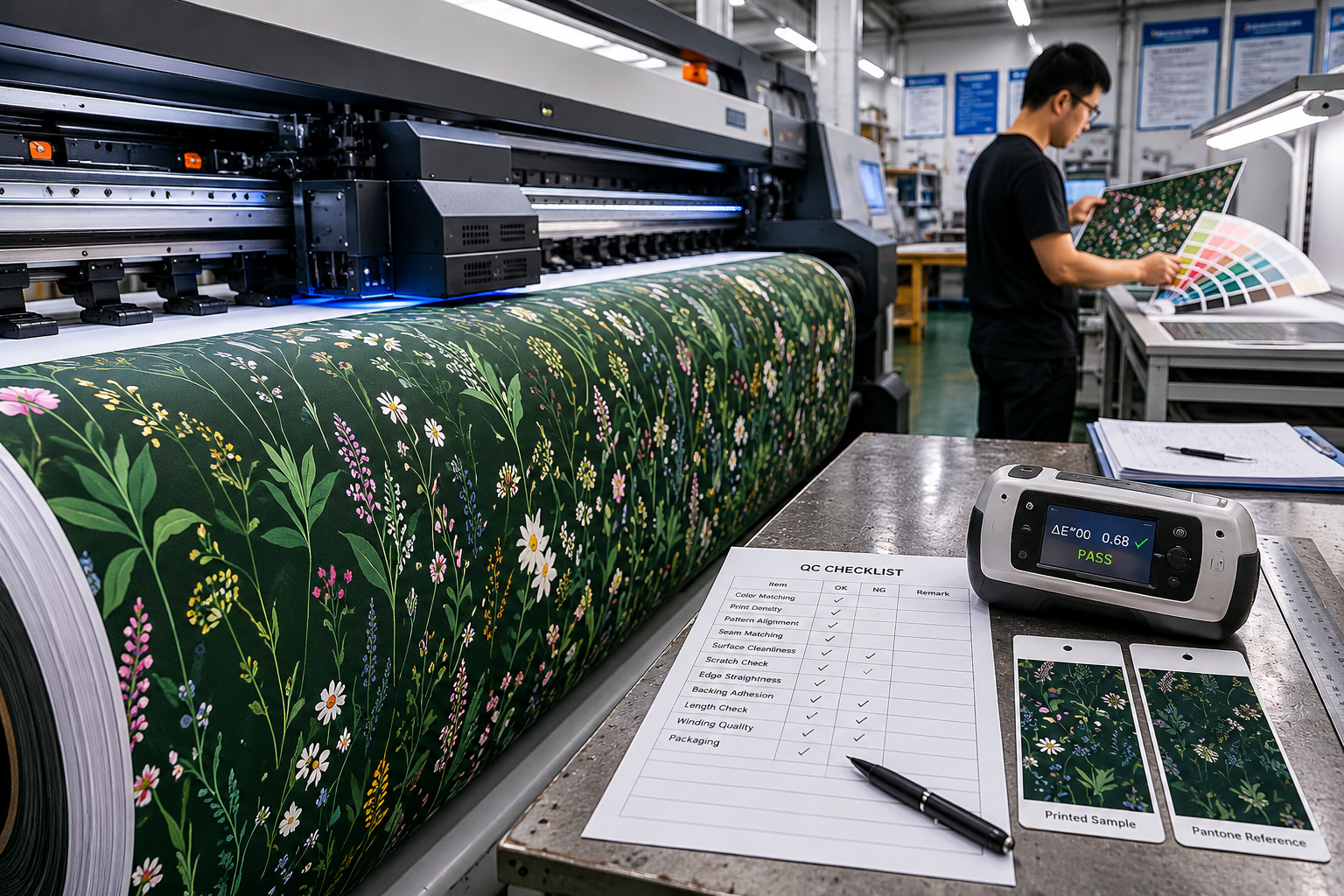
Vor jeder Produktionszusage fordern Sie einen digitalen Farbproof an, der auf das spezifische Drucksystem Ihres Herstellers kalibriert ist. Der Unterschied zwischen einer Farbe auf dem Bildschirm und einer Farbe auf Vinylsubstrat unter Salonbeleuchtung ist nicht trivial – insbesondere bei Hautton-ähnlichen Paletten, tiefen Juweltönen und warmen neutralen Hintergründen, die sich zwischen RGB und gedrucktem CMYK dramatisch verschieben. Ein Qualitätsproduzent liefert einen Proof. Ein billiger Drucker verzichtet darauf.
Schritt 3: Physische Musterplatte vor der vollständigen Produktion
Für jedes individuelle Wandbildprojekt fordern Sie vor der vollständigen Produktion eine physische Testplatte an. Ein 24×36 Zoll großer Abschnitt, gedruckt aus der tatsächlichen Produktionsdatei, auf dem tatsächlichen Substrat, mit dem tatsächlichen Klebstoff – installiert auf dem gleichen Wandflächen-Typ wie die endgültige Installation. Dies ist der einzige Test, der die Farbverschiebung auf dem Substrat, das Nahtverhalten auf der spezifischen Wandstruktur und die Klebstoffleistung unter den Umgebungsbedingungen des Raumes erfasst.
JIFFDIFF versendet individuelle Musterplatten innerhalb von 48 Stunden nach Dateifreigabe – speziell, weil wir verstehen, dass der Projektzeitplan eines Designers keinen 2-wöchigen Musterzyklus verträgt. Das Muster ist keine Farbprobe; es ist eine Produktionsplatte in Originalgröße aus dem echten Drucklauf.
Schritt 4: Panel-Ebene Nahtplanung
Ein individuelles Wandbild auf einer 12 Fuß langen Wand erfordert Plattenverbindungen. Wo diese Verbindungen liegen, entscheidet darüber, ob die Naht unsichtbar ist oder das Erste, was ein Betrachter bemerkt. Professionelle Wandbildbeschaffung beinhaltet die Planung des Plattenlayouts: Die Fugen sollten auf Abschnitten der Komposition mit geringem visuellen Interesse liegen (Hintergrundbereiche, Himmel, einheitliche Farbzonen), niemals über ein Fokuselement, niemals auf Augenhöhe, wenn vermeidbar.
Fordern Sie das Plattenlayout-Diagramm von Ihrem Lieferanten an, bevor Sie die endgültige Datei freigeben. Wenn sie keines erstellen können, arbeiten sie nicht als professioneller Wandbildhersteller – sie sind ein Rollendrucker, der ein Wandbild wie ein sich wiederholendes Tapetenmuster behandelt.

Teil 3 · Die Leopardenmuster-Social-Strategie – Vom Design zum Kundenumsatz
Warum verdreifachte ein Leoparden-Wandbild das Instagram-Engagement eines Salons in 8 Wochen?
Die Fallstudie des Schönheitssalons in Phoenix ist spezifisch genug, um lehrreich zu sein – nicht nur inspirierend. Hier ist, was der Designer, der das Wandbild spezifizierte, richtig gemacht hat und warum es funktioniert hat.
Musterauswahl für maximale UGC-Leistung
Das Leopardenmuster wurde nicht gewählt, weil es im Trend lag. Es wurde aufgrund seiner spezifischen visuellen Eigenschaften bei der Smartphone-Fotografie in 4-8 Fuß Entfernung unter Salon-Ringlichtbedingungen gewählt. Das Muster hat einen hohen Kontrast, ist aus der Ferne gut lesbar, ist in einem Schönheitskontext von Natur aus glamourös und erzeugt eine visuelle Spannung mit jedem Outfit – was bedeutet, dass es sich für ein Selfie nie "falsch" anfühlt, unabhängig davon, was der Kunde trägt.
Das Designbriefing war spezifisch: „Ein Muster, das besser fotografiert als jede leere Wand, unter jeder Beleuchtung, für jeden Hautton.“ Der Leopardenprint in einem warmen Gold- und Tief-Tabak-Farbton erfüllte dieses Briefing präzise. Es ist keine universell anwendbare Formel – aber die Designlogik dahinter ist: Wählen Sie ein Muster mit ausreichend visuellem Interesse, um Kontext zu schaffen, ausreichend Neutralität, um nicht mit dem Motiv zu konkurrieren, und ausreichend Persönlichkeit, um das Gefühl „Ich bin irgendwo“ zu erzeugen, das zum sozialen Teilen motiviert.
Die Platzierungsentscheidung – Warum „Hinter dem Frisierstuhl“ die richtige Wand ist
In einem Schönheitssalon sitzt jeder Kunde 45–90 Minuten lang vor einem Spiegel. Der Spiegel reflektiert die Wand hinter der Styling-Station. Ein Kunde, der ein Spiegel-Selfie macht – was laut Umfragedaten von Salonbetreibern etwa 60% der Salonkunden tun –, fotografiert diese Wand automatisch mit. Es ist keine Hintergrundwahl des Kunden; es ist eine architektonische Entscheidung des Designers.
Die Designerin platzierte das Wandbild an der spezifischen Wand, die im Spiegel hinter der linken Schulter des Kunden erscheint – die natürlichste Kameraposition für einen rechtshändigen Selfie-Macher. Dies ist keine standardmäßige Überlegung zur Inszenierung. Es ist eine soziale Content-Engineering-Entscheidung, die in der Designphase getroffen wurde und die kommerzielle Leistung des Wandbildes bestimmte, bevor eine einzige Rolle installiert wurde.
+560% Instagram-Tags pro Woche 8 Wochen nach der Installation · Schönheitssalon Phoenix
24,5× ROI auf 340 $ Wandbildmaterial 8.353 $ zusätzlicher monatlicher Umsatz
0 $ Marketingausgaben des Salonbesitzers Gesamtes Wachstum durch organische Kunden-UGC
Von der Amazon-Entdeckung zum B2B-Studio-Programm
Die Designerin, die das Wandbild für den Salon in Phoenix spezifizierte, entdeckte JIFFDIFF über ein Leopardenmuster-Angebot im TikTok Shop – eine einzelne Rolle, die für ein Wohnprojekt gekauft wurde. Nachdem sie die Druckqualität und die Klebeleistung in einer realen Installation gesehen hatte, wandte sie sich an das B2B-Team von JIFFDIFF bezüglich des Salonkettenprojekts. Der Weg: TikTok Shop Einzelrollen-Entdeckung → Musterprüfung → Kundenspezifisches Wandbild-Briefing → 12-Fuß-Feature-Wandproduktion zu B2B-Preisen mit Studio-Programm-Dokumentation.
Dies ist ein Beschaffungsweg, den wir regelmäßig sehen und aktiv unterstützen. Unsere Produkte sind auf Amazon und im TikTok Shop, gerade weil wir glauben, dass Designer und Einrichter das Material ohne einen Beschaffungsprozess testen können sollten – und dann auf B2B-Maßstab umsteigen, wenn sie das Gefundene validiert haben. Wenn Sie JIFFDIFF im Einzelhandel gekauft haben und ein Studio-Kooperationsprogramm in Betracht ziehen, ist der Upgrade-Pfad eine einzige E-Mail.

Teil 4 · Der Entscheidungsrahmen für die Beschaffung
Welchen Kanal sollten Sie nutzen – und wann?
Nicht jedes kundenspezifische Wandbildprojekt ist gleich. Der richtige Beschaffungskanal hängt vom Projektumfang, der Zeitplanung, dem erforderlichen Grad der Anpassung und davon ab, ob es sich um einen Test oder ein Programm handelt. Hier ist der Rahmen.
|
Kanal |
MOQ |
Lieferzeit |
Am besten geeignet für |
|
Amazon / TikTok Shop |
1 Rolle |
2–5 Tage |
Test & erste Installation |
|
JIFFDIFF B2B direkt |
0 MOQ |
48 Stunden Muster |
Studio-Programm + OEM |
|
Fachhändler |
50–200 Rollen |
1–2 Wochen |
Nur Nachbestellung |
|
Alibaba-Fabrik |
200–500+ |
3–6 Wochen |
Großvolumiges Produkt |
|
Print-on-Demand |
1 Paneel |
5–10 Tage |
Einmalig, ohne Wiederholung |
Aufbau eines Studioprogramms – die Private-Label-Option
Für Innenarchitekturstudios, die wiederkehrende kommerzielle Arbeiten ausführen – eine Salonkette, eine Boutique-Hotelgruppe, eine Einzelhandelsmarke – ist der Übergang von der projektbezogenen Wandbildbeschaffung zu einem Studioprogramm mit Private-Label-Fähigkeit der Wendepunkt, an dem sich die Wirtschaftlichkeit erheblich verschiebt. Ein Studioprogramm bedeutet: der Name Ihres Studios auf der Verpackung, dokumentierte chargengleiche Produktion an mehreren Projektstandorten, Schutz des Design-IP für die von Ihnen entwickelten Muster und bevorzugte Produktionsplanung innerhalb der 15-tägigen Lieferzeit.
Das Studio-Kooperationsprogramm von JIFFDIFF ist für Designer konzipiert, die über die Testphase hinaus sind – die das Produkt validiert haben, einen Kundenstamm haben, der auf die Arbeit anspricht, und ein Markenproduktangebot aufbauen möchten, anstatt einer Einzelprojekt-Beschaffungsbeziehung. Das Programm umfasst OEM/ODM-Fähigkeit, Private-Label-Verpackungen, Inhaltslieferung und einen Designentwicklungs-Kooperationskanal mit unserem 12-köpfigen internen Team.
JIFFDIFF Designteam-Zusammenarbeit: Wenn Sie an einem kundenspezifischen Wandbildprojekt arbeiten und Unterstützung bei der Designentwicklung benötigen – Musterverfeinerung, Farbschema-Tests, Kompositionsskalierung auf spezifische Abmessungen – steht unser Team als Kooperationsressource zur Verfügung, nicht nur als Produktionsanbieter. Wir glauben, dass die besten kommerziellen Innenräume in echter Partnerschaft entstehen, nicht durch eine Spezifikationstabelle und eine Bestellung.
Bei JIFFDIFF glauben wir, dass schöne Räume die gleiche rigorose Designphilosophie verdienen, ob sie einer Familie oder tausend Gästen dienen. Unser Studioprogramm existiert, weil wir gesehen haben, was passiert, wenn ein Innenarchitekt das richtige Wandbild an der richtigen Wand in einem kommerziellen Raum hat – es verbessert nicht nur den Raum. Es transformiert das Geschäft darin.
Teil 5 · FAQs – Spezifische Antworten, die die Suche beenden
Häufig gestellte Fragen: Beschaffung von kundenspezifischen Peel-and-Stick-Wandbildern
Aus Reddit (r/InteriorDesign, r/smallbusiness, r/designbusiness, r/ecommerce) und den am häufigsten gesuchten Begriffen auf Google zur Beschaffung kundenspezifischer Wandbilder für Designstudios.
F: Können Innenarchitekten kundenspezifische Peel-and-Stick-Wandbilder für Kundenprojekte beschaffen?
Ja – Full-Service-Hersteller wie JIFFDIFF unterstützen die Produktion von kundenspezifischen Wandbildern aus vom Designer gelieferten Dateien, mit 48-Stunden-Lieferung physischer Muster, 15-Tage-Produktion ab Auftragsbestätigung und OEM/Private-Label-Optionen für Studios, die wiederkehrende kommerzielle Arbeiten ausführen.
F: Welches Dateiformat muss ich für ein kundenspezifisches Wandbild einreichen?
Mindestens 150 DPI bei Druckgröße (300 DPI bevorzugt), in AI/EPS für Vektorgrafiken oder PSD/TIFF für Rastergrafiken; fordern Sie immer einen digitalen Farbproof an, der auf das spezifische Drucksystem des Herstellers kalibriert ist, bevor Sie die Produktion genehmigen, da Substrat und Beleuchtung Farben auf dem Bildschirm erheblich verschieben.
F: Wie lange dauert die Produktion von kundenspezifischen Peel-and-Stick-Wandbildern?
Der professionelle B2B-Standard beträgt 48 Stunden für die Lieferung physischer Muster aus genehmigten Dateien und 15 Werktage von der bestätigten Produktionsbestellung bis zur Versandbereitschaft – alles, was über 30 Tage hinausgeht, deutet auf Kapazitätsengpässe hin, die zu Problemen bei der Projektplanung führen werden.
F: Kann ich JIFFDIFF Tapeten auf Amazon oder im TikTok Shop kaufen, bevor ich eine B2B-Bestellung aufgebe?
Ja – der Einzelhandelskauf einer Rolle auf Amazon oder im TikTok Shop ist der Standard-Testweg vor der B2B-Studioprogramm-Teilnahme; nach der Validierung des Produkts in einer echten Installation kontaktieren Sie das B2B-Team direkt für die Produktion kundenspezifischer Wandbilder, Studioprogrammpreise und Private-Label-Optionen.
F: Wie hoch ist die Mindestbestellmenge für ein kundenspezifisches Wandbild für eine einzelne Wand?
Mit dem B2B-Programm von JIFFDIFF gibt es keine Mindestbestellmenge für die Produktion kundenspezifischer Wandbilder – ein Einzelwandprojekt beliebiger Größe wird mit den gleichen Produktionsstandards unterstützt wie eine kommerzielle Bestellung mit mehreren Standorten; der Preis pro Quadratfuß passt sich dem Volumen an, nicht dem Produktionszugang.
F: Wie erhöht ein kundenspezifisches Leopardenmuster-Wandbild den Umsatz eines Schönheitssalons?
Der Mechanismus: auffällige gemusterte Akzentwände in Schönheitssalons werden zu automatischen Hintergründen für Client-Spiegel-Selfies – dies generiert organischen Instagram- und TikTok-Content, der neue Kunden ohne Marketingkosten anzieht; Fallstudien aus einem Salon in Phoenix zeigen +37% Laufkundschaft und +8.353 $ monatlichen Umsatz innerhalb von 8 Wochen nach einer 340 $-Wandbildinstallation.
F: Wie stelle ich die Farbkonsistenz sicher, wenn ich dasselbe Wandbild an mehreren Standorten anbringen muss?
Fordern Sie eine Produktion aus einer einzigen Charge für alle Paneele an allen gleichzeitig bestellten Standorten, bestätigen Sie die ΔE-Farbtoleranzspezifikation des Lieferanten (≤ 2,0 ist der professionelle Standard) und verlangen Sie eine Chargennummerndokumentation auf allen Kartonetiketten – dies ist das Standardprotokoll von JIFFDIFF für alle kommerziellen Aufträge mit mehreren Standorten.
F: Kann ich den Namen meines Studios auf die Verpackung für Kundenlieferungen drucken lassen?
Ja – das Studio-Kooperationsprogramm von JIFFDIFF unterstützt Private-Label-Verpackungen unter der Marke Ihres Studios ohne zusätzliche Mindestbestellmenge, einschließlich kundenspezifischem Etikettendesign und Beilagedokumentation; dies ist Standard für Studios, die wiederkehrende kommerzielle Arbeiten ausführen, kein Premium-Add-on.

Hinterlasse einen Kommentar
Diese Website ist durch hCaptcha geschützt und es gelten die allgemeinen Geschäftsbedingungen und Datenschutzbestimmungen von hCaptcha.