
Hell vs. Dunkel in kleinen Räumen: Die überraschende Wahrheit (mit Beispielen)
Wenn Sie jemals gezögert haben, einen kleinen Raum zu tapezieren, haben Sie wahrscheinlich denselben Ratschlag gehört: „Wählen Sie helle Farben – das lässt den Raum größer wirken.“
Diese Regel funktioniert manchmal … aber sie ist nicht die ganze Wahrheit.
Die überraschende Wahrheit: In kleinen Räumen sind Kontrast und Blendung oft wichtiger als „hell vs. dunkel“.
harte Kanten reduziert. Ein heller Look kann kleiner wirken, wenn er harte Abgrenzungen schafft oder Blendung reflektiert – besonders bei Nachtbeleuchtung.
3-Sekunden-Fazit:
Warum „hell = größer“ nicht immer stimmt
Kleine Räume wirken beengt, wenn Ihre Augen die Grenzen klar „nachzeichnen“ können – wo Wand auf Leiste trifft, wo Wand auf Decke trifft, wo Ecken hervorstechen.
Drei Dinge verstärken diese Grenzen:
-
Kanten mit hohem Kontrast (zum Beispiel: helle Wand + dunkle Leisten oder scharfe Schwarz-Weiß-Muster)
- Blendung (glänzende Oberflächen, die Hotspots reflektieren)
- Ungeruhige Muster mittleren Maßstabs (Ihre Augen zählen ständig Wiederholungen)
Wenn Sie diese drei Faktoren reduzieren, kann ein Raum ruhiger und offener wirken – selbst wenn die Tapete dunkler ist.

Die wahren Treiber von „größer vs. kleiner“ (einfache Regeln)
1) Kantenkontrast (der wichtigste Faktor)
Wenn eine Tapetenauswahl den Umriss des Raumes „hervorhebt“, wirkt der Raum oft kleiner.
Abkürzung:
-
Hoher Kontrast = scharfe Kanten = engeres Gefühl
- Geringer Kontrast = weichere Kanten = offeneres Gefühl

2) Glanz (Blendung) ist genauso wichtig wie Farbe
Glänzende Oberflächen reflektieren Licht und können einen Raum aufhellen – aber sie erzeugen auch Hotspots und können die Wandstruktur hervorheben. In kleinen Räumen kann Blendung Wände „näher“ erscheinen lassen.
Sicherste Wahl für kleine Räume: matte / blendfreie Oberflächen.

3) Die Musterskala steuert „ruhig vs. unruhig“
Kleine Räume brauchen keine winzigen Muster. Sie brauchen einen sauberen visuellen Fluss.
Oft ist die sicherste Musterskala:
-
Große einfache Motive (weniger Wiederholungen = weniger visuelle Unordnung), oder
- Mikrotextur (wirkt aus der Ferne wie eine Oberfläche)
Die häufigste Risikozone ist mittel-unruhig – nicht mutig genug, um gewollt zu wirken, aber unruhig genug, um überladen zu wirken.
Hell vs. Dunkel: der schnelle Entscheidungsleitfaden (30 Sekunden)
Wählen Sie HELL, wenn…
- Der Raum sehr wenig natürliches Licht hat und Sie eine hellere Stimmung wünschen
- Sie den Kontrast kontrolliert halten können (keine harten Wand-/Leistenkonflikte)
- Sie matte/blendfreie Oberflächen verwenden, um Hotspots zu vermeiden
Helles wirkt am besten, wenn es ruhig ist, nicht schroff.
Wählen Sie DUNKEL, wenn…
- Sie Tiefe, Stimmung und einen „Kasten verschwindet“-Effekt wünschen
- Der Raum ungünstige Winkel oder kurze Wände hat und Sie einen einheitlicheren Look wünschen
- Sie einen niedrigen bis mittleren Kontrast und wenig Blendung erzielen können
Dunkel wirkt am besten, wenn es gewollt ist, nicht kontrastreich und glänzend.
Entweder hell oder dunkel kann gewinnen, wenn Sie diese 3 kontrollieren:
- Kontrast (wie scharf die Kanten wirken)
- Glanz (Blendung vs. Ruhe)
- Musterskala (unruhig vs. gewollt)
Tapetenregeln, die in kleinen Räumen fast nie versagen
Regel 1: Reduzieren Sie den „harten Schnitt“-Kontrast
Wenn Sie möchten, dass der Raum größer wirkt, wählen Sie:
- Ton-in-Ton-Muster
- ähnliche Farbfamilien
- weichere Kanten (organische oder aquarellartige Übergänge)
Wenn Sie Drama wünschen, können Sie immer noch mutig sein – aber seien Sie sich bewusst, dass scharfe Kontraste grafischer und definierter wirken.
Regel 2: Matt schlägt glänzend für kleine Räume im echten Leben
Matte Oberflächen:
- reduzieren Blendung
- wirken ruhiger bei Nachtbeleuchtung
- sind nachsichtiger bei unebenen Wänden
Regel 3: Maßstab bewusst wählen
Wählen Sie eine dieser beiden Richtungen:
-
Groß + einfach, oder
- Winzig + texturiert
Vermeiden Sie „mittel-unruhig“, wenn Ihr Ziel „größer und ruhiger“ ist.
Beispiele (reale kleine Räume und was tatsächlich funktioniert)
Beispiel 1: Winziges Schlafzimmer mit einem Fenster (nur tagsüber Licht)
Was man annimmt: „Überall hell.“
Was funktioniert: Helles kann wunderschön wirken, wenn der Kontrast weich bleibt und die Oberfläche matt.
Versuchen Sie: matte, kontrastarme Muster, die vom Türrahmen aus ruhig wirken (Mikrotextur oder große einfache Motive).
Warum: Ihr Auge hört auf, Kanten nachzuziehen, und beginnt, den Raum als eine durchgehende Fläche zu lesen.
Beispiel 2: Kleiner Flur ohne Fenster (Schatten + Deckenbeleuchtung)
Was man annimmt: „Weiß macht ihn größer.“
Die Überraschung: Ein Flur kann länger und ruhiger wirken, wenn ein tieferer Farbton den Kantenkontrast reduziert.
Versuchen Sie: dunklere Matte, subtile Textur, nicht-gerichtetes Muster (damit seltsame Ecken nicht hervorstechen).
Warum: Dunkelmatte Oberflächen können die Wände optisch „zurückdrängen“, wenn Blendung und Kontrast kontrolliert werden.
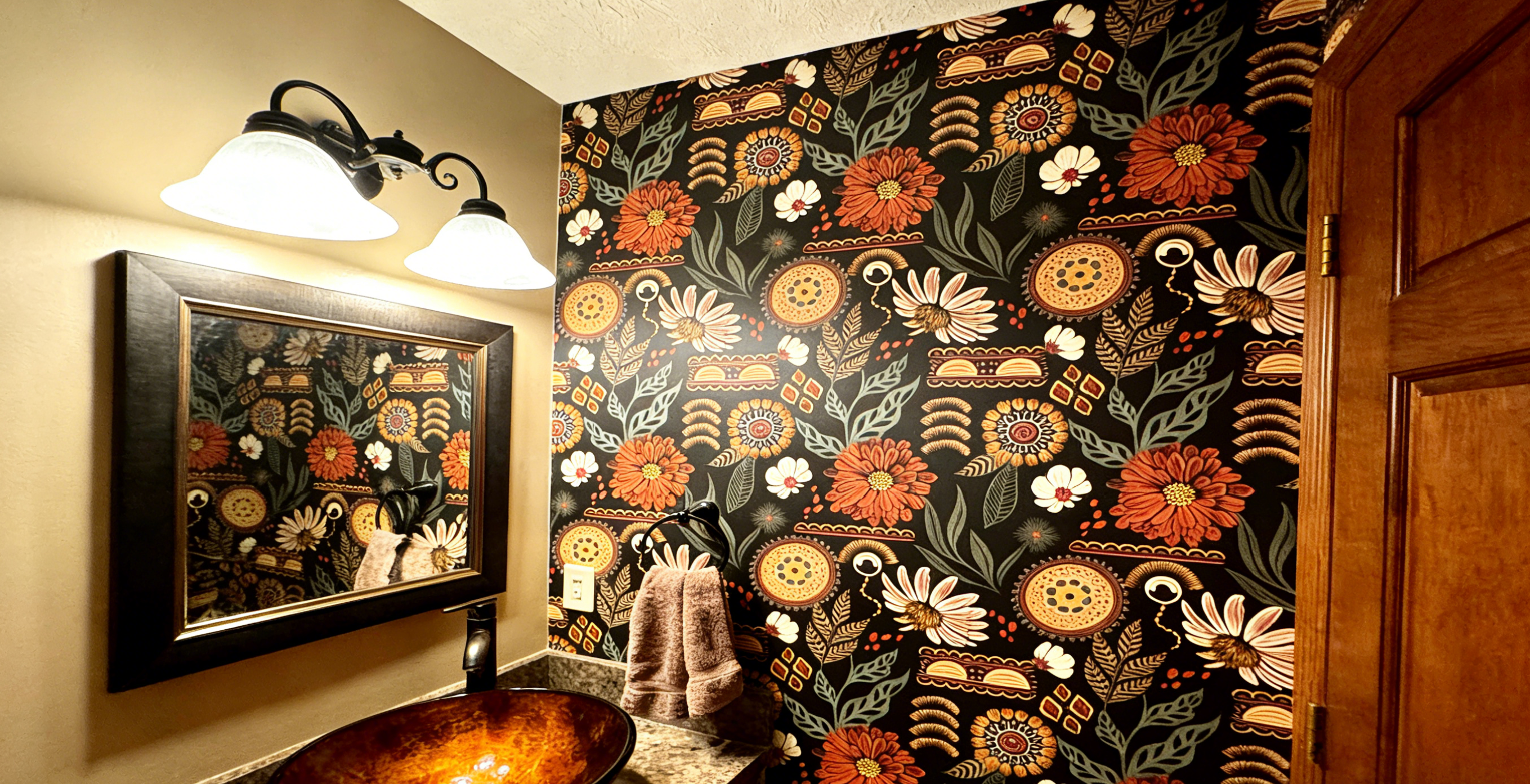
Beispiel 3: Gästetoilette (klein, aber soll besonders wirken)
Was man annimmt: „Kleiner Raum = auf Nummer sicher gehen.“
Was funktioniert: Dies ist der beste Raum, um mutig zu sein – denn es ist ein „Momentraum.“
Versuchen Sie: entweder
- große, grafische Muster (gewolltes Statement), oder
- dunkle, strukturierte Stimmung (Schmuckkästchen-Gefühl)
Warum: Gästetoiletten müssen nicht „größer“ wirken – sie müssen gestaltet wirken.
Beispiel 4: Kleines Wohnzimmer mit leicht unebenen WändenWas man annimmt: „Licht kaschiert Mängel.“
Die Wahrheit: Glanz ist wichtiger als Helligkeit.
Versuchen Sie: matt + Textur-Look + mittlere Details (vermeiden Sie scharfe Streifen/Gitter).Warum: Geringere Blendung mildert die Schatten, die Unvollkommenheiten umreißen.
Beispiel 5: Eckstudio / Mietwohnung mit ungewöhnlichen Winkeln und gemischter BeleuchtungWas man annimmt: „Nur neutrales Licht.“
Die Überraschung: Ein tieferes, kontrastarmes Muster kann unhandliche Geometrie vereinen und teurer wirken.
Versuchen Sie: nicht-gerichtete Muster, matte Oberfläche, Ton-in-Ton-Paletten.Warum: Ihr Auge hört auf, jeden Winkel zu messen, weil der Raum als ein kohärentes Ganzes wahrgenommen wird.
Beispiel 6: Kleine Küchenecke (muss abwischbar sein)Was man annimmt: „Glanz ist erforderlich.“
Was besser funktioniert: geringer Glanz (nicht Hochglanz) + Musterdetails, die nachgiebig bleiben.
Versuchen Sie: Oberflächen mit geringem Glanz und mittleren Details; vermeiden Sie superglänzende, kontrastreiche Streifen.Warum: Sie erhalten praktische Reinigungsfähigkeit, ohne die Wand in einen Spiegel zu verwandeln.
Häufige Fehler, die kleine Räume kleiner wirken lassen- Verwenden von hochkontrastreichen Leisten mit sehr hellen Wänden (umrahmt den Raum wie eine Box)
- Wählen von glänzenden Oberflächen (Blendung + Unvollkommenheiten + „Wände wirken näher“)
- Wählen von mittelmäßig unruhigen Mustern, die visuelle Unordnung hinzufügen
- Auf jeder Wand mutig sein, wo eine Akzentwand sauberer aussehen würde
- Nur bei Tageslicht beurteilen (ein Raum kann nachts von „niedlich“ zu „chaotisch“ werden)
Der 2-Minuten-Test, bevor Sie sich festlegen (einmal durchführen)
Dies ist der einfachste Weg, Reue zu vermeiden – besonders in kleinen Räumen.
- Kleben Sie ein Muster auf Augenhöhe an die Wand, die Sie zuerst sehen.
- Überprüfen Sie es bei Tageslicht und erneut bei Nachtbeleuchtung.
- Stellen Sie sich in den Türrahmen und machen Sie schnell ein Foto mit dem Handy.
- Fragen Sie: Fühlt es sich ruhig und tief an – oder unruhig und kantig?
- Wenn es kleiner wirkt: Kontrast reduzieren, Glanz reduzieren, Maßstab vereinfachen.
Nächster Schritt: Wenn Sie zwischen zwei Optionen stehen, ist der sicherere „Sieg für kleine Räume“ in der Regel die mattere, kontrastärmere Wahl.

FAQ (schnelle Antworten)
Lassen helle Farben einen kleinen Raum immer größer wirken?
Nein. Licht kann größer wirken, wenn der Kontrast weich und die Blendung gering ist. Licht kann kleiner wirken, wenn es starke Umrisse oder glänzende Hotspots erzeugt.
Kann dunkle Tapete einen kleinen Raum größer wirken lassen?
Ja – besonders wenn sie matt und kontrastarm ist. Dunkle Farben können zurücktreten und Tiefe erzeugen, wenn sie den Kantenkontrast reduzieren.
Was ist wichtiger: Farbe oder Kontrast?
In den meisten kleinen Räumen ist der Kontrast wichtiger. Harte Kontraste erzeugen scharfe Grenzen, die den Raum beengter wirken lassen können.
Sollte ich alle Wände oder nur eine in einem kleinen Raum tapezieren?
Wenn Sie unsicher sind, beginnen Sie mit einer Akzentwand. Dies ist die sauberste Option mit großer Wirkung und verhindert, dass der Raum überladen wirkt.
Welches Finish ist am besten für kleine Räume – matt oder glänzend?
Matt (blendarm) ist normalerweise am besten. Glanz kann Helligkeit hinzufügen, aber die Blendung verstärken und die Wandstruktur hervorheben.
Welcher Musterskala ist für kleine Räume am sichersten?
Entweder groß und einfach (weniger Wiederholungen) oder Mikrostruktur (wirkt wie ein Finish). Mittlere, unruhige Muster wirken am ehesten überladen.
Fazit
Bei kleinen Räumen geht es nicht um „hell vs. dunkel“. Es geht um Kontrast, Glanz (Blendung) und Musterskala.
Wenn Sie das sicherste Ergebnis mit dem größten „Geräumigkeitsgefühl“ erzielen möchten:
matt + geringer Kontrast + entweder große einfache Motive oder Mikrostruktur.
Und bevor Sie sich festlegen, machen Sie den 2-Minuten-Mustertest – Ihre Ansicht vom Türrahmen aus wird Ihnen sofort die Wahrheit sagen.

Hinterlasse einen Kommentar
Diese Website ist durch hCaptcha geschützt und es gelten die allgemeinen Geschäftsbedingungen und Datenschutzbestimmungen von hCaptcha.