Selbstklebende Tapeten für Airbnb-Vermieter: So finden, bepreisen und aktualisieren Sie Ihre Immobilie zwischen den Gästen
Der Airbnb-Markt im Jahr 2026 ist wettbewerbsintensiver als je zuvor.
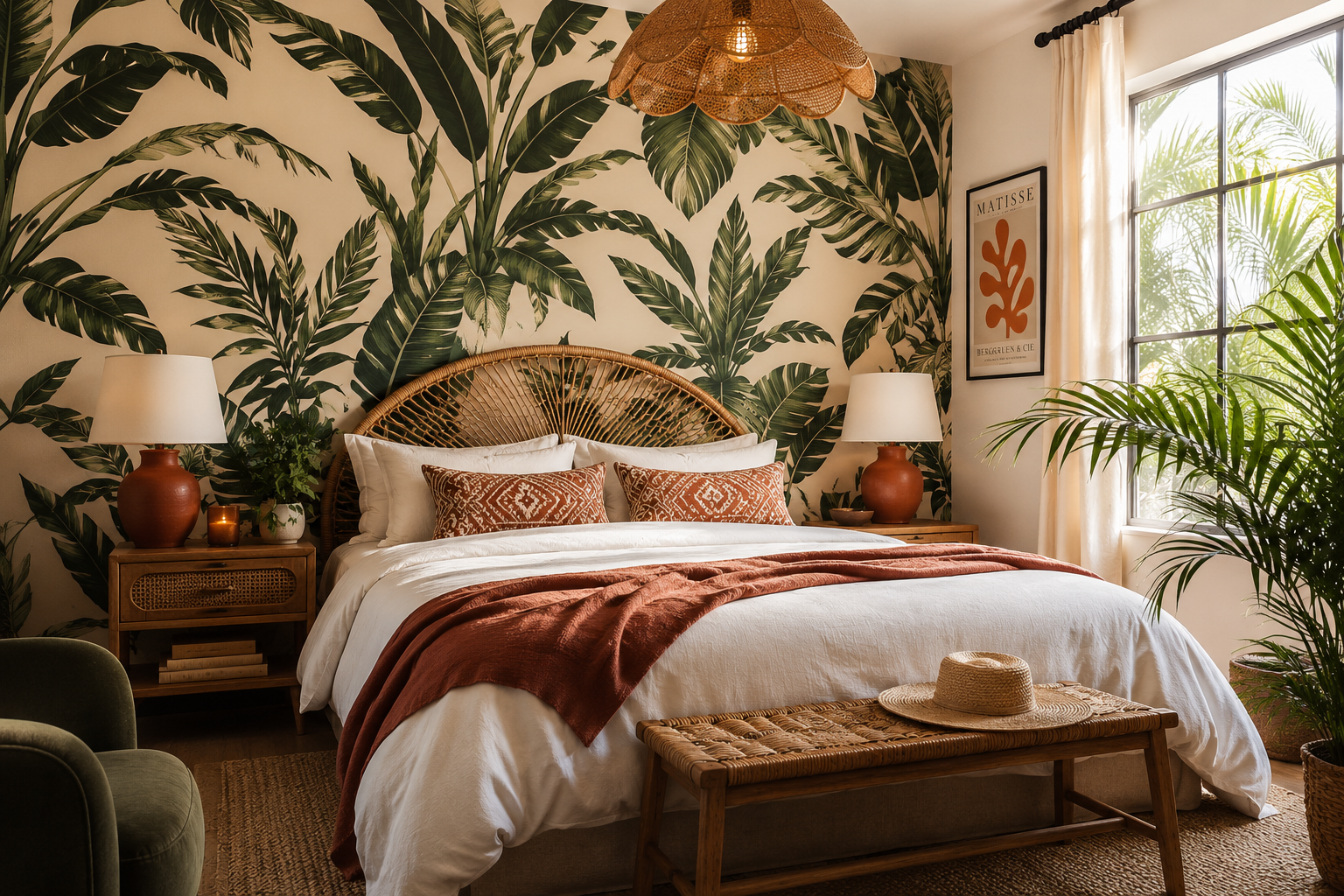
Während die durchschnittliche Auslastung in den USA bei 50–54 % liegt, sind die Objekte, die bei ADR und Bewertungs-Scores gewinnen, nicht die mit den günstigsten Preisen – es sind diejenigen, die gut fotografiert werden können, durchdacht wirken und sich merklich von einer generischen möblierten Wohnung unterscheiden. Eine starke Akzentwand ist eine der schnellsten und günstigsten Möglichkeiten, diese Unterscheidung zu schaffen. Und ablösbare Tapeten sind das einzige Format, das es Ihnen ermöglicht, sie zwischen den Gästewechseln aufzufrischen, ohne einen Handwerker rufen zu müssen.
Dieser Leitfaden richtet sich an Airbnb-Gastgeber und STR-Betreiber, die einen praktischen Beschaffungs- und Preisrahmen wünschen – keine allgemeine Designinspiration. Wir werden behandeln, wie man einen B2B-Tapetenlieferanten bewertet, wie die tatsächlichen Kosten über ein Portfolio von mehreren Objekten aussehen und wie man Design-Erneuerungszyklen als Buchungs- und Umsatzhebel nutzt.
Teil 1 · Die Business-Argumentation
Warum hat Wandgestaltung einen messbaren Einfluss auf den Airbnb-Umsatz?
Dies ist keine ästhetische Theorie – es sind Buchungsdaten. Die Branchenanalyse der Airbnb-Performance im Jahr 2026 zeigt durchweg, dass die Designqualität eine direkte, messbare Beziehung zu ADR und Auslastung hat. Die Zahlen, die es zu verstehen gilt:
10–25% ADR-Steigerung durch gezielte Innenarchitektur in wettbewerbsintensiven US-Märkten
11,2% zusätzliche Preissetzungsmacht pro 1-Punkt-Erhöhung der Gästebewertung
22% höhere Klickrate bei Angeboten mit lokalen oder markanten visuellen Elementen
64% höhere Jahreseinnahmen für Superhosts im Vergleich zu Standard-Hosts (Airbnb, 2024)
Der Mechanismus ist unkompliziert. Gastentscheidungen werden innerhalb von 3–5 Sekunden beim Durchsuchen von Fotos getroffen. Eine denkwürdige Akzentwand – der richtige botanische Druck im Schlafzimmer, ein geometrisches Wandbild hinter dem Sofa – schafft den Scroll-Stop-Moment, der einen Suchenden zu einem Bucher macht. Sobald der Gast in der Unterkunft ist, treibt dasselbe Designelement die Bewertungssprache an, die Ihren Preis in der nächsten Saison rechtfertigt.
Für einen tieferen Kontext, wie der Airbnb-Algorithmus die Qualität der Angebote und das Gästeerlebnis bewertet, bietet das Airbnb Resource Center für Gastgeber maßgebliche Anleitungen zu den Faktoren, die die Sichtbarkeit von Angeboten und die Buchungsleistung beeinflussen – direkt von der Plattform.
Teil 2 · Die Kostenrechnung für STR-Betreiber
Was kostet eine Ablösbare-Tapeten-Auffrischung über ein Portfolio hinweg?
Der relevante Kostenvergleich für einen Airbnb-Gastgeber ist nicht ablösbare Tapete versus traditionelle Tapete. Es ist ablösbare Tapete versus Farbe – denn Farbe ist die Standard-Auffrischungsoption, die die meisten Betreiber zwischen den Vermietungen verwenden. Hier ist die tatsächliche Rechnung für eine Standard-Schlafzimmer-Akzentwand (ca. 9-11 Quadratmeter):
Farb-Auffrischung
• Materialien: 40–80 $ (Premiumfarbe + Grundierung)
• Arbeitsaufwand: 200–400 $ (professioneller Maler, 1 Zimmer / halber Tag Minimum)
• Ausfallzeit: 24–48 Stunden Trockenzeit vor Gästezugang
• Ergebnis: Neutrale Wand – gleiches Aussehen wie jede andere Mietwohnung
Ablösbare Tapeten-Auffrischung
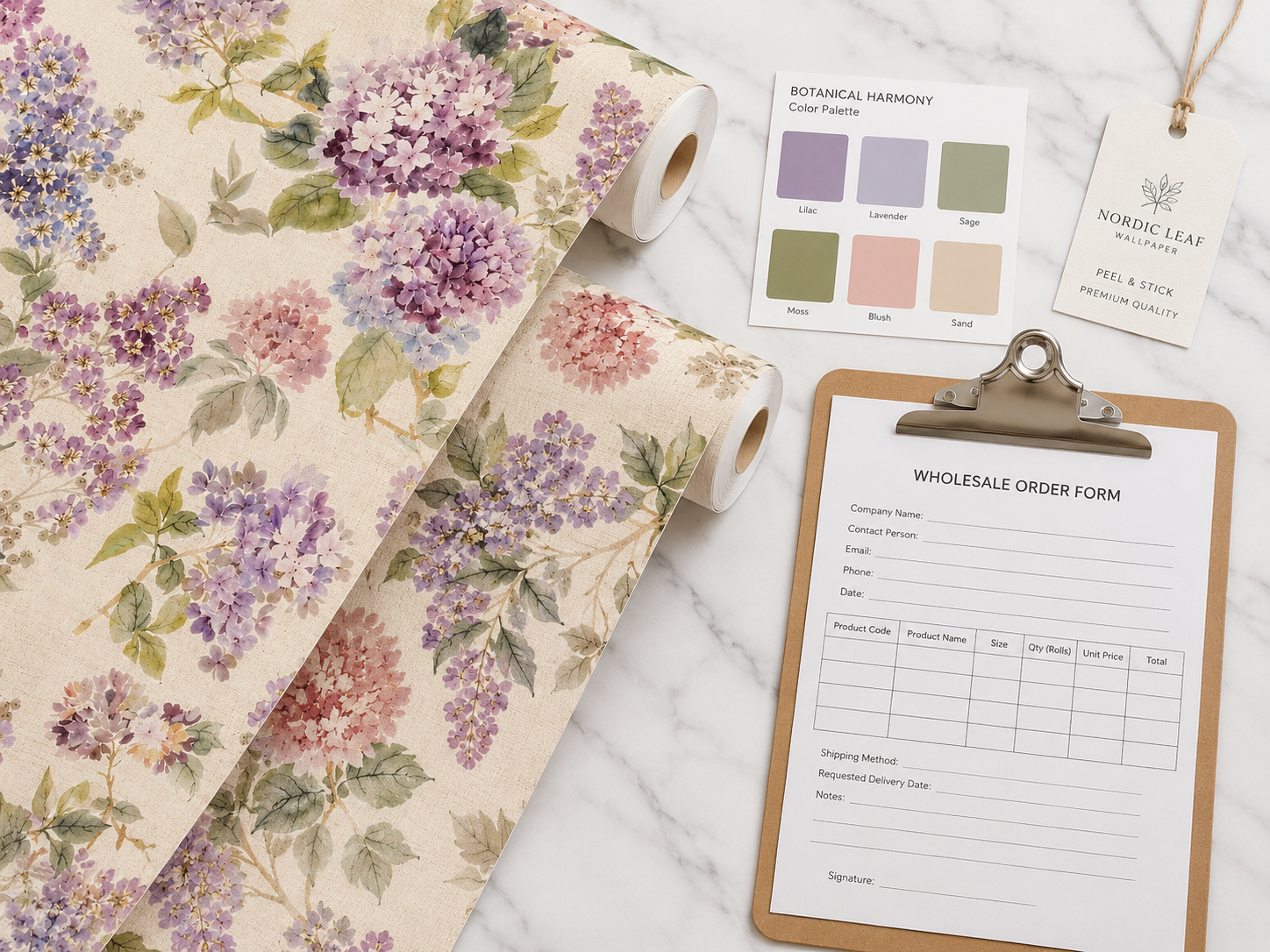
• Materialien (Großhandelspreise B2B): 120–280 $ für eine 9-11 qm große Akzentwand
• Arbeitsaufwand: 0 $ — selbst zu installieren in 2–4 Stunden, kein Spezialist erforderlich
• Ausfallzeit: 0 Stunden — Kleber haftet sofort; Zimmer ist noch am selben Tag für Gäste bereit
• Ergebnis: Markanter visueller Moment, der für die Aktualisierung des Angebots ohne zusätzliche Kosten fotografiert werden kann
Portfolio-Rechnung: Ein Betreiber, der 8 Airbnbs verwaltet und die Akzentwände jährlich auffrischt, gibt pro Zyklus ca. 2.400–4.800 $ für Farbe + Arbeitsaufwand aus. Die gleiche Auffrischung mit selbstklebender Tapete kostet 960–2.240 $ an Material – ohne Arbeitskosten und mit sofortiger Fertigstellung. Der Designeffekt ist auf den Angebotsfotos kategorisch anders.
Die Entfernungskosten sind der Punkt, an dem sich der Vorteil von ablösbaren Tapeten über mehrere Zyklen hinweg summiert. Die Entfernung traditioneller Tapeten kostet 0,60–3,00 $ pro Quadratfuß an professionellem Arbeitsaufwand – das sind 60–360 $ pro Akzentwand, pro Zyklus, bevor die nächste Installation beginnt. Hochwertige selbstklebende Tapeten lassen sich in 15–30 Minuten von Hand abziehen, ohne die Wand zu beschädigen und ohne professionellen Arbeitsaufwand.
Teil 3 · Wie man das richtige Produkt beschafft
Worauf sollten Airbnb-Gastgeber bei einem B2B-Tapetenlieferanten achten?
Verbrauchertapeten sind für eine einmalige Installation konzipiert. Eine Airbnb-Immobilie kann über fünf Jahre 3–5 Design-Auffrischungszyklen durchlaufen, mit 150–200 Gastnächten Abnutzung pro Jahr dazwischen. Das ist ein wesentlich anderer Haltbarkeitsanspruch – und die meisten Produkte für Verbraucher sind dafür nicht ausgelegt.
Hier ist die Checkliste für die Lieferantenbewertung, die für die STR-Beschaffung wichtig ist:
|
Was zu überprüfen ist |
Warum es für Airbnb wichtig ist |
Grünes Licht Antwort |
|
Physisches Muster in 48 Stunden |
Testet die echte Haftung an Ihrer Wand |
Versand innerhalb von 48 Stunden, ohne Ausreden |
|
Adhäsion Feuchtigkeitstest |
Bäder + Dampf = Risiko von Kantenablösungen |
Getestet bei 65%+ relativer Luftfeuchtigkeit – Daten verfügbar |
|
ΔE Farbtoleranz (≤2.0) |
Konsistenz in mehreren Räumen |
Schriftliche Spezifikation vorhanden |
|
Produktion in Einzelcharge |
Gleiche Farbe von Raum zu Raum |
Pro Bestellung bestätigt |
|
Entfernungsdaten nach 12–24 Monaten |
Schützt Wände zwischen den Mietzeiten |
Saubere Entfernung dokumentiert |
|
Foto-/Inhaltsmaterial enthalten |
Sie benötigen Heldenschüsse für Inserate |
Im B2B-Paket enthalten, nicht extra |
|
0 Mindestbestellmenge / Kleinserie verfügbar |
Testen, bevor man sich für 15 Zimmer entscheidet |
Einzelrolle oder 0 Mindestbestellmenge bestätigt |

Der 48-Stunden-Muster-Test
Bevor Sie eine einzige Großhandelsbestellung aufgeben, fordern Sie physische Muster von jedem Lieferanten an, den Sie bewerten. Installieren Sie diese in einer tatsächlichen Immobilie – idealerweise an der wandseitigen Wand zum Badezimmer, die der höchsten Feuchtigkeit ausgesetzt ist. Lassen Sie sie zwei bis drei Wochen lang unter normaler Gästebesetzung dort. Wenn es in diesem Zeitraum zu Kantenablösungen, Blasenbildung oder Haftversagen kommt, haben Sie das Problem erkannt, bevor es in 15 Zimmern auftritt.
Ein Lieferant, der kein physisches Muster innerhalb von 48 Stunden nach Ihrer Anfrage versenden kann, hat bereits etwas Wichtiges über seine operative Bereitschaft gezeigt. Bei jiffdiff werden Muster standardmäßig innerhalb von 48 Stunden versandt – denn ein Käufer, der das Produkt in den Händen gehalten hat, trifft bessere Beschaffungsentscheidungen, und das schützt beide Seiten der Beziehung.
Teil 4 · Designstrategie für STR-Leistung
Welche Designs fördern tatsächlich Buchungen – und wie oft sollten Sie sie auffrischen?
Nicht alle Tapetendesigns funktionieren gleich gut bei Airbnb-Angebotsfotos. Die Muster, die im Jahr 2026 zum Scroll-Stop und zu Buchungsentscheidungen führen, weisen spezifische visuelle Merkmale auf – und sie unterscheiden sich von dem, was in einem Showroom gut aussieht.
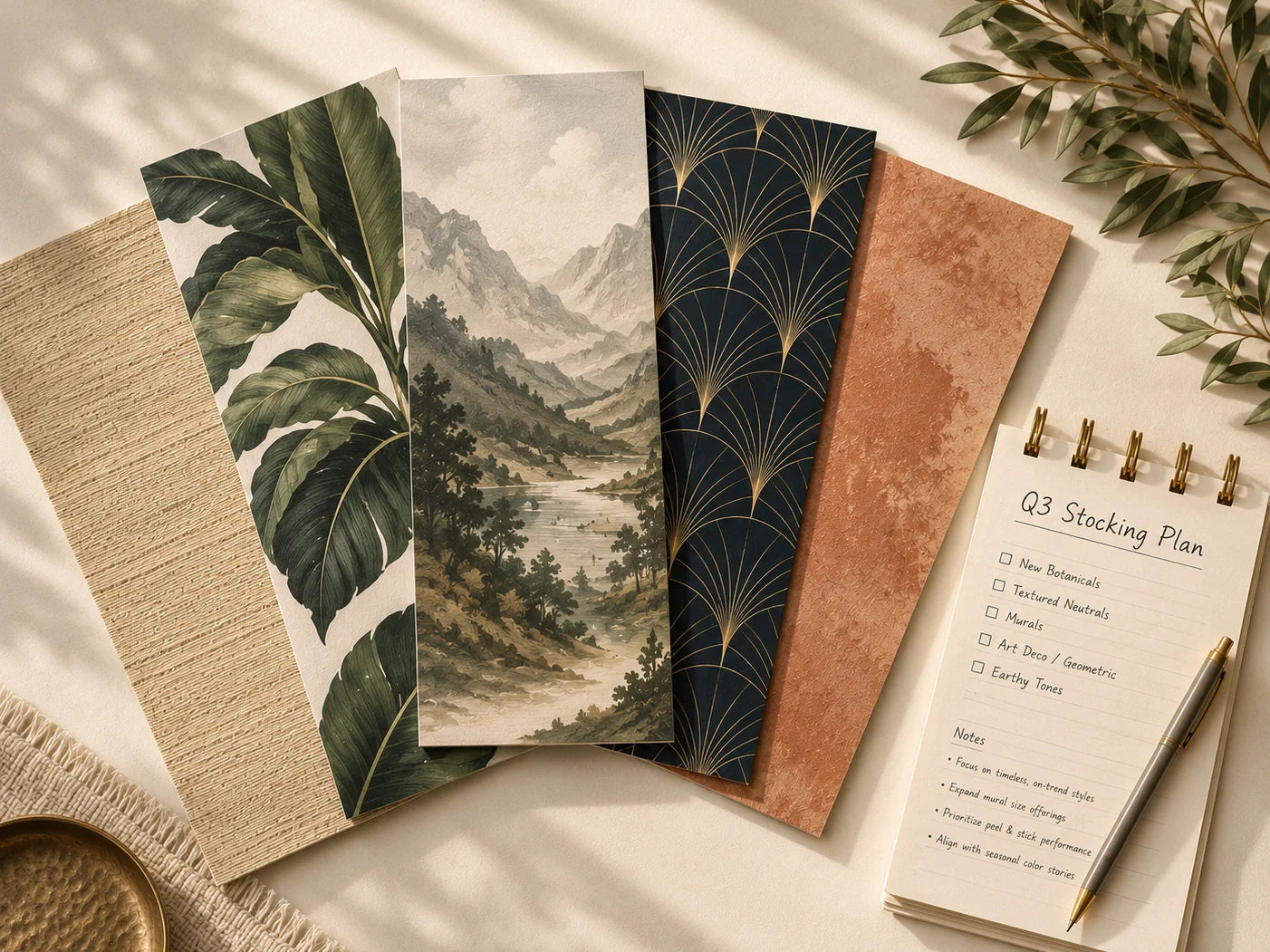
Designs, die gut fotografiert werden und Buchungen fördern
• Botanisch / floral (großformatig): Hoher visueller Kontrast in Angebotsfotos; vermittelt „dies ist keine generische Mietwohnung“. Funktioniert in Schlafzimmern und Wohnzimmern. Die leistungsstärkste Kategorie in den STR-Designdaten für 2025–2026.
• Geometrisch (Türkis, Terrakotta, Salbei): Starke architektonische Wirkung bei weiteren Blickwinkeln; funktioniert in Wohnzimmern und Essbereichen, wo die ganze Wand oft im Bild ist.
• Texturiert / Grasgewebe-Optik: Fügt haptische Fülle hinzu, die in Nahaufnahmen Qualität vermittelt; wirkt in Angebotsfotos „designt“ statt „DIY“.
• Wandbild / Feature-Wand-Format: Ein einzelnes Statement-Panel hinter dem Bett oder Sofa; die einfachste und wirkungsvollste Aufwertung mit dem klarsten ROI auf die Leistung der Angebotsfotos.
Auffrischungsfrequenz: Der richtige Zyklus für STR
Die meisten STR-Designberater empfehlen einen visuellen Auffrischungszyklus von 12–18 Monaten für stark frequentierte Objekte – nicht, weil die Tapete versagt, sondern weil die Frische der Angebotsfotos mit der Algorithmus-Sichtbarkeit auf der Plattform korreliert. Ein neues Hero-Foto führt zu einem Anstieg der Klickrate, der sich direkt in Buchungen umwandelt.
Das praktische Modell: Behalten Sie das Kerndesign für 12–18 Monate bei, dann erneuern Sie ein oder zwei wichtige visuelle Akzente (die Schlafzimmer-Akzentwand, das Wohnzimmer-Feature-Panel) mit einem neuen Muster. Die Gesamtkosten einer gezielten Design-Auffrischung – ein bis zwei Wände – belaufen sich auf 200–500 $ an Material zu Großhandels-B2B-Preisen. Die Aktualisierung des Angebotsfotos ist kostenlos. Der Buchungseffekt ist innerhalb von 30 Tagen messbar.
Wichtig für Betreiber mehrerer Immobilien: Bestellen Sie alle Rollen für eine einzelne Immobilie aus derselben Produktionscharge. Die Farbkonsistenz von Raum zu Raum ist wichtig für Immobilien, die Gruppen beherbergen – Gäste, die in verschiedenen Zimmern schlafen, werden bemerken, wenn dasselbe Design an verschiedenen Wänden unterschiedlich aussieht. Bestätigen Sie die Produktion in einer einzigen Charge schriftlich vor jeder Großbestellung.
FAQs – Was Airbnb-Gastgeber fragen
Häufig gestellte Fragen zu ablösbaren Tapeten für STR-Immobilien
Entnommen aus Reddit (r/airbnbhosts, r/ShortTermRentals, r/realestateinvesting) und Googles Top-Suchanfragen zu STR-Innenarchitektur und Tapetenbeschaffung.
F: Bleibt die ablösbare Tapete wirklich haften, wenn Gäste kommen und gehen?
Ja – hochwertige selbstklebende Tapeten mit Stoffrücken oder dickem Vinyl halten normalem Gästeverkehr gut stand; der Ausfallgrund ist immer ein Installationsfehler oder eine inkompatible Wandvorbereitung, nicht die Produktqualität bei normalem Gebrauch.
F: Wie entferne ich ablösbare Tapeten, ohne die Mietwände zu beschädigen?
Langsam in einem flachen Winkel von 15–30 Grad abziehen, hartnäckige Kanten mit einem Föhn auf niedriger Stufe erwärmen und niemals reißen – hochwertige PSA-Klebstoffe lösen sich bei korrekter Entfernung sauber von ausgehärtetem gestrichenem Trockenbau, ohne Farbe abzulösen.
F: Ist es sicher, ablösbare Tapeten in einem Badezimmer oder einem Bereich mit hoher Luftfeuchtigkeit anzubringen?
Speziell formulierte feuchtigkeitsbeständige Varianten können in der Nähe von Badezimmern funktionieren; vergewissern Sie sich immer, dass der Lieferant die Haftung über 65 % relativer Luftfeuchtigkeit getestet hat, und vermeiden Sie die direkte Anbringung an Wänden, die mit Spritzwasser in Kontakt kommen.
F: Wie viel Tapete benötige ich für eine Akzentwand in einem Standard-Airbnb-Schlafzimmer?
Für eine Standard-Akzentwand in einem Schlafzimmer mit 3,6 m Breite und 2,4 m Deckenhöhe werden ca. 9,3–11,1 Quadratmeter Tapete benötigt; rechnen Sie 10–15 % für Musteranpassung und Verschnitt hinzu und bestellen Sie immer aus derselben Charge.
F: Woher beziehen Airbnb-Gastgeber Großhandelsware für abziehbare und aufklebbare Tapeten?
B2B-Hersteller mit 0 Mindestbestellmenge für Muster, 48-Stunden-Lieferzeit für physische Muster und chargenkonstanter Produktion sind der Standard, nach dem man suchen sollte – vermeiden Sie den Einzelhandel für größere Mengen, da sowohl die Preise als auch die Chargenkonsistenz schlechter sind.
F: Wie oft sollte ich meine Airbnb-Tapete erneuern?
Hochwertige selbstklebende Tapeten halten unter normalen STR-Bedingungen 5–7 Jahre, aber die meisten erfahrenen Gastgeber erneuern Akzentwände alle 12–18 Monate, um die Angebotsfotos aktuell zu halten und die Algorithmus-Sichtbarkeit auf der Plattform zu gewährleisten.
F: Kann ich in einem Mietobjekt abziehbare und aufklebbare Tapeten ohne Erlaubnis des Vermieters verwenden?
Dies hängt ganz von Ihrem Mietvertrag ab; die meisten entfernbaren Tapeten hinterlassen beim Entfernen keine Schäden an den Wänden, aber überprüfen Sie immer Ihren Mietvertrag und erwägen Sie, die Installation vorher und nachher mit Fotos zu dokumentieren.

Hinterlasse einen Kommentar
Diese Website ist durch hCaptcha geschützt und es gelten die allgemeinen Geschäftsbedingungen und Datenschutzbestimmungen von hCaptcha.