Verträge mit Lieferanten von selbstklebenden Tapeten: Was Sie vor der Unterzeichnung aushandeln sollten
Eine Tapete ist mehr als nur eine Wandverkleidung – sie erneuert still und leise die Atmosphäre eines Raumes.
— JIFFDIFF
Die meisten B2B-Tapetenkäufer nähern sich ihrem ersten Lieferantenvertrag so, wie sie einen Software-Testvertrag angehen würden: bis zum Ende scrollen, auf „Akzeptieren“ klicken und sich wieder dem Aufbau des Geschäfts widmen. Das ist ein 50.000-Dollar-Fehler, der acht Monate später auftauchen wird, wenn die Chargenkonsistenz abweicht, die Zahlungsbedingungen sich als unzumutbar eng erweisen, eine IP-Klausel, die Sie nicht gelesen haben, dem Lieferanten tatsächlich eine Lizenz zum Weiterverkauf Ihrer kundenspezifischen Designs gewährt oder eine Preiseskalationsklausel einen 12%igen Sprung auslöst, den Sie nicht ohne Kundenverlust absorbieren können.
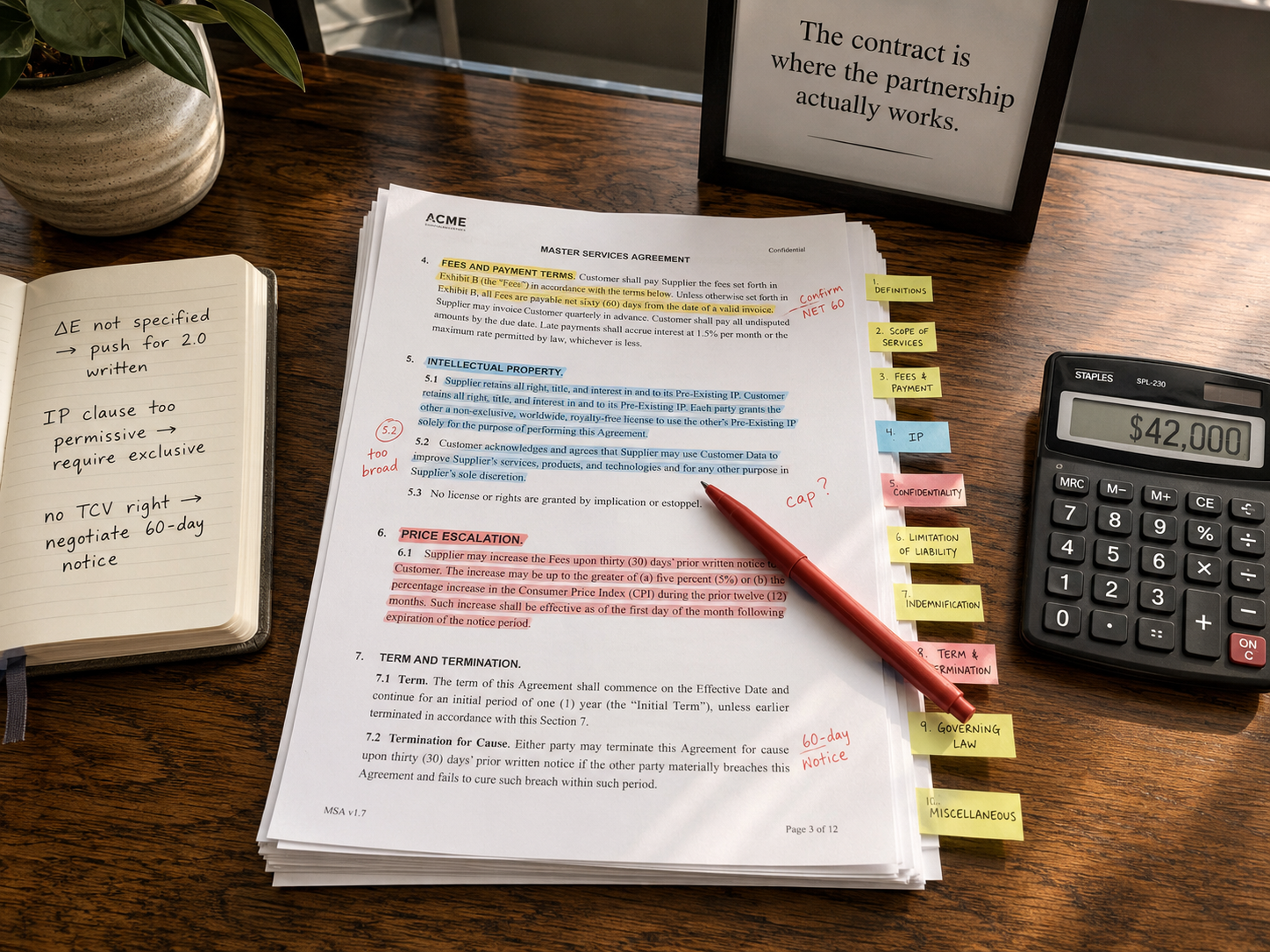
Der Liefervertrag ist das Dokument, das festlegt, wie die Beziehung tatsächlich funktioniert, sobald das Geschäft beginnt. Preise, Lieferzeiten, Farbtoleranz, Zahlungsrhythmus, IP-Eigentum, Kündigungsrechte, Mängelbehebungen und die Dutzend anderer operativer Realitäten der Zusammenarbeit mit einem Tapetenhersteller werden alle im Vertrag entschieden – nicht im Verkaufsgespräch. Dieser Leitfaden ist die praktische Referenz für B2B-Käufer im Bereich Peel-and-Stick-Tapetenbeschaffung: was zu verhandeln ist, wie man es verhandelt, die spezifische Sprache, die Ihr Geschäft schützt, und die roten Flaggen, die das Gespräch beenden sollten, bevor eine einzige Bestellung aufgegeben wird.
Teil 1 · Warum der Vertrag wichtiger ist als das Angebot
Was passiert eigentlich, wenn Sie die Verhandlung der operativen Klauseln überspringen?
Das Großhandelsangebot erregt Ihre Aufmerksamkeit. Die Vertragsklauseln bestimmen, ob der Preis tatsächlich hält, ob das Produkt pünktlich ankommt, ob die Farben über Chargen hinweg tatsächlich übereinstimmen und ob Sie die Beziehung tatsächlich beenden können, wenn sie nicht mehr funktioniert. Die meisten B2B-Käufer unterschätzen den Vertrag, weil das Angebot konkret erscheint und die Klauseln theoretisch wirken – bis die Klauseln auf ungünstige Weise sehr konkret werden.
5–9% Umsatzverlust durch schlechtes Vertragsmanagement Branchenstudie, 2026
55% der B2B-Rechnungen in Nordamerika sind überfällig Atradius/Kreditversicherungsdaten, 2025
80% der Beschaffungsfunktionen sind sich der wettbewerbsfähigen Vertragsbedingungen nicht vollständig bewusst McKinsey Beschaffungsstudie
40 Tage durchschnittliche Bearbeitungszeit für B2B-Verträge Branchen-Benchmark
Die Disziplin der Vertragsverhandlung ist keine reine Unternehmenspraxis. Die U.S. Small Business Administration – die Bundesbehörde für kleine Unternehmensabläufe – identifiziert Vertragsklarheit und -verhandlung immer wieder als eine der wirkungsvollsten und kostengünstigsten Geschäftsschutzmaßnahmen, die wachsenden Unternehmen zur Verfügung stehen. Die Kosten für eine gute Vertragsverhandlung belaufen sich auf Stunden; die Kosten für den Betrieb unter einem schlecht verhandelten Vertrag sind Monate der Margenerosion, die oft erst dann zum Vorschein kommt, wenn die Beziehung bereits irreparabel ist.
Die vier Fehlerquellen un-verhandelter Verträge
• Margenkompression durch einseitige Preiserhöhungen. Der Lieferant erhöht die Preise im zweiten Jahr um 8 %; Sie haben vertraglich keine Möglichkeit, sich zu wehren; Ihre Einzelhandelspreise sind festgelegt; Sie absorbieren den Margenverlust direkt.
• Operative Abweichungen durch fehlende SLAs. Die pünktliche Lieferung sinkt innerhalb von sechs Monaten von 97 % auf 78 %; der Vertrag enthält keinen SLA-Schwellenwert; Sie haben kein einklagbares Rechtsmittel; Ihr Lagerzyklus ist unterbrochen, bevor Sie Kündigungsgründe haben.
• IP-Verlust durch mehrdeutige Designklauseln. Ihre kundenspezifischen OEM-Designs erscheinen im folgenden Quartal unter einer konkurrierenden Marke; Sie stellen fest, dass der Vertrag dem Hersteller eine „Co-Entwicklungslizenz“ gewährt hat, die Sie nicht bemerkt haben; die Kosten für die rechtliche Wiederherstellung sind höher als der Wert des IP.
• Cashflow-Belastung durch käuferunfreundliche Zahlungsbedingungen. Sie zahlen 100 % im Voraus für alle Bestellungen; gleichzeitig zahlen Ihre Kunden Ihnen erst nach 60 Tagen; die Lücke im Betriebskapital frisst Ihre operativen Rücklagen in Wachstumsphasen auf.
Teil 2 · Die 10 Klauseln, die Sie vor der Unterzeichnung verhandeln sollten
Welche Vertragsbedingungen bestimmen tatsächlich die Gesundheit der Lieferantenbeziehung?
Jeder Tapetenliefervertrag ist in seiner Formulierung einzigartig, aber der operative Inhalt gliedert sich in zehn verhandelbare Kategorien. Jede Kategorie hat eine käuferfreundliche Position, die es zu verhandeln gilt, und eine rote Flagge, die das Gespräch beenden sollte. Hier ist die Arbeitsreferenz.
|
Klauselkategorie |
Was zu verhandeln ist |
Rote Flagge für Abbruch |
|
Farbtoleranz (ΔE) |
Schriftliches ΔE ≤ 2,0 mit Chargendokumentation |
Keine Toleranzspezifikation; nur mündliche Zusicherung |
|
MOQ im Musterstadium |
0 MOQ; Preisstufen bei 50–200 Rollen |
Zuerst 100+ Rollen erforderlich |
|
Lieferzeiten |
48 Stunden Muster + 15 Tage Produktion, schriftlich |
30+ Tage Produktion angeboten |
|
SLA für pünktliche Lieferung |
97%+ dokumentierte Erfüllungsquote mit Heilungsperiode |
Kein SLA; „wir geben unser Bestes“ |
|
Zahlungsbedingungen |
30-40-30 Meilensteine oder Netto 30 nach Pilotaufträgen |
100 % Vorkasse für alle Bestellungen |
|
IP & Design-Eigentum |
OEM-Artwork bleibt Ihnen; keine Lizenzierung an Dritte |
Co-Entwicklung / mehrdeutige Formulierung |
|
Preiseskalation |
Gedeckelte jährliche Anpassung (≤3–5 %); für die Laufzeit fixiert |
Einseitige Preisanpassungsklausel |
|
Kündigung aus Bequemlichkeit |
Jeder Partei, 30–60 Tage Kündigungsfrist, bezahltes Inventar |
Kündigung nur aus wichtigem Grund |
|
Mängel- & Schadenbehebung |
Ersatz + Fracht für dokumentierte Mängel abgedeckt |
Käufer trägt 100 % des Mängelrisikos |
|
Vertraulichkeit / NDA |
Gegenseitige NDA für Designs, Preise, Kundenlisten |
Einseitige NDA; Sie sind geschützt, sie nicht |
01 Farbtoleranz (ΔE-Spezifikation)
Die einzige Klausel, die bestimmt, ob Nachbestellungen übereinstimmen. Fordern Sie schriftlich ΔE ≤ 2,0.
Die Chargenkonstanz der Farben ist die wichtigste operative Variable in der Tapetenherstellung und die am häufigsten nicht spezifizierte Klausel in Lieferantenverträgen. Eine dokumentierte schriftliche Toleranz von ΔE ≤ 2,0 ist der professionelle B2B-Standard – unterhalb der Schwelle der menschlichen visuellen Erkennung. Ohne diese Klausel ist es dem Lieferanten vertraglich gestattet, Rollen mit sichtbaren Farbunterschieden zwischen den Chargen zu liefern, und Ihre Kundenbeschwerden sind vollständig Ihr Problem.
• Verhandeln Sie für: ΔE ≤ 2,0 schriftliche Toleranz, mit Chargennummern auf jeder Kartonage und auf Anfrage verfügbaren Chargenrückverfolgbarkeitsaufzeichnungen
• Akzeptabler Rückzieher: ΔE ≤ 3,0, wenn das Volumen des Lieferanten durch andere Faktoren gerechtfertigt ist
• Gehen Sie weg, wenn: Der Lieferant anbietet „wir passen Farben eng an“ oder sich weigert, eine Toleranz in die Vereinbarung aufzunehmen
02 MOQ und Volumenpreisstaffeln
Die Klausel, die bestimmt, ob Sie validieren können, bevor Sie sich festlegen.
MOQ-Strukturen definieren, wie viel Kapital Sie binden, bevor Sie Nachweise für den Verkauf haben. Der professionelle B2B-Standard ist 0 MOQ im Musterstadium, wobei Volumenpreisstufen ab 50–200 Rollen pro SKU freigeschaltet werden. Eine Erstbestellung von 500 Rollen ist eine Inventarwette von 500 Rollen auf ein Produkt, das Sie nicht validiert haben – das strukturelle Merkmal, das die meisten B2B-Beschaffungsausfälle verursacht.
• Verhandeln Sie für: 0 MOQ im Musterstadium; Mengenrabatte schriftlich für Schwellenwerte von 50, 100, 200, 500 Rollen offenlegen
• Gehen Sie weg, wenn: Der Lieferant 300+ Rollen vor jedem Musterstadium verlangt oder Preisstaffeln vor der Bestellung nicht offengelegt werden
03 Lieferzeiten und SLAs
Die Klauseln, die bestimmen, ob Ihre Projektzeitpläne tatsächlich funktionieren.
Die Musterversandgeschwindigkeit sind operative Leistungsdaten. Die Produktionsvorlaufzeit sind Daten zur Projektplanung. Ein dokumentiertes SLA für die pünktliche Lieferung ist das einzige durchsetzbare Rechtsmittel, wenn diese Zeitpläne nicht eingehalten werden. Die professionellen Benchmarks: 48 Stunden Versand für physische Muster, 15 Tage Produktion ab bestätigter Bestellung, 97 %+ pünktliche Lieferquote, dokumentiert über rollierende 6-Monats-Zeiträume.
Die SLA-Klausel, die B2B-Käufer am häufigsten übersehen: Heilungsperioden und Abhilfemaßnahmen bei SLA-Verletzungen. Was passiert, wenn die pünktliche Lieferung unter den vereinbarten Schwellenwert fällt? Gutschriften auf die nächste Bestellung? Eskalation an die Führungsebene? Heilungsperiode, bevor das Kündigungsrecht aktiviert wird? Ohne definierte Abhilfemaßnahmen ist das SLA eine Marketingaussage, kein vertraglicher Schutz.
04 Zahlungsbedingungen
Die Klausel, die Ihr Betriebskapitalrisiko bestimmt.
Zahlungsbedingungen sind keine Rohstoffpreise – sie sind Betriebskapital. Netto-30-Tage-Zahlungsziele bei einer Bestellung von 20.000 US-Dollar sind funktional gleichbedeutend mit einer zinslosen Kreditlinie von 20.000 US-Dollar über 30 Tage. Netto-60-Tage verdoppelt dies. Für wachsende B2B-Käufer können Zahlungsbedingungen wertvoller sein als Verhandlungen über den Stückpreis, insbesondere wenn Einzelhandelskunden sie selbst mit Netto-30+-Tagen bezahlen.
|
Struktur |
Wann zu verwenden |
Käufer-Cashflow |
Lieferantenrisiko |
|
100 % Vorauszahlung (CIA) |
Erste Kleinbestellung |
Schlechteste ❌ |
Niedrigstes ✅ |
|
50/50-Teilung |
Individueller OEM-Neupartner |
Moderat |
Moderat |
|
30-40-30 Meilensteine |
Kundenspezifische Produktion |
Gut ✅ |
Moderat |
|
Netto 30 |
Etablierte Lagerbestellungen |
Am besten ✅ |
Höher |
|
Netto 60 |
Partner mit hohem Volumen |
Am besten ✅ |
Höchste ⚠️ |
Die richtige Struktur hängt von der Phase Ihrer Beziehung zum Lieferanten ab. Die erste Bestellung bei einem neuen Partner beginnt typischerweise mit 100 % Vorauszahlung oder einer 50/50-Teilung. Nach 2–3 erfolgreichen Bestellungen verhandeln Sie eine Meilenstein-Struktur von 30-40-30 (30 % Anzahlung / 40 % bei Produktionsabschluss / 30 % bei Lieferung). Nach über 6 Monaten konsequenter Zahlungshistorie verhandeln Sie auf Netto 30. Der stufenweise Ansatz schützt beide Parteien.
• Verhandeln Sie über: Gestaffelte Zahlungsbedingungen – 100 % Vorauszahlung für die ersten 1–2 Bestellungen, danach eine 30-40-30-Meilensteinzahlung, Netto 30 nach 6 Monaten konsequenter Zahlungshistorie
• Verzichten Sie, wenn: Der Lieferant 100 % Vorauszahlung für alle Bestellungen auf unbestimmte Zeit verlangt, unabhängig von der Zahlungshistorie
05 Eigentum an geistigem Eigentum und Design
Die Klausel, die bestimmt, ob Ihre individuellen Designs tatsächlich Ihnen gehören.
Für die kundenspezifische OEM-Produktion – Designs, die Sie zur Herstellung unter Ihrer Marke einreichen – ist die IP-Klausel die wichtigste Bestimmung im Vertrag. Der Standard in vielen Hersteller-Vorlagen ist eine nachsichtige Co-Development-Sprache, die dem Hersteller Rechte zur Reproduktion, Lizenzierung oder zum Weiterverkauf Ihrer kundenspezifischen Designs einräumt. Dies ist die Klausel, die, wenn sie übersehen wird, den Anruf generiert, den Sie nicht erhalten möchten: „Mein individuelles Design wird jetzt unter drei anderen Marken angeboten“.
• Verhandeln Sie über: Schriftliches Alleineigentum an allen vom Designer eingereichten Kunstwerken; der Hersteller hat kein Recht, diese zu reproduzieren, zu lizenzieren, zu verkaufen oder an Dritte weiterzugeben; die Rechte bleiben auch nach Beendigung des Vertrages bestehen
• Akzeptabler Kompromiss: Der Hersteller darf Designs nur in eigenen Marketingmaterialien mit Ihrer schriftlichen Genehmigung pro Nutzung verwenden
• Verzichten Sie, wenn: Der Vertrag Formulierungen wie „Co-Development“, „gemeinsames IP“ oder „Herstellerlizenz“ für von Ihnen stammende Designs enthält
06 Preiseskalation
Die Klausel, die Ihre Margen bis ins zweite Jahr schützt.
Mehrjährige Lieferantenbeziehungen stehen vor der Frage der Kosteninflation: Wann ändern sich die Lieferantenpreise und um wie viel? Viele Herstellerverträge enthalten einseitige Preisanpassungsklauseln, die dem Lieferanten das Recht einräumen, die Preise „jederzeit mit angemessener Ankündigung“ anzupassen. Dies ist ein vertraglich zulässiger Mechanismus zur Margenkompression – der Lieferant kann Ihre Bruttomarge im zweiten Jahr um 8–15 % schmälern, wenn Sie nichts anderes ausgehandelt haben.
• Verhandeln Sie über: Preise fest für die anfängliche 12-monatige Laufzeit; nachfolgende Anpassungen auf 3–5 % jährlich begrenzt mit 90 Tagen Vorankündigung; Recht, Anpassungen abzulehnen und auszusteigen, wenn Erhöhungen die Obergrenze überschreiten
• Verzichten Sie, wenn: Der Lieferant auf einseitigen Preisanpassungsrechten mit Kündigungsfristen unter 30 Tagen besteht
07 Kündigungsrechte
Die Klauseln, die bestimmen, ob Sie tatsächlich aussteigen können.
Der vierte meistverhandelte Begriff in B2B-Handelsverträgen ist die Kündigung – und die Klausel, die B2B-Tapetenkäufer am häufigsten überspringen. Eine Kündigung aus wichtigem Grund erfordert, dass Sie einen wesentlichen Vertragsbruch nachweisen (teuer, umstritten, langsam). Eine Kündigung zur Bequemlichkeit erfordert nur eine Mitteilung. Ein Vertrag ohne Kündigungsrechte zur Bequemlichkeit ist ein Vertrag, der Sie in einer sich verschlechternden Beziehung gefangen hält, bis Sie einen klagewürdigen Vertragsbruch nachweisen können.
• Verhandeln Sie über: Kündigung zur Bequemlichkeit durch eine der Parteien mit 30–60 Tagen schriftlicher Frist; der Lieferant ist verpflichtet, ausstehende zugesagte Bestellungen zu erfüllen; der Käufer ist verpflichtet, die zum Zeitpunkt der Kündigung in Produktion befindlichen Waren zu bezahlen
• Verhandeln Sie über: Kündigung aus wichtigem Grund mit Heilungsfrist – der Lieferant hat 30 Tage Zeit, einen wesentlichen Vertragsbruch (spezifisch definiert: Zahlungsverzug, Lieferausfall unter SLA, IP-Verletzung) zu beheben, bevor die Kündigung wirksam wird
• Verzichten Sie, wenn: Kein Kündigungsrecht zur Bequemlichkeit; nur Kündigung bei „wesentlichem Vertragsbruch“ ohne spezifische Definitionen des Vertragsbruchs
08 Abhilfemaßnahmen bei Mängeln und Schäden
Die Klausel, die bestimmt, wer zahlt, wenn das Produkt falsch ankommt.
Produktionsfehler, beschädigte Lieferungen, Farbabweichungen außerhalb der ΔE-Toleranz und Qualitätsschwankungen sind betriebliche Realitäten – sie treten selbst bei den besten Herstellern in geringem Maße auf. Der Vertrag bestimmt, wer die Kosten trägt. Eine für den Käufer ungünstige Mängelhaftungsklausel macht 100 % des Mängelrisikos zu Ihrem; eine ausgewogene Klausel weist dokumentierte Mängel dem Hersteller zu, mit Ersatz-plus-Fracht-Abhilfe.
• Verhandeln Sie über: Der Hersteller ersetzt dokumentierte Mängel (Rollen außerhalb der ΔE-Toleranz, physische Schäden bei Lieferung, fehlende oder falsche SKUs), wobei der Versand übernommen wird; der Käufer muss den Mangel innerhalb von 14 Tagen nach Erhalt dokumentieren und melden
• Verzichten Sie, wenn: Der Vertrag besagt „Käufer akzeptiert alle Waren wie erhalten“ oder „keine Rückgabe aus irgendeinem Grund“ ohne explizite Mängelausnahmen
09 Vertraulichkeit (gegenseitige NDA)
Die Klausel, die Ihre Geschäftsdaten vor dem Lieferanten schützt.
Die meisten Herstellervertragsvorlagen enthalten einseitige NDAs – der Käufer verpflichtet sich, die vertraulichen Informationen des Lieferanten zu schützen, es gibt jedoch keine gegenseitige Verpflichtung. Für B2B-Käufer ist dies strukturell umgekehrt: Ihre individuellen Designs, Ihre Kundenlisten, Ihre Preisstrategie und Ihre Umsatzprognosen sind alles vertrauliche Informationen, die im normalen Geschäftsbetrieb mit dem Lieferanten geteilt werden. Eine gegenseitige NDA ist der standardmäßige professionelle Schutz.
• Verhandeln Sie über: Gegenseitige NDA, die alle Kundendesigns, Preise, Kundeninformationen und Verkaufsdaten abdeckt; überlebt die Beendigung der Vereinbarung; deckt alle Mitarbeiter und Auftragnehmer beider Parteien ab
10 Höhere Gewalt (zugeschnitten auf die Tapetenherstellung)
Die Klausel, die beide Parteien vor Störungen außerhalb ihrer Kontrolle schützt.
Die allgemeine Formulierung für höhere Gewalt („höhere Gewalt, Krieg, Pandemie“) ist selten auf die tatsächlichen Störungsrisiken in der Tapetenherstellung zugeschnitten. Intelligente Verträge definieren, was in dieser Branche spezifisch höhere Gewalt darstellt – Hafenschließungen, die die Rohstoffversorgung beeinträchtigen, behördliche Verbote, die Substrate betreffen, Cyberangriffe, die Produktionssysteme beeinträchtigen – und klären, was passiert (Leistung ausgesetzt? Beendet? Heilungsfrist, bevor beides zutrifft?).
• Verhandeln Sie über: Spezifische Ereignisse höherer Gewalt aufgeführt (Störung der Rohstoffversorgung, Hafenschließungen, regulatorische Änderungen), Leistung für bis zu 60 Tage ausgesetzt, jede Partei kann fristlos kündigen, wenn das Ereignis länger als 90 Tage andauert
Teil 3 · Warum JIFFDIFF-Vertragsbedingungen anders aufgebaut sind
Wie geht JIFFDIFF bei B2B-Vertragsverhandlungen mit Designern, Staging-Unternehmen und Distributoren vor?
Die B2B-Vereinbarungen von JIFFDIFF orientieren sich an den operativen Realitäten der professionellen Einkäuferbeziehungen – nicht an vorformulierten, herstellerfreundlichen Formulierungen, die für B2B angepasst wurden. Die spezifischen Positionen, die JIFFDIFF vertritt, anstatt sie zu verhandeln:
Vorverhandelte käuferfreundliche Bedingungen
• Schriftliche Farbtoleranz ΔE ≤ 2,0 — Standard in jeder B2B-Vereinbarung, mit Batch-Nummern auf jeder Verpackung und Chargenrückverfolgbarkeit auf Anfrage
• 0 Mindestbestellmenge in der Musterphase — mit schriftlich offengelegten Mengenpreisstufen für Schwellenwerte von 50, 100, 200 Rollen
• 48-Stunden-Musterversand + 15-Tage-Produktion mit 100 % dokumentierter pünktlicher Lieferung — operative SLAs mit Abhilfemaßnahmen bei dokumentierten Verstößen
• Schriftlicher OEM-Design-IP-Schutz — eingereichte Kunstwerke bleiben ausschließlich Ihr Eigentum; JIFFDIFF darf sie nicht reproduzieren, lizenzieren oder an andere Käufer weiterverkaufen; die Rechte bleiben auch nach Vertragsbeendigung bestehen
• Gestaffelte Zahlungsbedingungen — 100 % Vorauszahlung für die ersten 1–2 Bestellungen, 30-40-30-Meilensteinzahlung für kundenspezifische OEM-Produkte nach Feststellung der Zahlungshistorie, Netto 30 für etablierte Partner mit Lagerbestellungen verfügbar
• Gegenseitige NDA — deckt die vertraulichen Informationen beider Parteien gleichermaßen ab; überlebt die Kündigung
• Kündigung zur Bequemlichkeit — durch jede Partei mit 60 Tagen schriftlicher Kündigungsfrist, Erfüllung zugesagter Bestellungen wird eingehalten
• Jährlich fixierte Preise mit gedeckelten Anpassungen — maximal 3–5 % jährliche Anpassung mit 90 Tagen Vorankündigung, Recht des Käufers zur Ablehnung und zum Ausstieg
• Mängelbeseitigung mit Versandkostenübernahme — dokumentierte Mängel (ΔE außerhalb der Toleranz, physische Schäden, falsche SKU) werden auf Kosten von JIFFDIFF innerhalb von 14 Tagen nach Meldung durch den Käufer ersetzt
Die zugrundeliegende Überzeugung
Bei JIFFDIFF glauben wir, dass eine Tapete mehr tut, als eine Wand zu bedecken – sie erneuert stillschweigend die Atmosphäre eines Raumes. Für B2B-Käufer bedeutet diese Überzeugung eine spezifische operative Haltung zu Verträgen: Wir entwerfen keine Vereinbarungen, die darauf abzielen, den maximalen Wert aus den Käuferbeziehungen zu ziehen. Wir entwerfen Vereinbarungen, die darauf ausgelegt sind, die Beziehung für beide Parteien nachhaltig zu gestalten. Wir begannen mit der Überzeugung, dass schöne Räume nicht teuer, kompliziert oder unerreichbar sein sollten – und dieses Prinzip erstreckt sich auf die Verträge, die die Unternehmen regeln, die diese Räume gestalten. Ein Käufer, der unsere Standard-B2B-Vereinbarung lesen und selbstbewusst verhandeln kann, ist ein Käufer, der uns jahrelang treu bleibt. Der Vertrag ist nicht der Ort, an dem wir gegen unsere Kunden gewinnen. Er ist der Ort, an dem wir die Partnerschaft zum Erfolg führen.
Teil 4 · FAQs — Spezifische Antworten, die die Suche beenden
Häufig gestellte Fragen: Verhandlung von Lieferantenverträgen für selbstklebende Tapeten
Aus Reddit (r/ecommerce, r/Entrepreneur, r/smallbusiness, r/wholesale, r/Manufacturing) und den häufigsten Google-Anfragen zur B2B-Tapetenvertragsverhandlung.
F: Was sollte ich vor der Unterzeichnung eines Lieferantenvertrags für selbstklebende Tapeten aushandeln?
Zehn Klauseln sind am wichtigsten: schriftliche Farbtoleranz ΔE ≤ 2,0, 0 Mindestbestellmenge in der Musterphase, 48-Stunden-Muster + 15-Tage-Produktions-SLAs, gestaffelte Zahlungsbedingungen, schriftlicher OEM-Design-IP-Schutz, gedeckelte jährliche Preisanpassung (3–5 %), Kündigung zur Bequemlichkeit mit Kündigungsfrist, Mängelbeseitigung mit Versandkostenübernahme, gegenseitige NDA und maßgeschneiderte höhere Gewalt – die schriftliche Abdeckung aller zehn schützt Ihre Margen, Ihr geistiges Eigentum und Ihre operative Flexibilität.
F: Welche Zahlungsbedingungen sind für B2B-Tapetenlieferantenverträge Standard?
Gestaffelte Bedingungen sind professioneller Standard: 100 % Vorauszahlung (oder 50/50-Aufteilung) für die ersten 1–2 Bestellungen bei neuen Lieferanten, 30-40-30-Meilenstein-Struktur für kundenspezifische OEM-Produktion nach Feststellung der Zahlungshistorie, Netto 30 für etablierte Partner mit Lagerbestellungen mit über 6 Monaten konsequenter Zahlungshistorie verfügbar.
F: Wie schütze ich meine individuellen Tapetendesigns in einem Lieferantenvertrag?
Fordern Sie eine schriftliche Klausel zum ausschließlichen Eigentum an geistigem Eigentum, die Folgendes festlegt: Der Hersteller hat kein Recht, eingereichte Designs zu reproduzieren, zu lizenzieren, zu verkaufen oder an Dritte weiterzugeben; das Eigentum bleibt auch nach Beendigung des Vertrags bestehen; dies ist ein nicht verhandelbarer Punkt für die kundenspezifische OEM-Produktion – ein Vertrag ohne diese Klausel kann Ihrem Lieferanten das Recht einräumen, Ihre Designs weiterzuverkaufen.
F: Was ist eine typische ΔE-Farbtoleranz für Tapetenlieferantenverträge?
Der professionelle B2B-Benchmark ist ΔE ≤ 2,0 geschriebene Toleranz (unterhalb der menschlichen visuellen Erkennungsschwelle unter Standardbeleuchtung); einige kommerzielle Verträge akzeptieren ΔE ≤ 3,0; breitere ISO 12647-2 Druckstandards erlauben bis zu ΔE 5, was für die Anforderungen an die Konsistenz mehrerer Rollen im Designgeschäft unzureichend ist.
F: Kann ich die MOQ-Anforderungen in einem Lieferantenvertrag für Tapeten aushandeln?
Ja – der professionelle B2B-Standard ist 0 MOQ in der Musterphase, wobei Volumenpreisstaffelungen ab 50–200 Rollen freigeschaltet werden; Lieferanten, die ursprünglich Mindestmengen von 300+ Rollen anbieten, haben oft Flexibilität für Erstpartner, die bereit sind, sich zu einem gestaffelten Volumenwachstum zu verpflichten, insbesondere wenn der Käufer eine klare Einzelhandelsstrategie und Kreditwürdigkeit nachweisen kann.
F: Was passiert, wenn mein Tapetenlieferant die Preise mitten im Vertrag erhöht?
Ohne eine Preisanpassungsklausel hat der Lieferant je nach Gerichtsbarkeit erhebliche einseitige Preisfindungsrechte – auch mitten im Vertrag; verhandeln Sie über eine Preisbindung während der ursprünglichen Laufzeit (typischerweise 12 Monate), danach gedeckelte jährliche Anpassungen (maximal 3–5 %), eine Vorankündigungsfrist von 90 Tagen und das Recht des Käufers, ohne Strafe abzulehnen und auszutreten, wenn die Anpassungen die Obergrenze überschreiten.
F: Wie trete ich aus einem Tapetenliefervertrag aus, wenn die Beziehung nicht funktioniert?
Wenn Ihr Vertrag eine „Kündigung aus wichtigem Grund“ enthält, kann jede Partei mit der vereinbarten Kündigungsfrist (typischerweise 30–60 Tage) aussteigen – kein Verstoß erforderlich; ohne diese Klausel erfordert der Ausstieg den Nachweis eines „wesentlichen Verstoßes“, was teuer, umstritten und langsam ist; verhandeln Sie immer eine Kündigung aus wichtigem Grund in mehrjährige Lieferantenverträge, in beide Richtungen.
F: Hat JIFFDIFF käuferfreundliche B2B-Vertragsbedingungen für Designer und Stager?
Ja – der Standard-B2B-Vertrag von JIFFDIFF beinhaltet eine geschriebene Farbtoleranz von ΔE ≤ 2,0, 0 MOQ in der Musterphase, 48-Stunden-Muster mit 15-tägigen Produktions-SLAs, schriftlichen OEM-Design-IP-Schutz, gestaffelte Zahlungsbedingungen mit Netto 30 verfügbar, gegenseitige Geheimhaltungsvereinbarung, Kündigung aus wichtigem Grund mit 60-tägiger Frist, gedeckelte jährliche Preisanpassung und Mängelbeseitigung mit Versandkostenübernahme – konzipiert als Ausgangspunkt für nachhaltige B2B-Beziehungen, nicht als extraktionsoptimiertes Standardwerk.

Hinterlasse einen Kommentar
Diese Website ist durch hCaptcha geschützt und es gelten die allgemeinen Geschäftsbedingungen und Datenschutzbestimmungen von hCaptcha.