
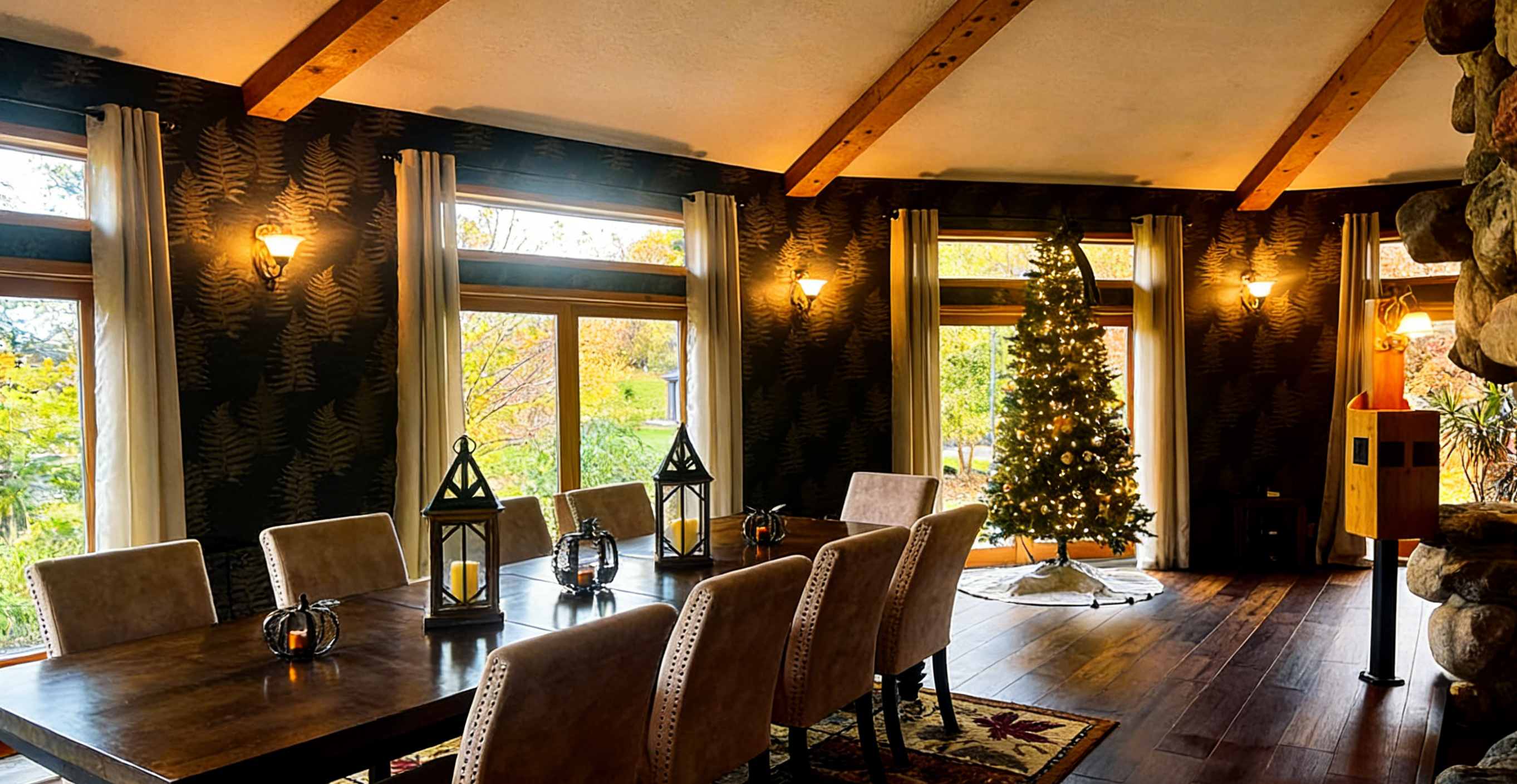
Mat ou texturé ou brillant : quelle finition masque le mieux les imperfections ?
Si votre mur n’est pas parfaitement lisse, la finition est plus importante que la couleur.
Beaucoup de gens supposent qu’une finition de papier peint plus brillante a l’air «plus haut de gamme» et lissera tout. Dans les vraies maisons, cela fait souvent le contraire: la brillance agit comme un projecteur, rendant chaque bosse, bord de raccord et ondulation plus faciles à voir, surtout la nuit sous un éclairage zénithal.
Voici la vérité simple que vous pouvez utiliser immédiatement:
Le meilleur pour cacher les bosses: Mat (surtout avec une texture subtile)
Le plus susceptible de faire ressortir les défauts: Brillant / très lustré
Vous trouverez ci-dessous le guide sans fioritures pour choisir la bonne finition pour les murs imparfaits, plus un test de 2 minutes qui prévient la plupart des regrets liés au papier peint.
Pourquoi les bosses sont plus visibles avec le brillant (30 secondes de science)
Les imperfections murales deviennent visibles à cause du contraste: reflets lumineux + ombres foncées.
-
Les finitions brillantes réfléchissent la lumière plus directement. Sous un éclairage latéral (fenêtres, appliques, plafonniers), cette réflexion crée des reflets et des ombres nettes, soulignant les bosses et les bords des raccords.
-
Les finitions mates diffusent la lumière, adoucissant ces ombres pour que le mur paraisse plus calme.
-
La texture ajoute du «bruit visuel» (dans le bon sens). Votre œil remarque les micro-détails de la finition plutôt que de rechercher de minuscules défauts de surface.
Si votre mur semble correct à la lumière du jour mais «désordonné» la nuit, c’est souvent un problème de brillance, pas un problème de couleur.
Aide-mémoire des finitions: ce que chaque finition fait réellement
Mat (faible brillance)
Idéal pour: masquer les bosses, les zones rapiécées et la texture inégale de la peinture
Son aspect: doux, calme, moderne, «fini» sans éblouissement
Inconvénient: peut montrer les éraflures plus tôt dans les zones très fréquentées (dépend de la couleur et du motif)
Choisissez le mat lorsque: votre priorité est le camouflage et que vous n’avez pas besoin d’une performance de nettoyage constante.
Texture (texture physique ou aspect texturé)
Idéal pour: les vieux murs, les légères ondulations, les bords des raccords, la texture incohérente des plaques de plâtre
Son aspect: lin, tissé, aspect plâtre ou surfaces subtilement gaufrées
Inconvénient: une texture très prononcée peut retenir la poussière dans certains espaces très fréquentés (une texture subtile est généralement la plus sûre)
Choisissez la texture lorsque: vous voulez l’aspect le plus tolérant possible, surtout si votre mur a un passé (réparations, repeinture, vieux placoplâtre).
Brillant / très lustré
Idéal pour: la lavabilité et la réflexion de la lumière dans des situations spécifiques
Son aspect: net, lumineux, réfléchissant
Inconvénient: montre tout – bosses, traces de rouleau, bords de raccords et joints inégaux
Ne choisissez le brillant que lorsque: votre mur est vraiment lisse ou que vous acceptez intentionnellement de voir la texture parce que vous avez besoin d’une lavabilité accrue.
Le vrai gagnant pour masquer les bosses (classé)
Si votre objectif est de «rendre le mur plus lisse», voici le classement pratique:
-
Mat + texture subtile (meilleur camouflage global)
-
Mat aspect texturé (idéal pour les murs rapiécés/anciens)
-
Peu brillant / satiné (entre-deux si vous avez besoin d’un nettoyage plus facile)
-
Brillant / très lustré (uniquement pour les murs lisses ou les zones lavables spécifiques)
Règle de décision:
Si vous voulez dissimuler, choisissez d’abord un lustre plus faible, puis ajoutez de la texture/détail.
Choisir en fonction du problème mural (sélecteur rapide)
Utilisez ceci lorsque vous savez déjà à quoi vous avez affaire:
Votre mur présente d’anciens raccords de peinture ou des marques de lissage
Optez pour: mat + aspect texturé (lin, plâtre, effets mouchetés)
Évitez: le brillant et les finitions unies lisses qui font ressortir les bords des raccords
Votre mur présente de légères bosses / une texture peau d’orange
Optez pour: le mat ou la texture subtile
Évitez: les finitions réfléchissantes qui transforment les micro-bosses en ombres
Votre mur semble légèrement ondulé ou pas parfaitement droit
Optez pour: le mat plus une finition qui n’accentue pas les réflexions droites
Évitez: le très lustré qui accentue les ondulations sous un éclairage latéral
Votre mur présente des fissures capillaires (stables, pas de mouvement actif)
Optez pour: mat aspect texturé + détail moyen
Évitez: les finitions ultra-lisses et minimalistes qui ne laissent nulle part où l’œil peut «se reposer»
Note importante: Si la peinture s’écaille, est farineuse ou si la surface n’est pas stable, réparez cela d’abord. Aucune finition ne peut masquer un mur qui s’effrite ou est lâche.
Choisir par pièce (camouflage vs nettoyage est le vrai compromis)
Les différentes pièces demandent différentes choses d’une finition. Voici comment décider sans trop réfléchir:
Chambre / salon
Choisissez: mat ou mat + texture subtile
Pourquoi: meilleur camouflage, aspect doux, moins d’éblouissement sur les photos et dans l’éclairage quotidien
Couloir / entrée
Choisissez: mat avec motif/texture, ou faible brillance si les éraflures sont courantes
Pourquoi: le trafic élevé signifie que vous voulez la tolérance et une durabilité pratique
Cuisine / buanderie
Choisissez: faible brillance si vous avez besoin d’une plus grande lavabilité
Évitez: le très brillant à moins que les murs ne soient vraiment lisses
Pourquoi: la graisse/les éclaboussures sont importantes, mais le brillant peut rendre un mur imparfait plus laid
Salle de bain (surtout les toilettes invités)
Choisissez: mat pour un aspect doux; envisagez une faible brillance si vous privilégiez un nettoyage plus facile
Pourquoi: l’humidité peut être gérée avec une bonne préparation, mais l’éblouissement reste l’éblouissement
Si vous n’êtes pas sûr, choisissez la finition qui correspond à votre vie réelle: enfants, animaux domestiques, cuisine, éraflures, éclairage – pas seulement ce qui semble le mieux sur une photo stylisée.
Le test d’échantillon de 2 minutes (le moyen le plus simple d’éviter les regrets)
Avant de vous engager, testez la finition là où votre mur est le plus laid.
-
Placez un échantillon près de la zone avec le plus de lumière latérale (fenêtre, plafonnier, applique).
-
Regardez-le à la lumière du jour et de nouveau la nuit.
-
Reculez de 6 à 8 pieds et demandez-vous:
Est-ce que je remarque le design en premier, ou le mur en premier? -
Facultatif mais puissant: utilisez une lampe de poche de téléphone de côté.
Si les bosses «ressortent», passez à un lustre plus faible ou à plus de texture.
Si vous choisissez entre deux finitions, le choix le plus sûr pour les murs imparfaits est généralement celui qui est plus mat et légèrement plus texturé.
Erreurs courantes qui empirent l’aspect des murs
-
Choisir le brillant pour un aspect «haut de gamme» sur un mur avec des raccords ou de la texture
-
Choisir des finitions ultra-minimalistes et lisses sur des plaques de plâtre imparfaites
-
Tester uniquement à la lumière du jour (l’éclairage nocturne est là où le lustre révèle les défauts)
FAQ
Quelle finition de papier peint masque le mieux les bosses?
Le mat est généralement le meilleur pour masquer les bosses, surtout lorsqu’il est associé à une texture subtile ou à une surface d’aspect texturé.
Le papier peint texturé est-il toujours meilleur que le mat?
Pas toujours. Le mat contrôle l’éblouissement, tandis que la texture ajoute du camouflage. Les meilleurs résultats proviennent souvent d’un mat + texture subtile, pas d’une texture extrême.
Le papier peint brillant donne-t-il l’impression qu’une petite pièce est plus grande?
Le brillant peut réfléchir la lumière et sembler plus lumineux, mais il révèle également plus clairement les défauts du mur. Dans la plupart des petites pièces, les finitions non brillantes semblent plus nettes et plus intentionnelles.
Que faire si j’ai besoin de quelque chose de lavable mais que mes murs ne sont pas lisses?
Visez un faible lustre plutôt qu’un brillant intense, et choisissez des motifs avec de la texture ou des détails visuels afin que les imperfections mineures ne ressortent pas.
Une couleur plus foncée masque-t-elle mieux les bosses?
Pas nécessairement. Le lustre et le contraste sont plus importants que la couleur. Un motif mat plus foncé peut mieux masquer qu’un uni brillant clair.
Point à retenir
Si votre objectif est de rendre des murs imparfaits plus lisses, ne cherchez pas la brillance.
Privilégiez d’abord le faible éblouissement (mat), puis ajoutez une texture douce.
Et avant de vous engager, faites le test d’échantillon de 2 minutes sous votre éclairage réel – la réponse devient évidente rapidement.
Étape suivante: Si vous hésitez encore, commencez par un échantillon dans la pièce où le mur semble le plus «honnête». Ce seul test vous fera gagner plus de temps (et d’incertitude) que n’importe quel tableau.

Laisser un commentaire
Ce site est protégé par hCaptcha, et la Politique de confidentialité et les Conditions de service de hCaptcha s’appliquent.