Papier peint amovible ou peinture : Que devraient choisir les investisseurs immobiliers pour la rénovation de leurs logements locatifs ?
Chaque investisseur immobilier connaît le rituel : une unité est libérée, les murs subissent des dégâts, et vous êtes confronté à la même décision.
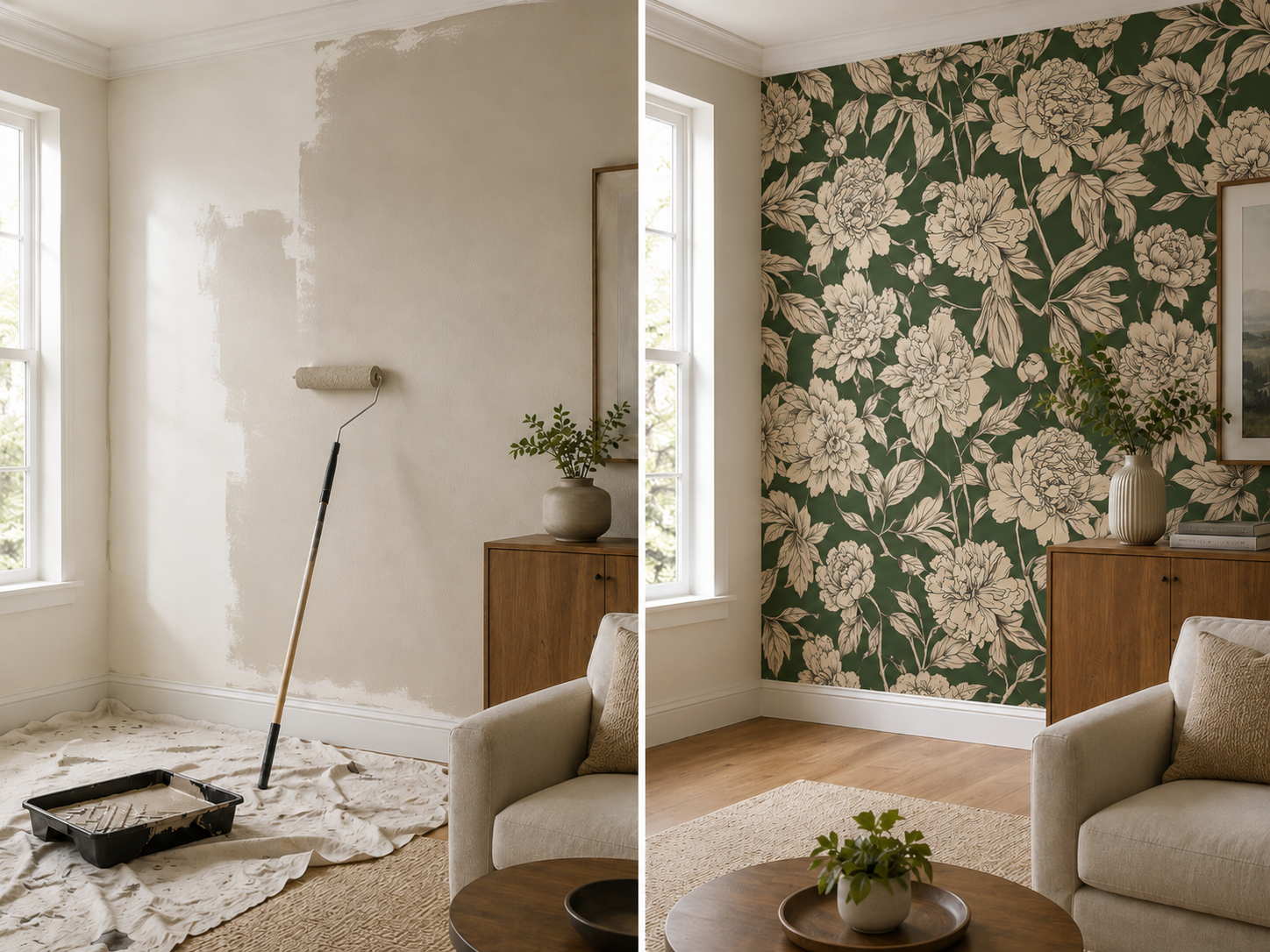
Peinture ou autre chose ? Pendant des décennies, la réponse a toujours été la peinture – neutre, fiable, suffisamment rapide. Mais en 2026, ce choix par défaut mérite d'être remis en question. Non pas parce que la peinture a cessé de fonctionner, mais parce qu'une nouvelle génération de papiers peints autocollants amovibles a véritablement changé l'équation des coûts et de l'impact pour les rafraîchissements de location et les projets de mise en scène.
Ce post est destiné aux professionnels de la mise en scène immobilière, aux investisseurs immobiliers et aux opérateurs de locations à court terme qui gèrent plusieurs unités et ont besoin d'une comparaison pratique et chiffrée. Nous aborderons les coûts réels, les délais réalistes, l'impact sur les photos d'annonce et les scénarios spécifiques où chaque option l'emporte, sans aucun discours commercial.
Partie 1 · Les enjeux de la mise en scène en 2026
Pourquoi la décision concernant le revêtement mural est-elle réellement importante pour le retour sur investissement de la mise en scène ?
La réponse se trouve dans la photo de l'annonce. Dans un marché où plus de 95 % des acheteurs et des locataires commencent leur recherche en ligne, l'impression visuelle créée par les revêtements muraux dans les photographies d'annonce est l'une des décisions les plus influentes que prend un professionnel de la mise en scène. La peinture change de couleur. Le papier peint amovible change entièrement le caractère d'une pièce.
73 % de ventes plus rapides pour les maisons mises en scène par rapport aux maisons non mises en scène — NAR 2025 Profile of Home Staging
5–15 % de prime de prix sur les annonces mises en scène — National Association of Realtors, 2025
83 % des agents d'acheteurs affirment que la mise en scène aide les acheteurs à visualiser la propriété — NAR 2025
Le NAR 2025 Profile of Home Staging — l'étude annuelle la plus complète sur le retour sur investissement de la mise en scène aux États-Unis — confirme que l'impact visuel de la mise en scène a une relation directe et mesurable avec le temps de commercialisation et le prix final de vente ou de location. Le traitement mural spécifique que vous choisissez détermine si votre mise en scène crée cet impact ou si elle passe inaperçue sur une photo.

Partie 2 · La comparaison des coûts réels
Combien coûte réellement un rafraîchissement de location – Peinture vs Papier peint amovible ?
La plupart des comparaisons de coûts entre la peinture et le papier peint s'arrêtent au prix du matériau par rouleau par rapport au prix par gallon. C'est le mauvais calcul. Pour les investisseurs immobiliers gérant plusieurs unités, le coût total livré — matériel, main-d'œuvre, temps d'arrêt et retrait au cycle suivant — est ce qui détermine quelle option est réellement la moins chère.
|
Facteur de coût de la mise en scène |
Papier peint amovible |
Rafraîchissement peinture |
|
Coût des matériaux par mur d'accent |
80–280 $ (vente en gros B2B) |
40–80 $ (peinture + apprêt) |
|
Main-d'œuvre professionnelle |
0 $ — installation autonome, 2–3 heures |
200–500 $/pièce (peintre) |
|
Temps de séchage/durcissement avant visite |
0 h — prêt le jour même |
24–48 h minimum |
|
Impact visuel sur les photos d'annonce |
Fort — motif, texture, dimension |
Modéré — couleur seulement |
|
Retour à l'état initial entre les locations |
Se décolle en ~20 min, sans dommage |
Repeindre — 200–500 $ |
|
Flexibilité de mise en scène (nouvel essai) |
Changer de design le jour même |
Engagement jusqu'à la prochaine peinture |
|
Coût total (rafraîchissement de 2 murs) |
~250–500 $ de matériel, 0 $ de main-d'œuvre |
~400–1 200 $ peints + main-d'œuvre |
L'écart de main-d'œuvre est le chiffre qui change tout
La peinture intérieure professionnelle aux États-Unis coûte actuellement en moyenne 200 à 500 dollars par pièce, avec des frais minimums à la journée courants dans les grandes villes. Pour un investisseur immobilier qui met en scène une unité de 3 chambres, cela représente 600 à 1 500 dollars de main-d'œuvre de peintre avant qu'un seul meuble ne soit déplacé. Le papier peint autocollant sur un mur d'accent dans chaque chambre prend 2 à 3 heures par pièce et ne nécessite aucun spécialiste — juste une surface propre, une raclette et quelqu'un qui peut suivre une ligne horizontale droite.
Le temps de séchage compte aussi. La peinture nécessite un minimum de 24 à 48 heures avant qu'un espace puisse être photographié et montré en toute sécurité. Le papier peint amovible est prêt dès qu'il est appliqué. Pour un professionnel de la mise en scène travaillant avec des délais serrés, c'est souvent la différence entre photographier le mardi ou le jeudi.
Le coût de la dépose est l'endroit où la logique du "moins cher à l'avance" de la peinture s'effondre sur plusieurs cycles. Repeindre entre les locataires coûte 200 à 500 dollars à chaque fois. Le papier peint amovible de qualité se décolle proprement en 20 minutes sans endommager le mur, sans apprêt et sans peintre à prévoir. Sur une période de 5 ans pour un portefeuille de locations multi-unités, cette économie s'accumule considérablement.

Partie 3 · L'avantage des photos d'annonce
Le papier peint amovible est-il réellement plus performant sur les photos d'annonce ?
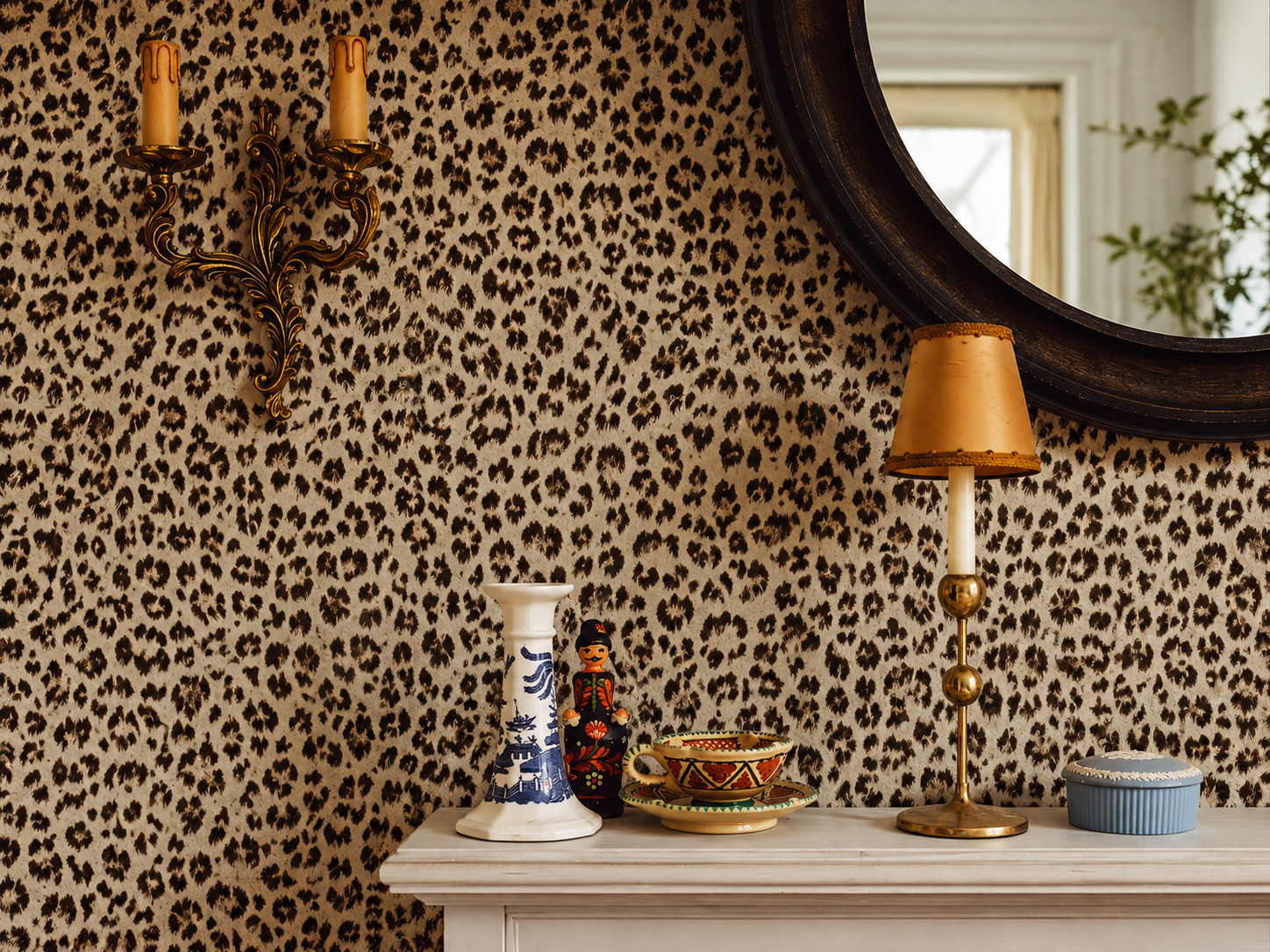
C'est la question la plus importante pour les professionnels de la mise en scène, et la réponse honnête est : oui, avec des nuances. Le papier peint crée une différenciation visuelle d'une manière que la peinture ne peut physiquement pas faire — dimension, motif, texture — et ces éléments se lisent clairement sur les photos d'annonce. Un mur d'accent botanique derrière le lit, une texture effet herbe dans le salon, un panneau mural dans l'entrée : chacun crée un moment visuel qui incite l'internaute à s'arrêter.
La peinture fonctionne différemment. Une couche fraîche de « Agreeable Gray » ou de « White Dove » crée un fond propre et professionnel qui aide les meubles et les éléments de mise en scène à se distinguer clairement. Elle ne crée pas de moment « héroïque » — mais elle ne rivalise pas non plus avec les meubles pour attirer l'attention. Pour les annonces de luxe où les meubles et les finitions sont au cœur du récit, cette neutralité est un avantage.

Quand le papier peint l'emporte en photo
• Propriétés vacantes où les murs sembleraient autrement vides et sans caractère
• Mise en scène à petit budget où vous ne pouvez pas vous permettre un rafraîchissement complet des meubles mais avez besoin d'un visuel fort
• Annonces de location à court terme où le caractère distinctif de la pièce influence les décisions de réservation
• Propriétés sur des marchés concurrentiels où des unités identiques sont photographiées de manière identique
Quand la peinture gagne en photo
• Propriétés de luxe où les meubles et finitions haut de gamme sont l'élément de vente principal
• Espaces avec de fortes caractéristiques architecturales qui ne devraient pas être visuellement concurrencées
• Marchés d'acheteurs où une présentation neutre attire la démographie la plus large
La formule de mise en scène la plus efficace pour les rafraîchissements de location en 2026 : peinture neutre sur trois murs, papier peint amovible sur un mur d'accent par pièce principale. L'un crée le décor ; l'autre donne la raison de s'arrêter de faire défiler.
Partie 4 · Choisir selon le scénario
Quelle option choisir pour votre situation de mise en scène spécifique ?
La bonne réponse dépend de votre échéancier, du nombre d'unités et de votre stratégie d'annonce. Voici la répartition par scénario :
|
Scénario de mise en scène |
Meilleur choix |
Raison clé |
|
Rénovation rapide (≤2 semaines) |
Papier peint amovible |
Pas de temps de séchage ; prêt le jour même pour les visites |
|
Rafraîchissement de location à long terme |
Papier peint amovible |
Pas de repeinture entre les locataires |
|
Propriété vacante (annonce de 30 jours) |
Papier peint amovible |
Spectaculaire sur les photos d'annonce ; aucun dommage |
|
Bien immobilier de luxe haut de gamme |
Peinture + papier peint |
Traitement complet des pièces pour le segment de prix premium |
|
Rafraîchissement uniquement budgétaire (<100 $) |
Peinture (DIY) |
Moins cher au départ si pas de coût de main-d'œuvre |
|
Portefeuille multi-propriétés (10+) |
Papier peint amovible |
Échelle sans dépendance vis-à-vis des entrepreneurs |
Le cas du portefeuille multi-propriétés
Pour les investisseurs gérant 10 unités ou plus, la décision ne porte pas réellement sur un seul rafraîchissement, mais sur la mise en place d'un système qui ne nécessite pas de planifier un peintre pour chaque rotation. Le papier peint amovible crée ce système. Un kit de mur d'accent standard — deux murs d'accent par unité — peut être installé par un gestionnaire immobilier ou une équipe de maintenance sans main-d'œuvre spécialisée. Lorsque le design semble démodé ou qu'un nouveau locataire a des goûts différents, il se décolle en une après-midi. Pas de corps de métier à planifier, pas de temps de séchage, pas d'odeur de peinture fraîche lors de l'emménagement.
L'approche de JIFFDIFF à cet égard est spécifique : nous travaillons avec des investisseurs immobiliers et des professionnels de l'immobilier qui ont besoin d'une qualité constante sur plusieurs unités, en sélectionnant des designs suffisamment actuels pour être bien photographiés et suffisamment stables pour ne pas paraître démodés dans 18 mois. Le résultat est un produit qui gagne sa place dans une boîte à outils de mise en scène non pas par sa nouveauté, mais par son utilité concrète pour l'ensemble d'un portefeuille.
Chez JIFFDIFF, nous croyons que les beaux espaces ne devraient pas nécessiter des entrepreneurs coûteux ou des semaines de planification. Notre slogan le dit simplement : Peel in a Jiff. Make it Diff. — ce qui est exactement ce dont un investisseur immobilier a besoin lorsqu'une unité est libérée et que la prochaine visite est dans 48 heures.
Partie 5 · FAQ — Questions réelles, réponses directes
Foire aux questions : Papier peint amovible ou peinture pour la mise en scène de propriétés
Ces questions sont compilées à partir de Reddit (r/realestateinvesting, r/landlord, r/HomeStaging, r/airbnbhosts) et des recherches Google les plus fréquentes sur ce sujet — réponses fournies ici pour que vous puissiez arrêter de chercher.
Q : Le papier peint amovible est-il réellement moins cher que de repeindre une location entre deux locataires ?
Oui — si vous incluez la main-d'œuvre : une repeinture professionnelle coûte entre 200 et 500 $ par pièce à chaque cycle ; un papier peint auto-adhésif de qualité s'enlève sans dommage en 20 minutes et la conception suivante s'installe le jour même sans qu'un peintre soit nécessaire.
Q : Le papier peint auto-adhésif endommagera-t-il les murs lors de son retrait — pourrais-je perdre ma caution ?
Un papier peint avec adhésif sensible à la pression de qualité s'enlève proprement des cloisons sèches peintes et durcies sans décoller la peinture, laisser de résidus ou endommager le mur — toujours peler lentement à un angle faible et tester d'abord une petite section sur toute surface inconnue.
Q : Combien de temps faut-il pour installer du papier peint amovible pour une propriété mise en scène ?
Un mur d'accent de chambre standard (environ 9,3 à 11,1 mètres carrés) prend 2 à 3 heures pour un installateur débutant sans outils spécialisés — la propriété est prête à être photographiée et montrée immédiatement après l'achèvement, sans temps de séchage.
Q : Le papier peint amovible est-il aussi beau que la peinture sur les photos d'annonce ?
Dans la plupart des contextes de mise en scène, il est plus impressionnant en photo — les motifs, les textures et les dimensions créent une différenciation visuelle que la peinture ne peut pas offrir ; la formule de mise en scène la plus efficace combine une peinture neutre sur les murs secondaires avec un mur d'accent en papier peint amovible par pièce.
Q : Puis-je utiliser du papier peint auto-adhésif dans une location sans l'autorisation du propriétaire ?
La plupart des baux interdisent les modifications murales permanentes mais pas les produits amovibles — confirmez toujours les termes spécifiques de votre bail et documentez l'état du mur avant et après avec des photos, car le papier peint qui s'enlève proprement ne laisse généralement aucune preuve d'installation.
Q : Combien de fois le papier peint amovible peut-il être repositionné pendant l'installation ?
Le papier peint auto-adhésif de qualité peut être repositionné plusieurs fois lors de l'installation initiale sans perdre son adhérence — c'est l'un de ses principaux avantages pour la mise en scène DIY, où un alignement précis des raccords du premier coup est plus difficile à réaliser.
Q : Quel est le meilleur papier peint auto-adhésif pour la mise en scène d'une propriété à vendre ?
Les motifs botaniques à grande échelle, les papiers peints texturés en herbe tressée et les motifs géométriques neutres dans des tons terre chauds (terracotta, sauge, crème chaude) sont les plus performants en photographie d'annonce et attirent le plus grand nombre d'acheteurs et de locataires en 2026.
Q : La peinture ou le papier peint amovible est-il meilleur pour un rafraîchissement Airbnb ?
Le papier peint amovible l'emporte de manière décisive pour les propriétés STR : il crée des images distinctives qui stimulent les réservations, s'enlève proprement entre les rafraîchissements de design et peut être échangé en un seul après-midi sans planification d'entrepreneur ni temps d'arrêt pour le séchage.
Vous recherchez du papier peint amovible pour un projet de mise en scène, un rafraîchissement de portefeuille locatif ou un programme d'investissement immobilier ?
Contactez l'équipe d'approvisionnement en mise en scène de JIFFDIFF — échantillons physiques en 48 heures, 0 MOQ pour commencer, photographie de contenu incluse, et une équipe de design qui comprend ce qui se photographie et ce qui se vend.


Laisser un commentaire
Ce site est protégé par hCaptcha, et la Politique de confidentialité et les Conditions de service de hCaptcha s’appliquent.