
Come valutare un partner all'ingrosso di carta da parati rimovibile: una checklist per piccoli acquirenti B2B
"Ogni scelta dietro uno spazio bellissimo è anche una scelta in cui vogliamo che le persone si sentano sicure."
— JIFFDIFF Valore del Marchio 02 · Scegli con Fiducia
La maggior parte dei piccoli acquirenti B2B nella categoria della carta da parati rimovibile subisce la stessa fregatura: non al primo rotolo ordinato, ma al terzo, quarto o quinto. Il prodotto sembrava ottimo nel campione. Sembrava ottimo persino nella prima installazione. E poi — da qualche parte tra il secondo riordino e un progetto su più proprietà — sono comparse le crepe. Differenze di colore tra i lotti. Bordi che si sollevano in un bagno umido. Una consegna in ritardo durante la finestra temporale per le foto dell'annuncio. Un file personalizzato apparso misteriosamente sotto l'inserzione di un altro marchio.
Questa non è una storia di difetti di fabbricazione. È una storia di selezione dei partner. Ed è interamente prevenibile con un rigoroso quadro di valutazione applicato prima di effettuare qualsiasi ordine.
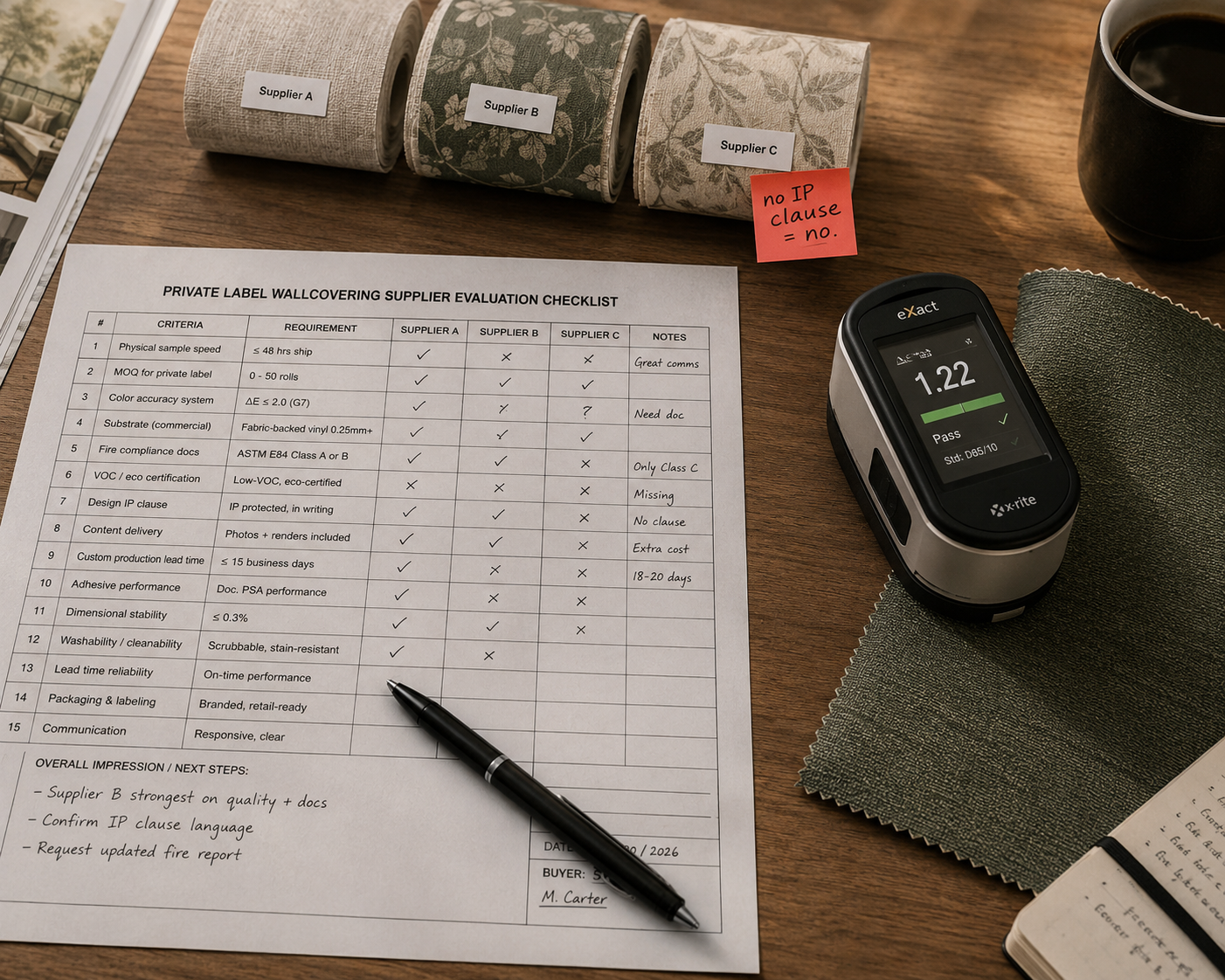
Questa guida è la lista di controllo di 15 criteri di JIFFDIFF per valutare qualsiasi partner all'ingrosso di carta da parati rimovibile: cosa cercare, cosa chiedere, cosa richiedere per iscritto e i segnali specifici che distinguono un partner di produzione su cui puoi costruire la tua reputazione da un fornitore i cui errori diventeranno presto i tuoi. Abbiamo costruito il nostro intero programma B2B attorno al principio che
una relazione all'ingrosso dovrebbe rendere la scelta più sicura — non più incerta.
Parte 1 · Perché la decisione del partner si amplifica
Perché scegliere il partner all'ingrosso sbagliato costa più del prodotto stesso?
Un piccolo acquirente B2B — un home stager che gestisce 8 proprietà, un interior designer che crea una linea private label, un fondatore di un brand DTC che testa una prima referenza (SKU) di carta da parati — opera con margini strutturalmente più stretti rispetto a un grande rivenditore. Non c'è un team di controllo qualità che possa assorbire gli errori di un produttore. Non c'è un budget per le sostituzioni quando una spedizione arriva in ritardo. Non c'è copertura di pubbliche relazioni quando un cliente si lamenta di un prodotto che porta il tuo nome. I fallimenti del partner all'ingrosso diventano i tuoi fallimenti, amplificati dalla tua reputazione.
Questo è ben documentato nella letteratura generale sull'approvvigionamento. La guida della U.S. Small Business Administration sulla valutazione dei fornitori identifica l'affidabilità del fornitore, la costanza qualitativa e la chiarezza contrattuale come le tre variabili a maggior impatto per la stabilità operativa delle piccole imprese — non il prezzo unitario, su cui gli acquirenti tendono a concentrarsi eccessivamente. Per la carta da parati rimovibile nello specifico, si applicano gli stessi principi con una variabile aggiuntiva: la natura visiva del prodotto fa sì che i difetti qualitativi siano immediatamente visibili al cliente finale. Non ci si può nascondere dietro un'incongruenza di colore su una parete.

Il costo reale di una decisione sbagliata sul partner
Quantifichiamolo. Per uno stager che specifica 6 installazioni di carta da parati a trimestre con una spesa media per materiali di 400 dollari ciascuna, un tasso di richiamo del 15% dovuto a difetti qualitativi rappresenta:
• 3.600 dollari in costi di sostituzione del prodotto nell'arco di un anno
• Più di 16 ore di manodopera per la risoluzione e tempi di reinstallazione
• 2–3 relazioni con i clienti a rischio ogni anno — ciascuna delle quali vale molto più della linea di carta da parati stessa
• Danni alla reputazione del marchio che si accumulano attraverso ogni conversazione di referenza che non avviene
La relazione all'ingrosso per la carta da parati non è una transazione. È un'estensione della tua reputazione professionale. Sceglila come scegli le persone che assumi — perché il prodotto del produttore ti rappresenterà in ogni spazio in cui apparirà.
Parte 2 · La lista di controllo di 15 criteri di valutazione
Cosa dovrebbe verificare ogni piccolo acquirente B2B prima di ordinare?
I seguenti 15 criteri sono organizzati per essere utilizzati direttamente — in una conversazione di sourcing, in un confronto RFP o come disciplina per le proprie note di valutazione. Ogni criterio ha una chiara risposta "via libera" e un chiaro segnale per rinunciare. Se un partner all'ingrosso fallisce su più di tre di questi punti, la relazione creerà più problemi di quanti ne risolva.
|
# |
Criterio |
Via libera |
Rinuncia |
|
1 |
Tempi di consegna campioni fisici |
48 ore, senza eccezioni |
Oltre 5 giorni lavorativi |
|
2 |
Formato del campione |
Materiale reale del rotolo di produzione |
Solo piccolo ritaglio o prova digitale |
|
3 |
Quantità minima d'ordine (MOQ) |
MOQ 0 per i campioni; basso per i primi ordini |
Oltre 500 rotoli prima di qualsiasi campione |
|
4 |
Specifica tolleranza colore |
Costanza di lotto scritta ΔE ≤ 2.0 |
Nessuna specifica o "i colori si abbinano bene" |
|
5 |
Tempi di produzione |
15 giorni lavorativi dall'ordine confermato |
30+ giorni, tempistiche vaghe |
|
6 |
Tasso di puntualità nelle consegne |
100% documentato con dati |
Solo assicurazioni verbali |
|
7 |
Qualità del substrato |
Vinile con retro in tessuto, 0.25mm+, lavabile |
Carta sottile, nessuna specifica dichiarata |
|
8 |
Ingegneria adesiva |
PSA commerciale, testato a 65%+ RH |
"Forte" — nessun dato |
|
9 |
Conformità antincendio |
Documenti ASTM E84 Classe A/B su richiesta |
Non disponibile |
|
10 |
Certificazione VOC / eco |
Basso VOC, eco-certificato, documentato |
Nessuna documentazione |
|
11 |
Protezione IP del design |
Clausola scritta: i tuoi file sono tuoi |
Vago, nessuna clausola contrattuale |
|
12 |
Supporto Private Label |
OEM/ODM, imballaggio personalizzato incluso |
Solo alta MOQ, costo extra |
|
13 |
Contenuti per la vendita |
Foto + rendering + documenti installazione inclusi |
A pagamento o assenti |
|
14 |
Frequenza aggiornamento libreria design |
100+ nuove SKU al mese |
Statico o solo trimestrale |
|
15 |
Disponibilità multicanale |
B2B diretto + vendita al dettaglio (Amazon/TikTok Shop) |
Solo B2B o solo vendita al dettaglio |

Come utilizzare questa lista di controllo nella pratica
Tre regole operative:
• Applicala prima di richiedere campioni, non dopo. Molti di questi criteri si possono scoprire in una singola conversazione di 20 minuti. Usa lo script nella Parte 3 per qualificare i fornitori prima di richiedere campioni — il campionamento richiede molto tempo. Fai prima il filtro facile.
• Valuta i fallimenti, non i successi. Ogni partner all'ingrosso dichiarerà di soddisfare la maggior parte di questi punti. Ciò che conta sono i criteri che non riescono a soddisfare — quelli sono gli indicatori di dove la relazione fallirà in seguito. Tre o più risposte da "rinuncia" = rinuncia.
• Richiedi documentazione, non assicurazioni verbali. "Possiamo farlo" ed "ecco la nostra specifica scritta" sono impegni molto diversi. Per i criteri 4 (tolleranza colore), 6 (puntualità), 9 (antincendio), 10 (VOC) e 11 (IP), richiedi documentazione scritta prima di qualsiasi primo ordine.
Parte 3 · Lo script di qualificazione in 5 domande
Quali domande rivelano di più nella prima conversazione?
Leggere una lista di controllo di 15 criteri durante una riunione con un fornitore è poco pratico. Fare cinque domande dirette e ascoltare attentamente le risposte non lo è. Queste sono le cinque domande che svolgono il maggior lavoro di valutazione — letterali, con spiegato cosa sta testando ciascuna e come suona una risposta sicura.
|
Chiedi testualmente |
Cosa stai realmente testando |
Com'è una buona risposta |
|
"Puoi spedire un campione fisico entro 48 ore?" |
Maturità operativa e priorità verso il B2B |
"Sì — entro lo stesso giorno lavorativo dalla specifica approvata" |
|
"Qual è la vostra tolleranza colore documentata ΔE per lotto?" |
Esistenza di un sistema di gestione della qualità |
"ΔE ≤ 2.0, indicato nella nostra scheda tecnica" |
|
"Qual è il vostro tasso di consegne puntuali quest'anno?" |
Disciplina operativa e tracciamento dei dati |
"100%, documentato per ogni spedizione" |
|
"Cosa succede se devo riordinare tra 6 mesi: i colori saranno identici?" |
Capacità di blocco del lotto e affidabilità dei riordini |
"Lotto unico per la prima tiratura; riordini abbinati a ΔE ≤ 2.0" |
|
"I miei file di design rimangono di mia proprietà, per iscritto?" |
Disciplina sulla proprietà intellettuale e maturità dei contratti B2B |
"Sì: la protezione della PI è standard nel nostro accordo B2B" |
Come valutare le risposte
Lo schema è più importante del contenuto. Fate attenzione a:
• Specificità: numeri, date, specifiche scritte, tassi documentati. Un partner con maturità operativa risponde con i dati. Un partner che ne è privo risponde con rassicurazioni.
• Velocità di risposta: una risposta sicura alla domanda "qual è la vostra tolleranza ΔE" arriva immediatamente. Un partner che deve "consultarsi con il team di produzione" vi sta dicendo che il suo programma B2B non include tali informazioni a livello di prima linea.
• Disponibilità a mettere tutto per iscritto: la domanda da porre dopo la risposta verbale è "posso averlo per iscritto?". Se la risposta è diversa da un sì, quella verbale non ha valore.
Se ponete tutte e cinque le domande e ricevete risposte sicure, specifiche e pronte per essere messe per iscritto, avete trovato un partner degno di una campionatura. Se una sola domanda produce una risposta difensiva, vaga o del tipo "fammi controllare", avete il vostro primo dato sul punto in cui la relazione sarà soggetta a frizioni.
Parte 4 · Segnali di allarme da non ignorare mai
Quali segnali di avvertimento giustificano l'abbandono, anche se il prezzo è buono?
La maggior parte degli errori di approvvigionamento inizia con un acquirente che ha notato un segnale di allarme e ha deciso che era trattabile. Alcuni segnali sono negoziabili: prezzi, tempi di consegna su un determinato SKU, personalizzazione del packaging nei primi ordini. I quattro seguenti non lo sono.
Segnale di allarme 1: Nessun campione fisico, solo prove digitali
Un partner all'ingrosso che non può o non vuole inviare un campione fisico vi sta dicendo una di queste tre cose: la loro produzione non è pronta per la campionatura (problema di maturità del processo), il loro modello di margine non può assorbire i costi dei campioni (problema di prezzo che emergerà di nuovo), o in realtà non sono produttori (una falsa dichiarazione fondamentale). Tutti e tre preannunciano un rapporto in cui non dovreste entrare. Lasciate perdere.
Segnale di allarme 2: "Faremo del nostro meglio per l'abbinamento dei colori"
Questa è la frase specifica che è costata più cara agli acquirenti B2B di qualsiasi altra in questa categoria. Segnala: assenza di un sistema di gestione del colore, assenza di capacità di blocco del lotto, assenza di una tolleranza documentata e assenza di ricorso se il secondo lotto non corrisponde al primo. Le risposte accettabili nel 2026 sono "ΔE ≤ 2.0 con blocco del lotto garantito" oppure "non effettuiamo produzioni coerenti per lotto". Qualsiasi altra via di mezzo è linguaggio di marketing che copre un sistema di qualità inesistente.
Segnale di allarme 3: Linguaggio sulla PI vago o assente
Se i vostri design personalizzati non possono essere protetti per iscritto, non lo saranno nella pratica. Un partner all'ingrosso privo di clausole standard sulla proprietà intellettuale nei propri accordi B2B o non comprende l'esposizione legale, o non la rispetta, o ha già utilizzato i vostri design in passato: nessuno di questi scenari è sostenibile per un acquirente B2B che sta costruendo un brand. Esigete una protezione scritta della PI o chiudete il rapporto.
Segnale di allarme 4: "È disponibile con un MOQ più alto" — per il servizio B2B di base
Campioni fisici, documentazione sulla tolleranza del colore, impegni sulla puntualità delle consegne e protezione della PI non sono "funzionalità B2B premium". Sono standard di servizio di base per qualsiasi relazione all'ingrosso nel 2026. Un partner che posiziona uno di questi elementi come "sbloccabile a oltre 500 rotoli" non è configurato per piccoli acquirenti B2B, ma per clienti di grandi volumi le cui esigenze sono strutturalmente diverse dalle vostre. Trovate un partner il cui modello di business si adatti al vostro.
Questi quattro segnali di allarme sono anche quattro momenti in cui le risposte di un partner rivelano se vi trattano come una transazione o come una relazione. Il programma B2B di JIFFDIFF tratta tutti e quattro come standard di base: campioni fisici in 48 ore, tolleranza cromatica scritta ΔE ≤ 2.0, protezione della PI per iscritto come impostazione predefinita e servizio B2B completo a partire da 0 MOQ. Perché, citando il nostro valore fondante, ogni scelta dietro uno spazio bellissimo dovrebbe trasmettere sicurezza.
Parte 5 · Lo standard JIFFDIFF: come punto di riferimento
Com'è fatto un partner all'ingrosso di carta da parati rimovibile costruito per piccoli acquirenti B2B?
Questo articolo sarebbe incompleto senza un riferimento onesto. JIFFDIFF è stato costruito specificamente attorno alle realtà operative dei piccoli acquirenti B2B — home stager, interior designer, fondatori di studi, brand DTC — perché abbiamo riconosciuto che il mercato all'ingrosso era strutturalmente ottimizzato per clienti con grandi volumi, lasciando agli altri il compito di compensare la mancanza di servizi con il proprio tempo e capitale. Ecco come si presenta tale convinzione in termini di programma concreto, non come argomento di vendita, ma come punto di calibrazione per valutare qualsiasi partner rispetto a questi standard.
Standard JIFFDIFF: valutazione rispetto alla checklist dei 15 criteri
• Tempi di consegna campioni fisici: 48 ore, materiale reale della tiratura di produzione: nessuna eccezione, nessun sovrapprezzo
• MOQ: 0 MOQ su campioni e validazione piccoli lotti; i prezzi per volume scalano con la quantità dell'ordine, non con l'accesso al servizio
• Tolleranza colore: ΔE ≤ 2.0, scritto nelle specifiche B2B, gestione del colore calibrata G7 su tutta la produzione
• Tempi di produzione: 15 giorni lavorativi dall'ordine confermato, con il 100% di consegne puntuali documentate sulla base partner B2B attiva
• Supporto: Vinile con supporto in tessuto, 0,25 mm+, lavabile, materie prime eco-certificate con conformità a basso contenuto di COV
• Adesivo: Acrilico PSA di grado commerciale, testato per l'umidità al 65%+ di UR, protocollo di rimozione documentato a 12–24 mesi
• Conformità antincendio: Documentazione dei test ASTM E84 Classe A e Classe B fornita su richiesta per qualsiasi ordine con specifiche commerciali
• Protezione della PI: Clausola scritta standard: i vostri design sono vostri, nessuna riproduzione, nessuna rivendita, nessuna licenza ad altri acquirenti
• Fornitura di contenuti: Fotografia di prodotto in stile, rendering di ambienti e documentazione d'installazione consegnati insieme agli ordini dei prodotti
• Libreria di design: Oltre 100 nuovi SKU al mese dal nostro team interno di 12 designer, calibrati sui dati del mercato statunitense
• Accesso multicanale: B2B diretto + Amazon rotolo singolo + TikTok Shop: così testare e scalare non richiede rapporti diversi
In JIFFDIFF, crediamo che una partnership all'ingrosso dovrebbe essere il momento in cui la vostra decisione di approvvigionamento vi fa sentire più sicuri, non più complicati. Ogni standard operativo sopra menzionato esiste perché abbiamo costruito il nostro programma attorno a tre valori: rendere la bellezza più accessibile, rendere ogni scelta più sicura e rendere il cambiamento che desiderate iniziare possibile fin da oggi. Per i piccoli acquirenti B2B, ciò si traduce in un partner che rimuove le frizioni dal vostro lavoro anziché aggiungerne.

Parte 6 · FAQ: Risposte specifiche che pongono fine alla ricerca
Domande frequenti: Valutazione dei partner all'ingrosso di carta da parati rimovibile
Tratto da Reddit (r/InteriorDesign, r/smallbusiness, r/HomeStaging, r/ecommerce, r/dropship) e dalle ricerche B2B ad alto volume su Google relative alla carta da parati: risposto con specificità operativa per piccoli acquirenti B2B.
D: Cosa dovrebbero cercare i piccoli acquirenti B2B in un fornitore all'ingrosso di carta da parati rimovibile?
I 15 criteri di base sono: spedizione campioni fisici in 48 ore, 0 MOQ per campionatura, tolleranza colore scritta ΔE ≤ 2.0, tempi di produzione di 15 giorni, 100% di consegne puntuali documentate, supporto in vinile con retro in tessuto, adesivo PSA commerciale con test di umidità, documentazione conformità antincendio ASTM E84, certificazione basso contenuto di COV, protezione scritta della PI del design, supporto private label e OEM/ODM, fornitura di contenuti insieme agli ordini, aggiornamento catalogo con oltre 100 nuovi SKU mensili e accesso multicanale (B2B diretto + Amazon + TikTok Shop).
D: Qual è la quantità minima d'ordine per la carta da parati peel and stick all'ingrosso per una piccola impresa?
Lo standard professionale del 2026 è 0 MOQ per la validazione dei campioni e gli ordini di prova di piccoli lotti, con livelli di prezzo per volume che si sbloccano a 50-200 rotoli: qualsiasi partner all'ingrosso che richieda oltre 500 rotoli prima di un campione non è configurato per piccoli acquirenti B2B e dovrebbe essere depriorizzato indipendentemente dal prezzo unitario.
D: Come verifico la qualità di un produttore all'ingrosso di carta da parati prima di ordinare?
Richiedete un campione fisico (non una prova digitale) entro 48 ore, chiedete la specifica scritta della tolleranza cromatica ΔE, installate il campione in un ambiente di applicazione reale, eseguite un test di adesione e stabilità del colore di 7 giorni e confermate che il fornitore fornisca la documentazione ASTM E84 e COV su richiesta: l'assicurazione verbale senza documentazione scritta non è verifica.
D: Quali domande dovrei porre a un fornitore all'ingrosso di carta da parati durante la prima chiamata?
Cinque domande rivelano la maturità operativa: (1) Potete spedire un campione fisico entro 48 ore? (2) Qual è la vostra tolleranza cromatica ΔE documentata per lotto? (3) Qual è il vostro tasso di consegne puntuali quest'anno? (4) Se riordino tra 6 mesi, i colori corrisponderanno? (5) I miei file di design rimangono di mia proprietà, per iscritto? Risposte specifiche basate sui dati indicano prontezza B2B; risposte vaghe prevedono frizioni nella relazione.
D: Come proteggo la PI del mio design quando mi approvvigiono di carta da parati stampata personalizzata all'ingrosso?
Esigete una clausola scritta sulla PI nell'accordo B2B prima di inviare qualsiasi file di design: nello specifico, il produttore non può riprodurre, dare in licenza, rivendere o utilizzare i vostri design per nessun altro acquirente; questo dovrebbe essere un linguaggio contrattuale standard per qualsiasi produzione personalizzata OEM, non negoziato progetto per progetto; rifiutatevi di inviare file senza che sia messo per iscritto.
D: I piccoli acquirenti B2B dovrebbero rivolgersi ad Alibaba per la carta da parati rimovibile?
Alibaba può funzionare per importatori esperti con capacità di controllo qualità interno che ordinano oltre 200 rotoli di merce standard; per home stager, interior designer e fondatori DTC che necessitano di design attuali, risorse di contenuto, coerenza dei lotti e supporto private label, i divari operativi creano costi che superano qualsiasi risparmio sul prezzo unitario: produttori B2B a servizio completo come JIFFDIFF colmano queste lacune come servizio standard.
D: Perché la coerenza del colore è così importante nell'approvvigionamento di carta da parati all'ingrosso?
La variazione di colore tra i rotoli diventa visibile sulle pareti: un'installazione di 12 piedi con due lotti di colore leggermente diverso crea una giuntura orizzontale che nessun cliente accetterà; per stager e designer che riordinano per lo stesso progetto o che scalano le proprietà, la coerenza del lotto (ΔE ≤ 2.0 scritto) è la differenza tra un lavoro di livello professionale e fallimenti qualitativi visibili.
D: Un piccolo acquirente B2B può ottenere carta da parati peel and stick private label senza un MOQ elevato?
Sì: i produttori a servizio completo come JIFFDIFF supportano l'OEM/ODM private label a partire da 0 MOQ nella fase di campionatura e 50 rotoli di volume nei primi ordini di produzione; le soglie private label con MOQ elevato (oltre 500) sono posizionamenti da fabbrica di materie prime, non lo standard B2B per piccoli acquirenti nel 2026.
D: Quanto tempo dovrebbe volerci per ricevere un campione di carta da parati all'ingrosso nel 2026?
48 ore dal file o dalla specifica approvata è il punto di riferimento professionale del 2026 per la spedizione di campioni fisici; qualsiasi tempo superiore ai 5 giorni lavorativi indica che il produttore non è configurato operativamente per i flussi di lavoro di servizio B2B e probabilmente creerà frizioni in ogni fase successiva della relazione.

Commenta
Questo sito è protetto da hCaptcha e applica le Norme sulla privacy e i Termini di servizio di hCaptcha.