
Carta da parati rimovibile per camere d'albergo: classi di reazione al fuoco, standard di durabilità e domande da porre ai fornitori
Gli hotel non acquistano semplicemente della carta da parati, stanno procurando un materiale performante che verrà pulito centinaia di volte, toccato da migliaia di ospiti, fotografato per recensioni che influenzano direttamente le prenotazioni e conforme a standard legali di sicurezza antincendio che variano in base al tipo di occupazione e alla giurisdizione.
Si tratta di un capitolato d'appalto fondamentalmente diverso da quello di un proprietario di casa che sceglie un motivo che gli piace. Eppure, la categoria della carta da parati adesiva è maturata abbastanza da rispondere ora concretamente a tale richiesta — non come soluzione di ripiego, ma come un'opzione di specifica di grado commerciale legittima che offre reali vantaggi in termini di velocità di ristrutturazione, agilità di design ed economia nel rinnovamento del brand.
Questa guida è scritta per i team di approvvigionamento alberghiero, i consulenti FF&E, i gestori di proprietà e i designer dell'ospitalità che valutano la carta da parati rimovibile come opzione di specifica. Copre i tre livelli di ciò che gli acquirenti del settore ospitalità devono effettivamente gestire correttamente: conformità antincendio, durabilità delle prestazioni e qualificazione dei fornitori. Si conclude con le domande specifiche che distinguono un produttore in grado di supportare una struttura alberghiera da uno che creerà problemi di conformità che scoprirete solo durante un'ispezione dell'autorità competente (AHJ).
Parte 1 · Conformità Antincendio — Il Livello Non Negoziabile
Quali Classificazioni Antincendio sono Richieste per i Rivestimenti Murali Alberghieri?
La conformità antincendio non è una semplice casella da spuntare: è il motivo per cui l'approvvigionamento di carta da parati per l'ospitalità è più complesso di qualsiasi altra applicazione commerciale. Gli hotel sono spazi occupati da ospiti che dormono e che potrebbero non essere in grado di evacuare rapidamente in caso di emergenza. I codici edilizi riflettono questa realtà con alcuni dei requisiti di finitura interna più rigorosi nel sistema di classificazione dell'edilizia commerciale.
Comprendere l'ASTM E84 nel Contesto Alberghiero
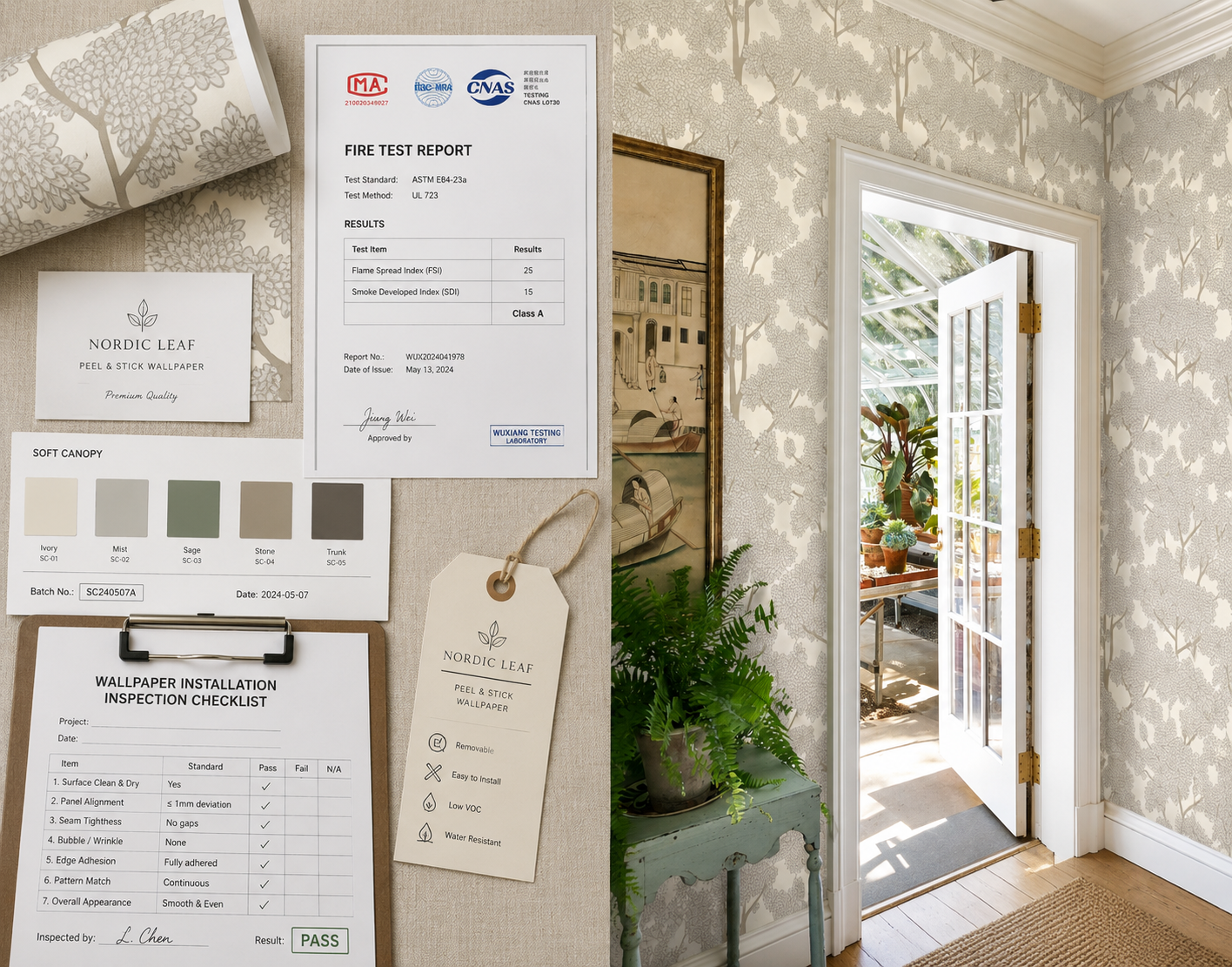
ASTM E84 — il metodo di prova standard per le caratteristiche di combustione superficiale dei materiali da costruzione — è il principale riferimento normativo per le finiture delle pareti interne negli Stati Uniti, richiesto dal Capitolo 8 dell'International Building Code (IBC) e citato direttamente nella NFPA 101, il Life Safety Code che regola la sicurezza degli occupanti nelle strutture ricettive e di alloggio.
Il test misura due indici: il Flame Spread Index (FSI), che quantifica la velocità con cui le fiamme si propagano sulla superficie di un materiale, e il Smoke Developed Index (SDI), che misura il volume di fumo durante la combustione. Le finiture interne sono classificate come:
▸ Classe A: FSI 0–25, SDI 0–450. Massima resistenza. Richiesta in tutti i percorsi di esodo, corridoi, hall e aree ad alta occupazione.
▸ Classe B: FSI 26–75. Accettabile nelle camere degli ospiti in molte giurisdizioni a determinate condizioni.
▸ Classe C: FSI 76–200. Generalmente non accettabile per applicazioni alberghiere, se non in condizioni molto limitate di bassa occupazione.
Per i progetti di ospitalità, la NFPA 101 è lo standard che conta di più. Stabilisce i requisiti di sicurezza per gli occupanti specificamente per le strutture ricettive e di alloggio, incluso il requisito che i corridoi e le vie di fuga mantengano finiture interne di Classe A, indipendentemente dallo stato dell'impianto sprinkler dell'edificio. È possibile consultare la panoramica ufficiale del NFPA 101 Life Safety Code direttamente dalla NFPA International, la fonte autorevole per gli standard di sicurezza antincendio e della vita in Nord America.
Riferimento per la Classificazione Antincendio Zona per Zona per l'Approvvigionamento Alberghiero
I requisiti di resistenza al fuoco non sono uniformi in tutta la struttura alberghiera. La tabella sottostante riflette la guida generale secondo l'IBC e la NFPA 101; confermare sempre i requisiti specifici con l'Autorità Competente (AHJ) locale, poiché gli emendamenti locali a questi codici sono comuni.
|
Zona Hotel |
Classificazione ASTM E84 Min. |
Gamma FSI |
Riferimento Codice |
|
Camere ospiti |
Classe B (preferibile A) |
FSI 0–75 |
IBC Cap. 8 / NFPA 101 |
|
Corridoi e vie di fuga |
Classe A — obbligatoria |
FSI 0–25 |
NFPA 101 § 7.1 |
|
Hall e reception |
Classe A |
FSI 0–25 |
IBC § 803 + AHJ locale |
|
Atri ascensori |
Classe A — obbligatoria |
FSI 0–25 |
IBC § 3006 |
|
Aree ristorazione |
Classe A |
FSI 0–25 |
Revisione vigili del fuoco |
|
Aree fitness / spa |
Consigliata Classe A |
FSI 0–25 |
Discrezione AHJ locale |
Nota critica: I rapporti di prova ASTM E84 sono specifici per prodotto e per lotto. Un certificato di resistenza al fuoco per una formulazione di materiale non è trasferibile a una versione modificata di quel prodotto. Richiedere sempre il rapporto di prova originale rilasciato dal laboratorio — non una referenza di marketing o una copia di un certificato emesso per una diversa produzione — e verificare che copra l'esatta combinazione di adesivo e substrato che si sta ordinando.
Il Caso Speciale: Carta da Parati Rimovibile vs. Rivestimento Murale Tradizionale con Colla
La carta da parati adesiva crea una complessità significativa nella conformità antincendio che il rivestimento murale con colla tradizionale non presenta: l'adesivo fa parte del sistema testato. Un risultato di prova ASTM E84 per un rivestimento murale vinilico applicato a colla non copre lo stesso materiale in forma autoadesiva: la chimica dell'adesivo, il suo spessore e il metodo di applicazione influenzano le caratteristiche di combustione superficiale.
Quando si specifica una carta da parati rimovibile per un hotel, richiedere che il test sia stato condotto sulla versione del prodotto dotata di adesivo, applicata utilizzando il metodo di montaggio corrispondente alla propria installazione. Qualsiasi deviazione invalida il risultato del test per la propria applicazione. Un fornitore affidabile chiarirà questo aspetto in anticipo; chi non distingue il metodo di test dai test per rivestimenti murali tradizionali rappresenta una potenziale responsabilità.
Parte 2 · Standard di Durabilità per l'Uso nell'Ospitalità
La Carta da Parati Rimovibile Resisterà all'Usura e alla Pulizia di Grado Alberghiero?
La conformità antincendio fa guadagnare al prodotto il diritto di essere preso in considerazione. La durabilità determina se merita un riordino. Le superfici delle pareti degli hotel subiscono un tipo di usura per cui nessun prodotto residenziale è progettato, e la carta da parati adesiva deve essere valutata rispetto a questa realtà in modo onesto, non ottimistico.
1. Prestazioni dell'Adesivo in Umidità Variabile
Gli ambienti alberghieri sono operativamente umidi in modi che la maggior parte dei test di prodotto non tiene in considerazione: migrazione del vapore dei bagni nelle aree notte, rapido ricambio di occupazione che crea picchi di umidità e cicli stagionali di HVAC che creano ripetuti cicli di condensazione/asciugatura vicino alle pareti esterne. Il sistema adesivo è il componente più vulnerabile di qualsiasi rivestimento murale autoadesivo in queste condizioni.
Cosa gli acquirenti del settore ospitalità devono verificare:
▸ Dati del test di ciclo di umidità: L'adesivo è stato testato attraverso ripetuti cicli di esposizione all'umidità, non solo un singolo punto di esposizione?
▸ Prestazioni della sigillatura dei bordi: Il sollevamento delle giunture e dei bordi è la prima modalità di cedimento negli ambienti umidi. Richiedere specificamente dati sulla stabilità delle giunture nelle condizioni pertinenti alla zona climatica della propria proprietà.
▸ Compatibilità del substrato: Il cartongesso degli hotel è spesso rifinito o dipinto con finiture semi-lucide o satinate che influenzano l'adesione. Richiedere test di adesione sulla preparazione murale effettiva utilizzata nelle vostre proprietà.
Approfondimento operativo: Il protocollo di campionamento fisico di 48 ore esiste proprio per questo: i team di approvvigionamento possono installare campioni nell'ambiente della proprietà, lasciarli per 2–4 settimane in normali condizioni di occupazione e verificare l'adesione reale prima di impegnarsi nei volumi. Questo è l'unico test che conta per la vostra specifica proprietà.
2. Lavabilità e Resistenza ai Prodotti Chimici di Pulizia
Il personale addetto alle pulizie dell'ospitalità non usa acqua e sapone neutro. Le pareti degli hotel vengono regolarmente pulite con disinfettanti a base di ammonio quaternario, igienizzanti a base di perossido di idrogeno e soluzioni diluite di candeggina, in particolare dal 2020, quando i protocolli di controllo delle infezioni sono diventati più severi nella maggior parte degli standard di marca. Un rivestimento murale che non può sopravvivere a questo regime di pulizia mostrerà segni di degrado entro tre mesi dall'installazione.
Il test pratico: richiedere i dati documentati sulla resistenza alla pulizia del fornitore, idealmente testati contro le formulazioni disinfettanti specifiche presenti nel vostro protocollo di pulizia. Come minimo, confermare:
▸ Il rivestimento superficiale sopravvive a ripetute pulizie con panno umido senza degradazione dell'inchiostro o della texture
▸ Il materiale è classificato per l'esposizione ad ammonio quaternario e candeggina diluita senza delaminazione
▸ Le giunture dei bordi rimangono stabili dopo il passaggio di pulizia — il panno che si impiglia in un bordo è la modalità di guasto meccanico più comune in ambienti con frequenza di pulizia elevata
3. Coerenza di Stampa in una Proprietà con Molte Stanze
Un boutique hotel con 40 stanze. Una proprietà select-service con 120. Una ristrutturazione di resort su tre ali. Ogni applicazione di carta da parati alberghiera comporta lo stesso requisito fondamentale: ogni stanza deve apparire identica alle altre, non solo simile, ma indistinguibilmente coerente.
È qui che la coerenza del lotto diventa un requisito operativo specifico dell'hotel piuttosto che uno standard di qualità generale. Ospiti e auditor del brand notano variazioni da stanza a stanza. Le recensioni online ne parlano. Gli standard del brand lo segnalano. Ed è interamente prevenibile con i giusti controlli di produzione.
Il benchmark professionale: ΔE (Delta-E) 2.0 o inferiore, il punto in cui la variazione di colore diventa impercettibile all'occhio umano in condizioni di illuminazione standard. Un fornitore che non può fornire una specifica di tolleranza ΔE scritta per il proprio processo di produzione non è attrezzato per supportare un progetto di ospitalità su larga scala.
Un gestore di proprietà che ristruttura 40 camere ha bisogno di più di un buon campione. Ha bisogno di una garanzia di produzione a lotto singolo: conferma che ogni rotolo per la sua proprietà sarà stampato in un'unica tiratura, da un unico lotto di inchiostro, su un unico lotto di substrato, in modo che la camera 101 e la 312 appaiano identiche al termine dell'installazione.
4. Rimozione Senza Danni alle Pareti — Il Ciclo di Ristrutturazione Successivo
Gli hotel ristrutturano. I brand si rinnovano. La proprietà cambia. Il ciclo medio di rinnovo completo degli interni per una struttura alberghiera di fascia media è di 5–8 anni. Il ciclo medio di ritocco a livello di camera è di 18–36 mesi. Ogni volta che un rivestimento murale viene rimosso, la condizione del substrato determina il costo dell'installazione successiva.
La carta da parati adesiva offre un reale vantaggio qui, ma solo se il sistema adesivo è progettato per una rimozione pulita dopo un'installazione prolungata. Un adesivo progettato per un facile riposizionamento iniziale non è lo stesso di uno che si rilascia in modo pulito dopo 36 mesi su una parete d'albergo. Richiedere dati di rimozione a lungo termine: come appare la rimozione a 12 mesi? A 24? A 36? Ci sono residui? Solleva la pittura? Queste sono le domande che proteggono il vostro budget di ristrutturazione al ciclo successivo.
Parte 3 · Qualificazione dei Fornitori per Progetti di Ospitalità
Quali Domande Determinano Davvero se un Fornitore può Servire un Account Alberghiero?
La maggior parte dei fornitori di carta da parati ha venduto i propri prodotti a uno o due hotel. Questo non significa essere configurati operativamente per supportare gli acquisti alberghieri. Gli hotel hanno requisiti di conformità, finestre temporali per le ristrutturazioni, esigenze di coerenza tra più proprietà e standard di documentazione che la maggior parte dei produttori rivolti al consumatore finale non è semplicemente attrezzata per soddisfare. Le seguenti domande distinguono i fornitori che comprendono il settore dell'ospitalità da quelli che non lo fanno.
|
Domanda da porre |
Perché è importante per gli hotel |
Risposta da "campanello d'allarme" |
|
Potete fornire un rapporto di prova ASTM E84 Classe A? |
Obbligatorio per corridoi e hall; protegge la conformità legale |
"Possiamo ottenerlo in seguito" |
|
L'adesivo è testato per ambienti umidi? |
Bagni e aree spa presentano rischi di delaminazione dovuti all'umidità |
Nessun dato di prova specifico |
|
Qual è la vostra tolleranza cromatica ΔE per lotto? |
Coerenza tra più stanze durante l'intera ristrutturazione della proprietà |
Nessuna specifica di tolleranza fornita |
|
Potete garantire una produzione a lotto singolo per ordini riguardanti l'intera proprietà? |
Previene visibili variazioni di colore tra le stanze |
"Faremo del nostro meglio" |
|
Quali sono i tempi di consegna per i campioni fisici? |
Gli hotel pianificano in base a rigide tempistiche di ristrutturazione |
Più di 5 giorni lavorativi |
|
Fornite la documentazione sul protocollo di rimozione? |
Ciclo di ristrutturazione successivo: una rimozione pulita protegge il supporto della parete |
Non disponibile |
|
Potete supportare private label o pattern esclusivi del brand? |
Le catene alberghiere richiedono un'identità visiva coerente con il brand |
Solo con MOQ molto elevati |
|
Qual è il vostro tasso documentato di consegne puntuali? |
Le ristrutturazioni alberghiere avvengono a blocchi di stanze; i ritardi costano ricavi |
Nessun dato disponibile |
Tre domande che fungono da filtro principale
Se state valutando più fornitori sotto pressione temporale, queste tre domande sono le più efficaci:
1. "Potete consegnare un campione fisico alla nostra struttura entro 48 ore?" Questo mette alla prova l'intera infrastruttura logistica e di gestione dei campioni. Un fornitore con una solida operatività B2B spedisce i campioni entro 48 ore come standard. Chi ha bisogno di "preparare un campione" e lo invierà in due settimane vi ha già detto tutto sulla sua flessibilità produttiva.
2. "Potete fornire il rapporto di prova ASTM E84 per la versione specifica adesiva di questo prodotto?" Questo distingue i prodotti effettivamente conformi alle norme antincendio da quelli che sembrano solo tali. L'adesivo conta. Il supporto conta. Il metodo di applicazione conta. Un fornitore che risponde a questa domanda con un certificato generico o un rinvio rappresenta un rischio per la conformità.
3. "Qual è la vostra politica se viene riscontrata una variazione di colore durante l'installazione in più stanze?" Questo rivela l'impegno del fornitore verso la qualità. Una risposta sicura include un protocollo documentato di blocco del lotto e un chiaro processo di risoluzione. Una risposta incerta significa che vi state assumendo quel rischio.
Come RunpWell è strutturata per gli acquisti alberghieri
Il modello produttivo di RunpWell è stato progettato attorno alle realtà operative della ristrutturazione immobiliare, non agli ordini consumer per singole stanze. Le specifiche operative importanti per gli acquisti alberghieri:
▸ Tempi di consegna campioni fisici di 48 ore: Dall'invio della specifica alla data di spedizione del campione fisico, per supportare i team di approvvigionamento che lavorano rispettando le tempistiche di pianificazione della ristrutturazione.
▸ Campionamento con MOQ 0 fino alla produzione di volume: Testate qualsiasi design in una singola stanza prima di impegnarvi in un ordine per l'intera proprietà. Passate da un singolo rotolo a una ristrutturazione completa di più ali utilizzando lo stesso sistema produttivo.
▸ Sette checkpoint di controllo qualità: Dall'acquisizione delle materie prime all'imballaggio finale: ogni lotto che lascia lo stabilimento ha superato un gate di qualità documentato, con registri di lotto disponibili per la documentazione di acquisto.
▸ Materiali eco-certificati: Materie prime naturali ed eco-compatibili che soddisfano le normative ambientali e gli standard di sicurezza, supportando gli impegni ESG degli hotel e i requisiti di qualità dell'aria interna per l'occupazione delle camere senza ritardi dovuti a emissioni di gas.
▸ Sistema Style Package: Set multi-SKU che combinano carta da parati con complementi d'arredo coordinati, in modo che il rinnovo di un'intera camera possa essere specificato e completato come un unico ordine anziché gestire molteplici relazioni con i fornitori.
L'impegno di RunpWell: Quando gestite la ristrutturazione di 60 camere entro una finestra di 21 giorni, avete bisogno di un partner che monitori l'affidabilità delle consegne come KPI operativo, non come frase fatta del servizio clienti. Il nostro sistema di qualità completo e il nostro modello di fabbrica diretta esistono affinché la risposta alla domanda "arriverà in tempo e secondo le specifiche?" sia basata su dati, non su rassicurazioni.
Parte 4 · Considerazioni progettuali specifiche per gli ambienti alberghieri
Quali fattori di design sono unici per le specifiche dei rivestimenti murali alberghieri?
La conformità e la durata inseriscono un prodotto nella lista degli approvati. Le decisioni di design determinano se tale scelta favorisce la soddisfazione degli ospiti e i punteggi delle recensioni sul brand. La specifica della carta da parati negli hotel comporta diverse considerazioni di design che non sono condivise dagli approvvigionamenti residenziali e commerciali generici.
Performance fotografica: il fattore recensioni online
Una parte significativa dei ricavi alberghieri è oggi trainata dai contenuti visivi: fotografie del listino, post degli ospiti su Instagram e foto sui siti di recensioni. I rivestimenti murali appaiono in quasi tutte le foto scattate dagli ospiti in camera. Ciò significa che il materiale deve rendere bene non solo sotto l'illuminazione della stanza, ma anche in condizioni di fotografia da smartphone: fonti di luce miste, flash ed elaborazione HDR che possono sbiadire o sovrasaturare i pattern a seconda della finitura superficiale.
Le superfici opache e a bassa lucentezza appaiono più coerenti in diverse condizioni di illuminazione rispetto alle finiture lucide. I pattern geometrici e architettonici mantengono il loro impatto visivo a varie distanze. Le stampe botaniche molto dettagliate richiedono una risoluzione e una profondità di colore sufficienti per essere percepite come progettate in foto scattate a 1,2–1,8 metri. Queste sono considerazioni che i processi tradizionali di selezione della carta da parati raramente affrontano esplicitamente, ma che influenzano direttamente i punteggi delle recensioni e le foto di prenotazione che guidano l'occupazione.
Economia del rinnovo del brand: il vantaggio della rimozione
Uno degli argomenti finanziari più sottovalutati a favore della carta da parati rimovibile nelle applicazioni alberghiere è il confronto dei costi del ciclo di ristrutturazione. La rimozione di un rivestimento murale tradizionale con colla richiede manodopera professionale, riparazione della parete, levigatura e primer prima della nuova installazione. Su larga scala — anche per una proprietà di 40 camere — questo aggiunge costi significativi e tempi di inattività a ogni ciclo di aggiornamento del brand.
La carta da parati adesiva che si rimuove in modo pulito elimina o riduce drasticamente tale ciclo di preparazione. Quando l'adesivo è formulato correttamente e il prodotto installato nel modo giusto, la rimozione è un'operazione che può essere gestita dal personale interno, anziché richiedere un appaltatore esterno. Questo cambia l'economia del rinnovamento del brand, trasformandolo da un progetto di capitale di più settimane a un aggiornamento operativo graduale: è un argomento di approvvigionamento che risuona con i gruppi proprietari che gestiscono il ritorno sull'investimento di ristrutturazione.
Contributo acustico: un fattore di specifica spesso trascurato
Nel design dell'ospitalità, la performance acustica è una componente misurabile della soddisfazione degli ospiti, in particolare nei corridoi e nelle pareti comunicanti. Le superfici lisce e dure riflettono il suono; le superfici testurizzate e stratificate lo assorbono. La carta da parati autoadesiva con supporti testurizzati contribuisce in modo significativo all'attenuazione acustica dei corridoi senza richiedere un trattamento acustico separato. Per le proprietà con lamentele per rumore nello storico delle recensioni, la specifica del rivestimento murale è un intervento acustico a basso costo che vale la pena inserire nel capitolato di ristrutturazione.
Parte 5 · FAQ per acquirenti del settore hotel & ospitalità
Domande frequenti sulla carta da parati rimovibile per hotel
Queste domande sono state raccolte dai forum sugli acquisti nel settore ospitalità, r/HotelManagement, r/airbnbhosts e dalle ricerche più frequenti su Google riguardanti le specifiche della carta da parati commerciale.
D: La carta da parati adesiva è effettivamente certificata antincendio per uso alberghiero?
Alcune lo sono, ma la classe di resistenza al fuoco deve coprire la specifica versione adesiva del prodotto; richiedete sempre il rapporto di prova ASTM E84 originale per il formato autoadesivo, non un certificato rilasciato per lo stesso design in forma applicata a colla.
D: Quale classe ASTM E84 è richiesta per i corridoi degli hotel?
La NFPA 101 richiede la Classe A (FSI 0–25) per i corridoi e le vie di fuga nelle strutture ricettive; questo è un requisito non negoziabile, indipendentemente dal fatto che l'edificio sia dotato di un sistema sprinkler.
D: Quanto dura la carta da parati rimovibile in una camera d'albergo?
Con un sistema di adesivo commerciale formulato correttamente e una corretta installazione, è possibile raggiungere 3–5 anni di utilizzo nelle camere; la durata è determinata principalmente dalla qualità dell'adesivo, dalla preparazione della superficie e dalla compatibilità con i metodi di pulizia.
D: I prodotti per la pulizia domestica dell'hotel danneggeranno la carta da parati adesiva?
I disinfettanti standard a base di ammonio quaternario possono degradare i bordi adesivi e i rivestimenti superficiali nel tempo: richiedete dati specifici sulla resistenza alla pulizia per i prodotti chimici presenti nel vostro protocollo di pulizia prima di procedere alla specifica.
D: Possiamo ottenere una colorazione coerente in una proprietà di 100 camere?
Sì, ma solo se confermate che il fornitore produrrà tutti i rotoli da un singolo lotto; richiedete la specifica di tolleranza cromatica ΔE (ΔE ≤ 2.0 è il benchmark professionale) e fate mettere per iscritto la produzione a lotto singolo prima di inoltrare l'ordine.
D: I brand alberghieri consentono la carta da parati rimovibile nelle ristrutturazioni standard del marchio?
La politica varia a seconda del brand e del piano di miglioramento della proprietà (PIP); la maggior parte dei principali marchi consente rivestimenti murali rimovibili nelle camere quando i prodotti sono certificati antincendio di Classe B o superiore; le applicazioni nei corridoi richiedono quasi universalmente la documentazione di Classe A.
D: Come possiamo reperire carta da parati che si rimuova in modo pulito per il prossimo ciclo di ristrutturazione?
Richiedete dati sulla rimozione a lungo termine dopo 24 e 36 mesi dall'installazione; un fornitore affidabile avrà testato il comportamento di rimozione su periodi prolungati e può descrivere le condizioni in cui si presenta il supporto della parete dopo la rimozione.
D: Quali certificazioni dovremmo richiedere oltre alla resistenza al fuoco?
Per la qualità dell'aria interna: GREENGUARD Gold è lo standard per gli ambienti in cui si dorme; per le credenziali ecologiche: cercate materie prime naturali ed eco-certificate con documentazione di conformità alle normative ambientali e di sicurezza, fattore critico per le proprietà con obblighi di reportistica ESG.
State acquistando carta da parati rimovibile per una ristrutturazione alberghiera, un aggiornamento del portfolio immobiliare o un'espansione del brand nel settore dell'ospitalità?
Contattate il team ospitalità di RunpWell per discutere la portata del vostro progetto, i requisiti di conformità e le tempistiche di consegna: campioni fisici in 48 ore, pacchetto completo di documentazione incluso.

Commenta
Questo sito è protetto da hCaptcha e applica le Norme sulla privacy e i Termini di servizio di hCaptcha.