
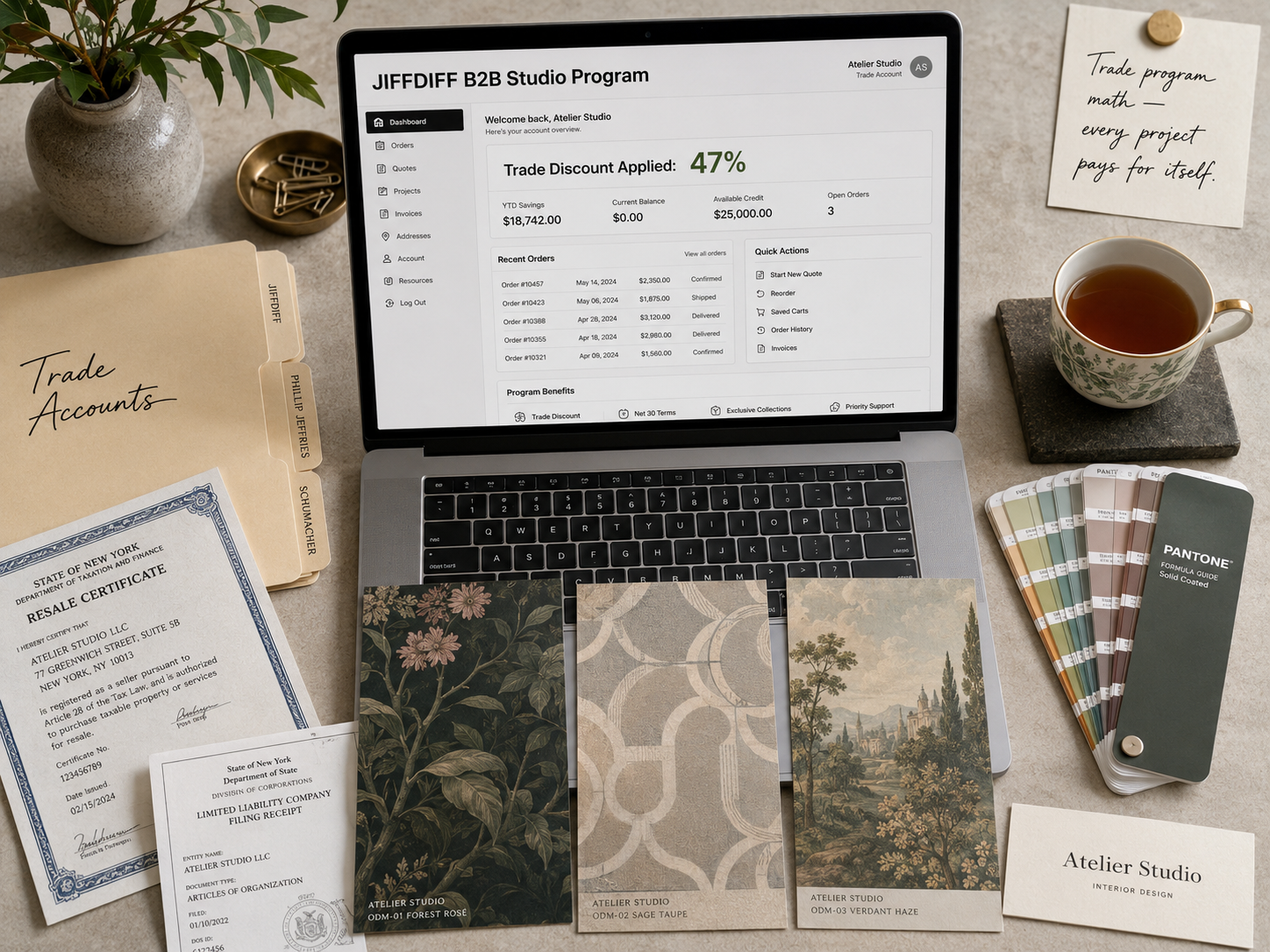
Tapeten-Handelsprogramme für Innenarchitekten: So erhalten Sie Großhandelspreise, exklusive Muster und engagierten Support
Eine Tapete ist mehr als nur eine Wandverkleidung – sie erneuert still und leise die Atmosphäre eines Raumes.
— JIFFDIFF
Händlerprogramme sind die operative Infrastruktur einer profitablen Innenarchitekturpraxis. Designer, die für die von ihnen spezifizierte Tapete den vollen Einzelhandelspreis zahlen, lassen 20–60 % ihrer potenziellen Marge liegen – und konkurrieren mit HomeGoods um die Preistransparenz für dieselben Produkte. Designer, die über Händlerprogramme arbeiten, kaufen zu Großhandelspreisen ein, erhalten Zugang zu Mustern, die die Öffentlichkeit niemals sehen wird, und arbeiten mit engagierter Kundenbetreuung, die das Sourcing von einem Transaktionsproblem in einen strategischen Vorteil verwandelt.
Doch überraschend viele Designprofis – insbesondere neuere Studios und Home-Stager, die von informeller Beschaffung umsteigen – arbeiten ohne aktive Händlerkonten, weil der Antragsprozess undurchsichtig erscheint, die Programmlandschaft fragmentiert wirkt und niemand eine klare Anleitung veröffentlicht, was Händlerprogramme tatsächlich leisten. Dieser Artikel behebt das. Wir werden die vier Programmtypen behandeln, die 2026 in Betrieb sind, die dokumentierten Vorteile auf jeder Stufe, den Antragsprozess und die Qualifikationsanforderungen sowie die strategischen Fragen, die bestimmen, welche Programmstruktur tatsächlich mit Ihrer Praxis wächst.
Teil 1 · Was ein Händlerprogramm 2026 tatsächlich bedeutet
Warum gibt es „Handelspreise“ – und wofür sind sie eigentlich gedacht?
„Für den Handel“ ist die branchenübliche Abkürzung für Produkte, Preise oder Ausstellungsräume, die nur für verifizierte Designprofis – nicht für die breite Öffentlichkeit – zugänglich sind. Es handelt sich nicht um einen Ermessensrabatt. Es ist eine strukturelle Preisstufe, die eine andere kommerzielle Beziehung widerspiegelt: Der Designer ist der Vertriebskanal des Herstellers zum Endkunden, und die Handelspreise sind das, was diesen Vertrieb wirtschaftlich rentabel macht.
Diese Großhandelsdynamik ist im gesamten Designbereich dokumentiert. Laut der American Society of Interior Designers (ASID) – Professional Practice Resources – der maßgeblichen Stelle für den US-amerikanischen Innenarchitektenberuf – ist der Aufbau von Handelsbeziehungen einer der wichtigsten Schritte zur Praxisentwicklung für jeden Designer, der von reinen Projektgebühren zu einem nachhaltigen, skalierbaren Studiobetrieb übergehen möchte. Das Handelskonto ist kein Bonusvorteil. Es ist die betriebliche Grundlage, die eine profitable Spezifikationsarbeit überhaupt erst ermöglicht.
Die fünf dokumentierten Vorteile eines aktiven Händlerprogramms
• Großhandelspreise (10–60 % unter Einzelhandelspreis). Die Rabattstufe hängt von der Art des Programms und Ihrer Beziehungsphase ab. Einzelhandelsmarken mit Händlerprogrammen bieten typischerweise 10–20 %. Nur für den Handel tätige Hersteller und Direktanbieter ab Werk bieten 30–60 %. Dies ist ein echter Margenschutz – keine Rabatte, die Sie „aushandeln“ könnten.
• Exklusiver Musterzugang. Nur für den Handel erhältliche Kollektionen, individuelle Farbvarianten, OEM-Designvorschläge und limitierte Produktauflagen, die Einzelhandelskunden physisch nicht erwerben können. Ihre berufliche Differenzierung hängt teilweise vom Zugang zu Produkten ab, die Ihre Kunden nicht selbst durch Einkäufe beim selben Einzelhändler replizieren können.
• Früher Zugang zu neuen Kollektionen. Priorisierte Vorschau auf neue Designs, oft 30–90 Tage vor der öffentlichen Veröffentlichung – das bedeutet, Sie können Muster spezifizieren und installieren, bevor sie auf Pinterest-Moodboards erscheinen. Hier werden professionelle Reputationen wie „Wie findet sie das bloß immer wieder?“ aufgebaut.
• Engagierte Kontobetreuung. Benannter Ansprechpartner für Spezifikationsfragen, individuelle Anfragen, Bestätigung der Chargenkonsistenz und Logistikkoordination. Der Unterschied zwischen einer E-Mail-Antwort eines Handelsvertreters in 4 Stunden und einer Warteschlange beim Einzelhandelskundendienst in 4 Tagen ist das, was Projektzeitpläne zum Funktionieren bringt.
• Steuerbefreiung für weiterverkaufte Waren. Mit einem gültigen Wiederverkaufszertifikat zahlen Sie keine Umsatzsteuer auf Produkte, die Sie an Kunden weiterverkaufen – ein signifikanter Margenschutz bei jeder Bestellung, insbesondere bei höherwertigen Artikeln wie individuellen Wandmalereien.

Teil 2 · Die vier Händlerprogrammtypen – Welcher passt zu Ihrer Praxis?
Worin bestehen die strukturellen Unterschiede zwischen Handelsprogrammen und welche sollten Sie priorisieren?
Die Landschaft der Handelsprogramme im Jahr 2026 weist vier unterschiedliche Strukturen auf, jede mit unterschiedlichen Rabattprofilen, Anpassungsmöglichkeiten und Support-Levels. Die Wahl des falschen Typs für Ihre Praxis ist der häufigste Fehler – und derjenige, der darüber entscheidet, ob Ihre Handelskonten zu einem echten operativen Vorteil werden oder eine Sammlung ungenutzter Anmeldungen bleiben.
|
Programmtyp |
Rabatt |
Anpassungsfähigkeit |
Support-Level |
Am besten geeignet für |
|
Einzelhandelsmarken |
10–20 % |
Begrenzt |
Basis-E-Mail |
Solo-Designer-Probe |
|
Nur-Handel-Hersteller |
30–50 % |
Einige Anpassungen |
Zugang zum Handelsvertreter |
Aktive Studio-Praxis |
|
Direkt ab Werk |
40–60 % |
Volle OEM/ODM |
Dedizierter Account |
Studio + Markenaufbau |
|
Händlerprogramm |
15–25 % |
Keine |
Nur Vertriebsteam |
Nachbestellungsabläufe |
① Handelsprogramme von Einzelhandelsmarken – Einstiegsniveau, begrenztes Skalierungspotenzial
Die meisten großen Einzelhandelsdesignmarken bieten mittlerweile Händlerkonten an: 10–20 % Rabatt auf den Einzelhandelspreis, Online-Antrag mit schneller Genehmigung, grundlegender E-Mail-Support. Der Rabatt ist zwar bedeutsam, aber bescheiden, und die Anpassungsmöglichkeiten sind praktisch nicht vorhanden – Sie kaufen das gleiche Produkt, das die Öffentlichkeit kauft, zu einem niedrigeren Preis. Für Solo-Designer, die gerade erst anfangen, sind diese Konten nützlich, um die Projektmarge zu unterstützen, ohne den Aufwand des Beziehungsaufbaus. Für Studios, die über die ersten 2–3 Jahre hinaus sind, skalieren sie nicht.
② Programme von Herstellern nur für den Handel – Die Arbeitsebene
Hersteller, die ausschließlich über verifizierte Designprofis agieren und keine Direktverkäufe an Endverbraucher tätigen, bieten Rabatte im Bereich von 30–50 % und bedeutsame Anpassungsmöglichkeiten. Engagierte Handelsvertreter. Zugang zu Showrooms (physisch oder virtuell). Individuelle Farbvarianten für bestehende Designs. Dies ist die strukturelle Ebene, auf der die meisten aktiven Designpraxen operativ agieren. Die Antragstellung erfordert mehr Dokumentation, aber der mehrjährige Nutzen ist wesentlich größer als bei der Einstiegsalternative von Einzelhandelsmarken.
③ Direkt-ab-Werk-Programme – Die strategische Ebene (wo JIFFDIFF agiert)
Direkt-ab-Werk-Programme eliminieren die Schichten zwischen Ihnen und der Produktionslinie. Der Rabattbereich erweitert sich auf 40–60 % unter dem vergleichbaren Einzelhandelspreis. Die Anpassungsmöglichkeiten reichen von „Farbvariantenanpassung“ bis hin zu vollwertigem OEM/ODM mit IP-Schutz. Der dedizierte Account-Support wechselt von einem Vertriebsmitarbeiter zu einer Beziehung, die die Zusammenarbeit mit dem Designteam, Protokolle zur Chargenkonsistenz und Infrastruktur zur Inhaltslieferung umfasst.
Dies ist die strukturelle Ebene, auf der Studios von der projektbasierten Beschaffung zum Aufbau nachhaltiger Markenwerte übergehen – Eigenmarkenkollektionen, eine unverwechselbare Designsprache unter dem eigenen Studionamen, wiederkehrende Einnahmen aus Produkten und nicht nur Dienstleistungen. Das B2B-Studio-Programm von JIFFDIFF arbeitet auf dieser Ebene: 0 MOQ in der Musterphase, 48-Stunden-physische Muster, 15-Tage-Sonderanfertigung, schriftlicher Schutz des Design-IP, Inhaltspaket inklusive.
④ Händlerprogramme – Taktische Nachbestellung
Vertreiber fassen Produkte verschiedener Hersteller zusammen, lagern sie und verkaufen sie mit Marge an Designprofis weiter. Der Rabatt ist bescheidener (15–25 %), da der Vertreiber einen Anteil zwischen Hersteller und Designer einnimmt. Die Anpassungsmöglichkeiten sind praktisch null – Sie arbeiten mit dem Lagerkatalog des Vertreibers. Nützlich für schnelle Nachbestellungen etablierter SKUs, aber nicht strategisch für Studios, die Katalog- oder Musterbibliotheken aufbauen.
Strategisches Prinzip für Händlerprogramm-Portfolios: Die meisten aktiven Studios haben letztendlich 3–5 aktive Händlerkonten gleichzeitig – ein oder zwei Einzelhandelsmarkenprogramme für taktische Projektanforderungen, ein oder zwei Nur-Handel-Herstellerkonten für die tägliche Spezifikationsarbeit und mindestens einen Direkt-ab-Werk-Partner wie JIFFDIFF für die Arbeit, die die strategische Differenzierung Ihres Studios aufbaut. Die Mischung ist wichtiger als die Gesamtzahl.

Teil 3 · So bewerben Sie sich – Der dokumentierte Weg
Was benötigen Sie tatsächlich, um sich für ein Händlerprogramm zu qualifizieren?
Die meisten Händlerprogrammanträge folgen einem konsistenten Dokumentationsmuster in der gesamten Branche. Die Verifizierungsanforderungen bestehen aus einem Grund: Programme müssen bestätigen, dass Sie ein praktizierender Designprofi und kein Hausbesitzer sind, der versucht, auf Großhandelspreise zuzugreifen. Hier ist, was Sie vorbereiten müssen, bevor Sie einen Antrag ausfüllen.
|
Was vorzubereiten ist |
Erforderlich für |
Wie man es bekommt |
|
Geschäftsregistrierung (LLC/EIN) |
Bestätigung, dass Sie ein echtes Unternehmen sind |
Einreichung beim Secretary of State, ca. 50–300 $ |
|
Wiederverkaufszertifikat |
Steuerbefreiung für weiterverkaufte Waren |
State Department of Revenue, Antragstellung kostenlos |
|
Portfolio oder Website |
Nachweis einer aktiven Tätigkeit |
Auch 3–5 abgeschlossene Projekte qualifizieren für die meisten Programme |
|
Berufsverband (optional) |
ASID-, IIDA-Mitgliedschaft beschleunigt die Überprüfung |
Jährliche Mitgliedschaft 100–650 $, je nach Stufe |
|
Kundenreferenzen |
Einige Programme erfordern 1–2 Referenzen |
Ehemalige Kunden oder Handwerker |
|
Projektmuster |
Zeigen Sie tatsächlich ausgeführte Arbeiten |
Telefonfotos für die meisten B2B-Programme akzeptabel |
Der dreistufige Bewerbungsprozess
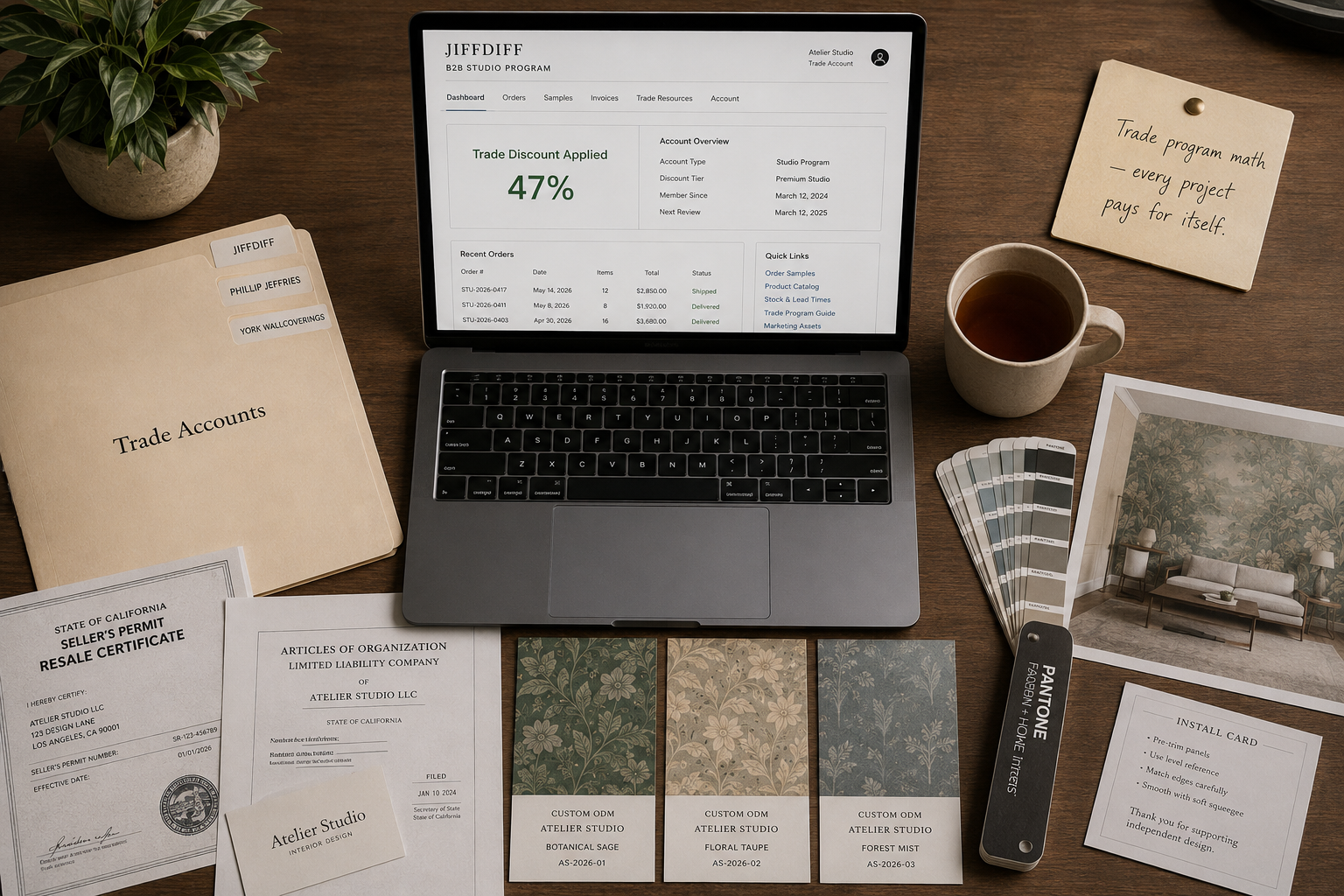
• Schritt 1 — Legen Sie die Dokumentationsgrundlage fest. Die Unternehmensregistrierung (GmbH, Einzelunternehmen mit DBA oder vergleichbar) und die Wiederverkaufsbescheinigung sind die universell erforderlichen Dokumente. Beide sind kostengünstig zu erhalten (unter 400 $ kombiniert für die meisten US-Bundesstaaten) und beide ermöglichen nicht nur den Zugang zu Handelsprogrammen, sondern auch den legitimen Geschäftsbetrieb im Allgemeinen. Wenn Sie informell tätig sind, ist dies der richtige Zeitpunkt, um sich zu formalisieren.
• Schritt 2 — Erstellen Sie ein Verifizierungsportfolio. Sie benötigen keine 20 veröffentlichten Projekte, um sich für die meisten Handelsprogramme zu qualifizieren. 3–5 dokumentierte Projekte mit Fotos, selbst vom Handy, gepaart mit einer einfachen Website oder einem Instagram-Konto, das aktive Designarbeiten zeigt, erfüllen die meisten B2B-Programmverifizierungsanforderungen. Einrichtungs- und Wohndekorationsarbeiten werden für die meisten Programme genauso bewertet wie die vollständige Innenarchitektur von Wohnräumen.
• Schritt 3 — Bewerben Sie sich strategisch, nicht erschöpfend. Beginnen Sie mit 3–5 Programmbewerbungen über verschiedene Ebenen hinweg (ein oder zwei Einstiegsprogramme für Einzelhandelsmarken, ein oder zwei Konten bei reinen Handelsherstellern und ein Direkt-ab-Werk-Programm wie JIFFDIFF). Die meisten Entscheidungen fallen bei Online-Bewerbungen innerhalb von 24–48 Stunden. Bauen Sie die Beziehung zu den Konten auf, die am schnellsten und begeistertsten zustimmen – diese signalisieren eine Übereinstimmung mit Ihrem Praxisprofil.
Die Bewerbung für das JIFFDIFF B2B Studio-Programm ist für Designprofis konzipiert, die sich in jeder Phase ihrer Praxislaufbahn befinden – von Designern, die ihre erste Studiokollektion auf den Markt bringen, bis hin zu etablierten Praxen, die die Beschaffung von Mehrfachprojekten verwalten. Die Bewerbung konzentriert sich auf die Arbeit, nicht auf die Länge der Qualifikation: Projektbeispiele, Unternehmensregistrierung und ein kurzes Gespräch darüber, worauf Ihr Studio hinarbeitet. Entscheidungen erfolgen in der Regel innerhalb eines Werktages. Die Genehmigung eines Handelsprogramms sollte keine bürokratische Hürde sein, sondern der Beginn einer operativen Beziehung, die die Arbeit unterstützt.
Teil 4 · Was das B2B-Studio-Programm von JIFFDIFF tatsächlich liefert
Wie schneidet das Handelsprogramm von JIFFDIFF im Vergleich zu Industriestandards ab?
JIFFDIFF agiert als direkter Werkspartner – Stufe ③ in der obigen Übersicht – mit Funktionen, die auf Designpraxen zugeschnitten sind, die dauerhafte Studio-Markenwerte aufbauen möchten, nicht nur vergünstigte Produkte beziehen wollen. Die spezifischen Leistungen:
Preise und Zugang
• Studiopreise 40–60 % unter vergleichbaren Einzelhandels-Benchmarks für das gleiche Produkt, das bei Amazon und TikTok Shop im Einzelhandel erhältlich ist – Direktpreise ab Werk ohne die Zwischenhändlermarge
• 0 MOQ in der Musterphase mit Ein-Rollen-Physischen Mustern, die innerhalb von 48 Stunden nach Spezifikationseingabe versandt werden – validieren Sie jedes Design ohne Verpflichtung, bevor Sie eine Projektbestellung aufgeben
• Gestaffelte Mengenpreise ab 10–50 Rollen (ODM), 50–200 Rollen (Volumen B2B mit Batch Lock) und 200+ Rollen (volles Studioprogramm mit Eigenmarkenverpackung)
Produktzugang
• Über 100 neue SKUs werden monatlich von unserem 12-köpfigen internen Designteam auf den ästhetischen Daten des US-Marktes abgestimmt – Muster, die die Öffentlichkeit erst Monate später, wenn überhaupt, sehen wird, nachdem Sie sie spezifiziert haben
• Exklusive Farbvarianten und kundenspezifische Ausführungen für den Fachhandel für bestehende Designs in ODM-Mengen, mit IP-Schutz für jede von Ihnen in Auftrag gegebene kundenspezifische Ausrichtung
• Vollständige OEM-Sonderanfertigung basierend auf der Originalkunst oder dem Briefing Ihres Studios, mit schriftlich geschütztem Design-IP – Ihre Designs gehören Ihnen, wir können sie für keinen anderen Käufer reproduzieren
Engagierter Support
• Namentlicher Ansprechpartner für Spezifikationsfragen, kundenspezifische Anfragen, Bestätigung der Chargenkonsistenz und Projektlogistik – keine allgemeine Vertriebswarteschlange
• 48-Stunden-Versand von physischen Mustern an Ihre Studioadresse oder direkt an Projektstandorte – die operative Reaktionsfähigkeit, die Ihre Projektpläne respektiert
• 15-Tage-Durchlaufzeit für Sonderanfertigungen von der bestätigten Bestellung bis zur Versandbereitschaft, mit 100 % dokumentierter pünktlicher Lieferung bei unseren aktiven Studiokunden
• Lieferung von Inhaltspaketen im Lieferumfang von B2B-Bestellungen enthalten: gestylte Produktfotografie, Raumrenderings, Installationsdokumentation – Content-Infrastruktur, die in das Produkt integriert und nicht separat in Rechnung gestellt wird
Strategische Fähigkeiten
• ΔE ≤ 2,0 Farbtoleranz schriftlich mit G7-kalibrierter Produktion und Chargennummern-Dokumentation bei jeder Lieferung – Nachbestellungskonsistenz, die bei Multi-Projekt-Arbeiten professionell zuverlässig ist
• Phasenweise Lieferung in mehreren Sendungen aus einer einzigen bestätigten Bestellung – Unterstützung von Portfolio-Rollouts, sequenziellen Kundeninstallationen und Einzelhandelsstartplänen ohne erneute Bestellreibung
• Eigenmarkenverpackung unter dem Markennamen Ihres Studios zu Standard-Programmpreisen – Ihr Studio-Name auf der Lieferung, unsere Fertigungsinfrastruktur dahinter
Die zugrunde liegende Überzeugung
Bei JIFFDIFF glauben wir, dass eine Tapete mehr bewirkt, als nur eine Wand zu bedecken – sie verändert den Charakter eines Raumes. Für Innenarchitekten und Designstudios führt diese Überzeugung zu einer spezifischen operativen Position: ein Handelsprogramm, das auf die tatsächlichen Bedürfnisse Ihrer Praxis zugeschnitten ist, und nicht auf das, was bequem anzubieten ist. Wir begannen mit der Überzeugung, dass schöne Räume nicht teuer, kompliziert oder unerreichbar sein sollten. Für Designprofis bedeutet das: Handelspreise, die Ihre Projektmargen schützen, exklusive Muster, die Ihre professionelle Differenzierung schützen, und engagierter Support, der Ihre Projektzeitpläne schützt – jede Komponente des Programms ist darauf ausgelegt, großartiges Design einfacher, häufiger, wirtschaftlicher und mit besseren Kundenergebnissen zu liefern.
Teil 5 · FAQs – Spezifische Antworten, die die Suche beenden
Häufig gestellte Fragen: Tapeten-Handelsprogramme für Innenarchitekten
Aus Reddit (r/InteriorDesign, r/designbusiness, r/smallbusiness, r/HomeStaging) und den meistgesuchten Google-Anfragen zum Zugang zu Handelsprogrammen für Innenarchitekten.
F: Was ist ein Innenarchitekten-Handelsprogramm für Tapeten?
Ein Handelsprogramm ist ein strukturiertes Großhandelskonto, das verifizierten Designprofis Zugang zu vergünstigten Preisen (typischerweise 20–60 % Rabatt auf den Einzelhandelspreis), exklusiven Mustern, die der Öffentlichkeit nicht zugänglich sind, frühem Zugang zu neuen Kollektionen, dediziertem Account-Support und Steuerbefreiung für weiterverkaufte Waren bietet – die Programme sind in vier Stufen unterteilt, von Einstiegsprogrammen für Einzelhandelsmarken bis hin zu direkten strategischen Partnerschaften mit Herstellern wie JIFFDIFF.
F: Welchen Rabatt erhalten Innenarchitekten auf Tapeten über Handelsprogramme?
Die Handelspreise reichen von 10–20 % bei Handelsprogrammen für Einzelhandelsmarken bis zu 30–50 % bei reinen Fachhandelsherstellern und 40–60 % bei Direkt-ab-Werk-Partnern; die größten Margen ergeben sich aus direkten Herstellerbeziehungen wie dem JIFFDIFF B2B Studio-Programm, das Großhandelspreise mit Zugang zu kundenspezifischer Produktion und IP-Schutz kombiniert.
F: Wie qualifiziere ich mich als neuer Innenarchitekt für ein Tapeten-Handelsprogramm?
Die meisten Programme erfordern eine Geschäftsregistrierung (LLC, Einzelunternehmen mit DBA oder gleichwertig), eine Wiederverkaufsbescheinigung Ihres Bundesstaates und ein grundlegendes Portfolio von 3–5 dokumentierten Projekten – veröffentlichte Fallstudien sind nicht erforderlich; Handyfotos von abgeschlossenen Installationen mit einer einfachen Website oder Instagram, die eine aktive Praxis zeigen, erfüllen die meisten B2B-Verifizierungsanforderungen.
F: Qualifizieren sich Home Stager für Innenarchitekten-Handelsprogramme?
Ja – die meisten Handelsprogramme heißen Home Stager, Immobilien-Stager, Dekorateure und Styling-Profis willkommen; die Qualifikationskriterien konzentrieren sich auf den aktiven Geschäftsbetrieb und die nachgewiesene Praxis, nicht auf formale Innenarchitekturabschlüsse oder Lizenzen, was bedeutet, dass JIFFDIFF und die meisten anderen Hersteller-Handelsprogramme Staging-Profis zu gleichen Bedingungen wie Wohnraumdesigner akzeptieren.
F: Wie lange dauert die Bearbeitung einer Handelsprogramm-Bewerbung?
Online-Bewerbungen von Einzelhandelsmarken werden oft innerhalb von 24–48 Stunden genehmigt; reine Hersteller-Handelsprogramme antworten in der Regel innerhalb von 1–3 Werktagen; Direkt-ab-Werk-Programme wie das Studio-Programm von JIFFDIFF entscheiden innerhalb etwa eines Werktages, wenn die vollständige Dokumentation eingereicht wurde, wobei Muster typischerweise innerhalb von 48 Stunden nach Genehmigung versandt werden.
F: Kann ich mehrere Tapeten-Handelskonten gleichzeitig haben?
Ja – die meisten arbeitenden Designstudios betreiben 3–5 aktive Handelskonten gleichzeitig über verschiedene Ebenen hinweg (Einzelhandelsmarkenprogramme für taktische Bedürfnisse, reine Handelshersteller für die tägliche Arbeit, Direkt-ab-Werk-Partner für strategische Differenzierung), wobei jedes Konto unterschiedliche Beschaffungsanforderungen innerhalb derselben Praxis erfüllt.
F: Was ist der Unterschied zwischen Handelspreisen und Großhandelspreisen?
Handelspreise sind typischerweise die verifizierte-professionelle Version des Großhandels – die gleiche strukturelle Rabattstufe, aber für einzelne Praktiker durch dokumentierte Bewerbung zugänglich, anstatt große Geschäftskonten zu erfordern; Handels- und Großhandelspreise sind oft der gleiche operative Preispunkt mit unterschiedlichen Qualifikationswegen.
F: Benötige ich eine Wiederverkaufsbescheinigung, um mich für ein Tapeten-Handelsprogramm zu bewerben?
Ja – die meisten US-Handelsprogramme verlangen eine staatlich ausgestellte Wiederverkaufsbescheinigung, um eine Steuerbefreiung für weiterverkaufte Waren zu gewähren; die Bescheinigung kann kostenlos über das Finanzministerium Ihres Bundesstaates beantragt werden und ist für den legitimen Betrieb jedes Designunternehmens, das Produkte an Kunden weiterverkauft, unabhängig vom Zugang zum Handelsprogramm, erforderlich.

Hinterlasse einen Kommentar
Diese Website ist durch hCaptcha geschützt und es gelten die allgemeinen Geschäftsbedingungen und Datenschutzbestimmungen von hCaptcha.