
Does Peel and Stick Wallpaper Look Cheap? What Really Affects the Result
Does Peel and Stick Wallpaper Look Cheap? A More Useful Way to Ask the Question
Peel and stick wallpaper has become one of the most popular ways to update a room without paint, paste, or renovation work.
But there is one question people still hesitate to ask before buying:
Does peel and stick wallpaper look cheap?
The more accurate answer is: it depends on how it’s used, not just what it is.
In real homes, peel and stick wallpaper can look either temporary and “sticker-like” or surprisingly close to traditional designer wallpaper. The difference is rarely about the concept itself—it comes down to material quality, finish, print detail, wall condition, and installation.
So instead of asking whether peel and stick wallpaper is “cheap or not,” a better question is:
What makes some peel and stick wallpaper look like a quick fix, while others look like a real interior design choice?
Let’s look at it from that angle.
1. The Real Question Isn’t “Cheap or Not”—It’s “What Does It Look Like on a Wall?”
When people say peel and stick wallpaper “looks cheap,” they are usually reacting to a visual effect, not the product category itself.
In practice, what they notice is:
-
Too much shine under light
-
Visible seams between panels
-
Thin material showing wall imperfections
-
Colors that look flat or artificial
-
Patterns that don’t scale well in a real room
These are design and material issues—not inherent flaws in peel and stick wallpaper.
In other words, the outcome depends on execution.
2. Finish: Why Shine Changes Everything
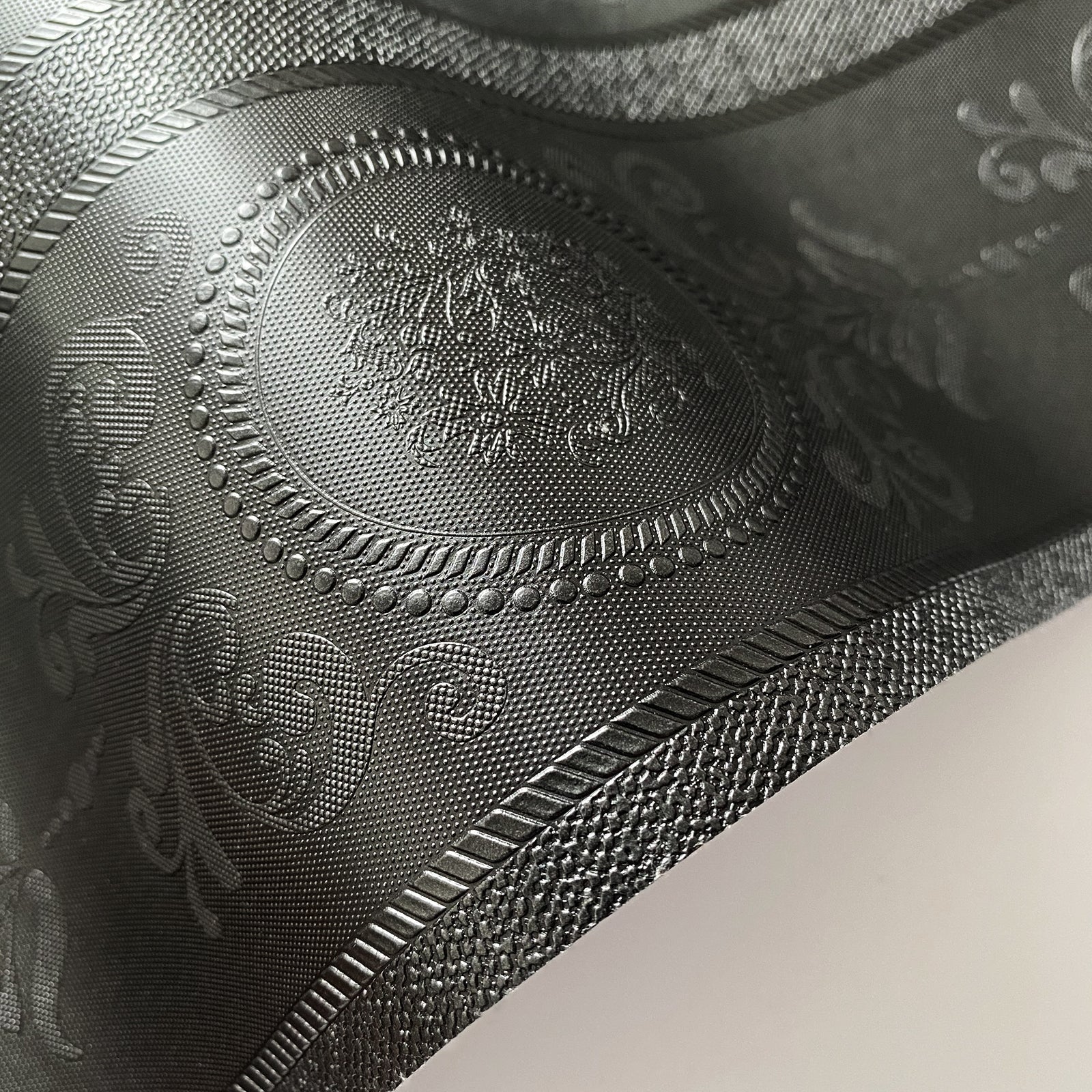
One of the biggest visual differences between “cheap-looking” and “high-end-looking” wallpaper is surface finish.
A highly glossy surface tends to:
-
Reflect light sources strongly
-
Highlight seams and edges
-
Emphasize wall texture underneath
-
Create a plastic-like appearance in large areas
This is why some peel and stick wallpapers feel more like decorative film than wallcovering.
A matte or softly textured finish, on the other hand, behaves more like traditional wallpaper:
-
It diffuses light instead of reflecting it
-
It softens transitions between panels
-
It blends more naturally into the room
That’s also why many interior designers prefer matte finishes for residential spaces, especially bedrooms and living areas.
Gloss is not “bad”—it just needs the right design context. But for most home settings, matte finishes are easier to make look intentional.
3. Material Thickness: What You Don’t See in Product Photos
Thickness is one of the most underestimated factors in how wallpaper looks after installation.
On a screen, thin and thick wallpaper can look identical. On a wall, they behave very differently.
Thinner materials are more likely to:
-
Reveal bumps and uneven paint
-
Show previous wall repairs
-
Emphasize drywall texture
-
Make seams more visible under side lighting
Thicker materials tend to:
-
Cover minor imperfections more effectively
-
Sit more evenly on the wall surface
-
Create a more “finished” visual layer
This is why two wallpapers with the same pattern can produce completely different results in real rooms.
4. Seams: The Detail That Most People Notice First
Even if the pattern is beautiful and the material is good, seams can change the entire perception of quality.
Seams become noticeable when:
-
Panels are slightly misaligned
-
The pattern repeat is not matched carefully
-
The wall underneath is uneven
-
Edges begin to lift over time
-
Installation is rushed or inconsistent
This is one of the most common reasons people describe peel and stick wallpaper as “temporary-looking.”
But it’s also one of the most controllable factors.
With proper alignment, careful smoothing, and correct installation technique, seams can become subtle enough that they disappear in normal viewing distance.
5. Print Quality: Why a Beautiful Online Image Isn’t Enough
A wallpaper design can look perfect on a product page and still feel underwhelming on a full wall.
That’s because screens hide issues like:
-
Low resolution when enlarged
-
Weak contrast in large-scale viewing
-
Repetitive or unnatural pattern spacing
-
Flat-looking textures (wood, stone, fabric effects)
On a wall, these details are no longer abstract—they become part of the room’s atmosphere.
Good wallpaper design is not just about how it looks in a sample image. It’s about how it behaves at architectural scale.
6. Pattern Choice: Why Some Designs Instantly Look More “Expensive”
Even with the same material, pattern choice can completely change perception.
Some patterns naturally feel more elevated in interior spaces:
Soft botanicals
Organic shapes tend to feel more natural and less “printed.”
Chinoiserie or mural-style designs
Large scenic compositions often resemble custom wall art.
Linen, plaster, or grasscloth textures
These add depth without visual noise.
Stone or architectural textures
Subtle surface references can make a wall feel built-in rather than decorated.
Large-scale statement patterns
When used intentionally, oversized designs can feel like a curated focal point.
The key is not complexity—it’s intention. A well-chosen pattern looks designed for the space, not simply applied to it.
7. The Wall Itself Matters More Than Most People Expect
Even high-quality wallpaper can look disappointing if the wall underneath is not ready.
Common issues include:
-
Dust or grease on the surface
-
Fresh paint that hasn’t fully cured
-
Uneven drywall or patchwork
-
Strong wall texture showing through
-
Moisture or structural imperfections
Peel and stick wallpaper is not a “cover everything” solution—it still reflects what is underneath.
That’s why testing a sample directly on your wall is so important. Lighting, texture, and color can change significantly depending on the room.
8. Installation: The Difference Between “DIY” and “Done Well”
Installation is often the final factor that determines whether wallpaper looks polished or unfinished.
Common mistakes include:
-
Stretching the material during application
-
Misaligned pattern matching
-
Air bubbles trapped under the surface
-
Uneven trimming around edges
-
Rushing corners and outlets
On the other hand, careful installation can dramatically improve even mid-range wallpaper.
In many cases, the final result is less about the product price and more about whether the installation was treated as a design step or a quick task.
9. A Simple Way to Judge Quality Before You Buy
Instead of relying only on product photos, you can evaluate peel and stick wallpaper with a few simple checks:
| What to Check | What You Want to See |
|---|---|
| Surface finish | Soft, matte, low glare |
| Material feel | Flexible but substantial |
| Print detail | Clear, not pixelated |
| Pattern scale | Looks natural at room size |
| Seam alignment | Easy to match consistently |
| Wall compatibility | Hides minor imperfections |
| Installation behavior | Smooth, not overly stretchy |
The goal is not perfection—it’s predictability. Good wallpaper should behave consistently once installed.
So, Does Peel and Stick Wallpaper Look Cheap?
A more accurate answer is:
It depends on how well the material, design, wall, and installation work together.
Peel and stick wallpaper can look cheap when shine is too strong, material is too thin, seams are visible, or installation is rushed.
But it can also look surprisingly refined when:
-
The finish is matte or softly textured
-
The material has enough body
-
The print is high quality and well-scaled
-
The wall is properly prepared
-
The installation is done carefully
In those cases, it stops looking like a temporary sticker and starts looking like a real interior surface.
A Better Way to Think About Peel and Stick Wallpaper
Instead of asking:
“Is peel and stick wallpaper cheap?”
A more useful question is:
“What kind of design result do I want in this room?”
Because peel and stick wallpaper is not just a shortcut—it’s a design tool.
Used thoughtfully, it allows you to:
-
Experiment with style without long-term commitment
-
Refresh a space without renovation
-
Add personality to rental or temporary homes
-
Test bold ideas before making permanent changes
Final Thought
Peel and stick wallpaper doesn’t automatically look cheap or high-end.
It reflects the decisions behind it.
When material, design, and installation are aligned, it can look like a deliberate interior design choice—not a temporary fix.
And that is the real difference worth paying attention to.

Commenta
Questo sito è protetto da hCaptcha e applica le Norme sulla privacy e i Termini di servizio di hCaptcha.