
One Year Later: What Peel and Stick Wallpaper Actually Looks Like
It’s 11pm, your cart has four rolls in it, and you’re reading the reviews again. “Peeled at the corners within a month.” “Looked great until summer.” Or maybe you’re the other person — the one who papered a wall last November, and now, twelve months on, you’re not sure what you’ll find when you walk in the door.
We get both versions of that anxiety, because peel and stick wallpaper is usually sold with before-and-after photos and almost never with after-after photos. So this is that post: a year in the life of a real wall, and how to make sure yours still looks considered next winter.
What Twelve Months Actually Does to a Wall
A properly installed peel and stick wall doesn’t dramatically change. The design doesn’t dissolve, the color doesn’t fall off, and the panel doesn’t spontaneously drop. What changes is subtler, and it happens in four places.
Sun. Every wallcovering shifts under a year of direct sunlight. What matters is whether the shift is visible. Warm neutrals and soft browns are far more forgiving than saturated brights — a slight softening reads as patina rather than damage.
Edges. This is where nearly every story of “it failed” begins, and it’s almost never the paper’s age. Corners, seams, and the strip beside a door frame take the most contact and air movement. An edge that lifted in week three was installed with trapped air or a stretched panel.
The seasons. Adhesion is stressed by cycles, not by time: dry winter heating, humid summer air, a radiator running for five months. Long-lasting adhesion is mostly a function of what the wall was like before the backing came off — clean, smooth, dry, fully cured.
Texture. The quiet advantage. A linen, grasscloth, or fine-grid surface hides what a year does to a room — the scuff where a suitcase brushed past, the faint sheen where a chair back rubs, the hairline crack above the door. Flat paint magnifies those marks. Texture absorbs them.
The Four Things That Actually Cause Failure
Some peel and stick walls look tired at month ten; others look new at year three. It comes down to four avoidable causes — none requiring a pricier roll.
1. Wall prep, or the lack of it. Dust, kitchen grease, and old adhesive residue are the enemy. A wall that feels clean can still carry a film. Wipe it down, let it dry completely, and give fresh paint time to cure before covering it.
2. The wrong surface. Textured drywall, orange-peel finishes, brick, and non-stick or easy-clean coatings don’t give adhesive enough continuous contact. Our own guidance is blunt: apply to smooth surfaces and skip textured walls and non-stick finishes. A bumpy wall is a case for a different wall — not for pressing harder.
3. Over-working the panel. Repositioning once during install is normal. Peeling and re-sticking the same section five times is not — each cycle picks up dust and stretches the material.
4. Steam without ventilation. Peel and stick can live happily in a well-ventilated bathroom, powder room, or kitchen — just not in the constant splash zone of a shower.

The Ten-Minute One-Year Check
Before a lease renewal, a listing shoot, or a season change, run this inspection:
- Walk the perimeter. Press edges near corners, door frames, the floor line, and behind radiators. A corner that lifts slightly can usually be warmed with a hairdryer on low, then pressed flat with a squeegee from the center outward.
- Look along the wall, not at it. Stand at the far end of the room and sight down the surface. Bubbles and lifted seams are invisible head-on and obvious at an angle.
- Wipe, don’t scrub. A damp cloth with mild soap handles fingerprints and pet nose art. Abrasive pads dull the matte finish — the one thing that genuinely can’t be repaired.
Before and After — and Then the Year
Picture a rental bedroom in a Midwestern city: builder-beige walls, four patched nail holes, a clanking radiator, one window facing a parking lot. The before isn’t ugly, just unresolvable — a room that refuses to feel like anyone’s.
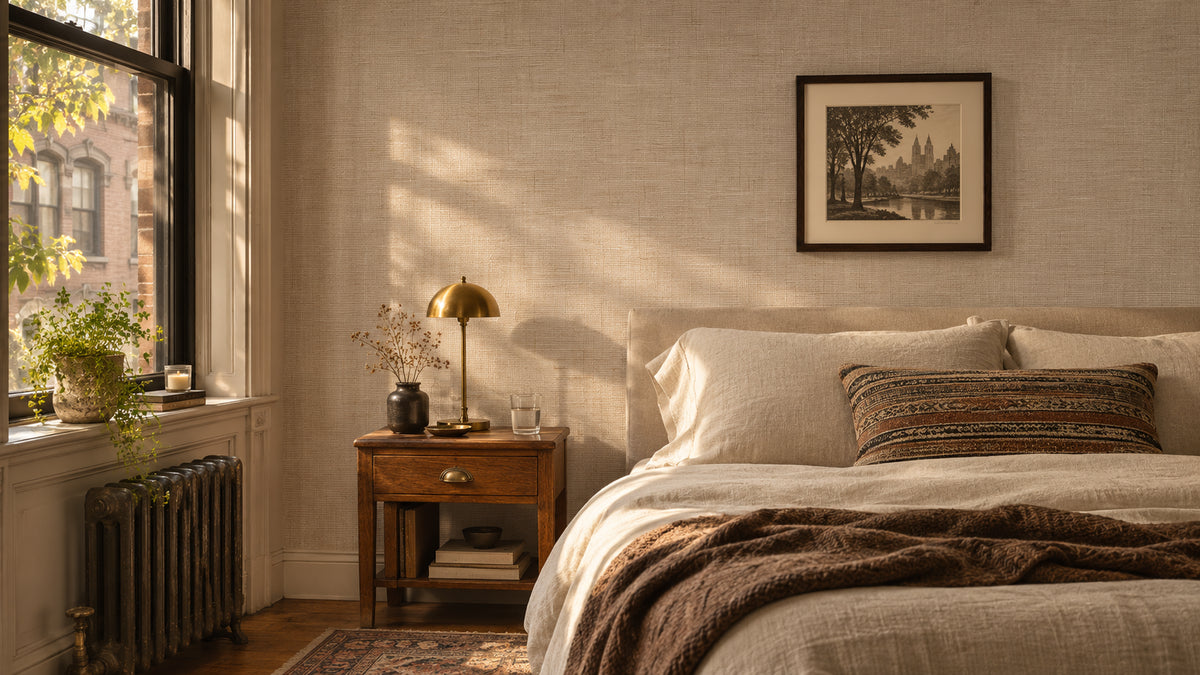
After a weekend with a warm brown linen texture on the bed wall, the same room reads differently. The radiator looks intentional. The oak nightstand looks chosen. The light has somewhere to land.
Now fast-forward twelve months: a faint scuff where a suitcase lived, a polished patch where the desk chair turns — both wiped clean in under a minute. The paper above the radiator has settled a hair tighter, not looser. The room still reads as designed.
The Deposit Math Renters Actually Care About
The real question isn’t whether peel and stick looks good in month one. It’s what happens ten minutes before a move-out inspection.
Peel slowly from a corner at a low angle — that’s the whole technique. If a section resists, warm it with a hairdryer on low, then keep going slowly rather than pulling hard. Panels come away without scraping, steaming, or chemical removers, and painted walls typically return to how they looked before. Keep removed panels rolled face-out if you plan to reuse them, and treat the second install as an accent rather than a full wall — first-application adhesion is always strongest.
One piece of peace of mind: every JIFFDIFF design is made with eco-friendly materials and comes with free replacement for quality issues within one year — a sensible backstop for the rare roll that arrives wrong.
Choosing a Design That Ages Well
Three rules do most of the work. Go mid-tone rather than very pale — chalk-white papers show every mark, while oatmeal, clay, and truffle hide them. Choose texture over graphic — a woven surface forgives imperfect walls and unflattering light. And buy a sample first: the cheapest insurance in the project — you’re testing color and adhesion in your own light.

Shop the One-Year Edit
These are the designs we’d put on a wall we intended to live with for a long time:
- Brown Linen Texture Peel and Stick Wallpaper — the warm neutral that started the room above. Reads as fabric, hides imperfections, suits bedrooms and rentals equally well.
- Woven Grasscloth Texture Peel and Stick Wallpaper — an authentic sisal-look weave with real tactile depth, versatile enough for smooth walls, kitchen cabinets, stair risers, even drawer liners.
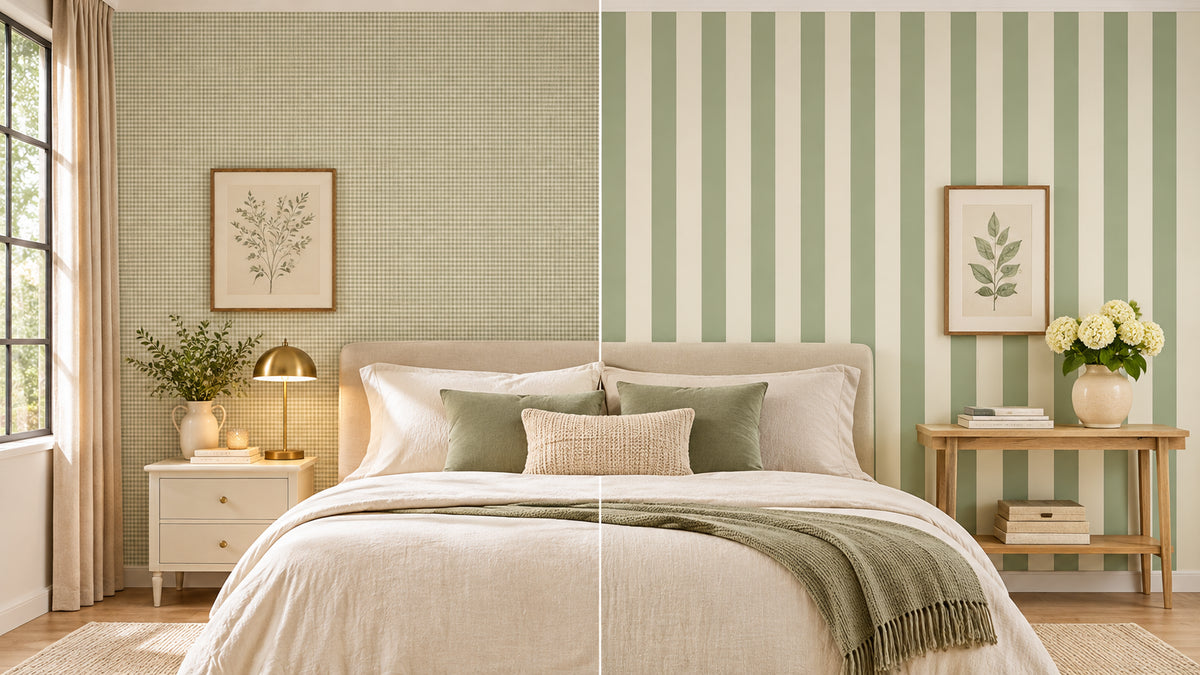
- Green Grass Fine Grid Neutral Peel and Stick Wallpaper — a fine, quiet grid that reads as texture from across the room.
- Sage Green Linen Texture Vertical Stripe Wallpaper — pale-green striping over a woven ground: the calmest way to add height to a low ceiling.
- Multi-Style Wallpaper and Mural Sample Kit — order this first if you’re torn between two neutrals. Tape the swatches up, live with them for a week, then commit.
Want to compare weaves side by side? Browse the full Grasscloth & Linen Texture collection.
Twelve months from now, nobody will ask which wallpaper is on your wall. Start with one wall, one weekend, and a paper you’d be happy to look at next winter.

Commenta
Questo sito è protetto da hCaptcha e applica le Norme sulla privacy e i Termini di servizio di hCaptcha.