Migliori fabbriche di carta da parati adesiva personalizzata per private label nel 2026
Ogni interior designer che abbia consigliato la carta da parati sbagliata a un cliente conosce quella sensazione. Ma chi si occupa di home staging o i fondatori di un brand che si sono affidati alla fabbrica private label sbagliata conoscono qualcosa di peggio: un prodotto che porta il loro nome e che non sono più in grado di sostenere.
Il mercato della carta da parati adesiva personalizzata nel 2026 è ampio, competitivo e davvero difficile da navigare. Centinaia di fabbriche dichiarano di avere capacità OEM. Decine offrono servizi private label. Un numero molto più esiguo è in grado di mantenere le promesse: precisione cromatica nelle ristampe, supporti conformi, prestazioni documentate dell'adesivo, protezione della proprietà intellettuale del design e l'infrastruttura di contenuti che permette a un designer o a un fondatore di brand di vendere con sicurezza fin dal primo giorno.
Questa guida non classifica le fabbriche per nome: nominare i concorrenti non è utile all'acquirente e il mercato cambia troppo rapidamente perché qualsiasi classifica basata sui nomi rimanga attuale. Piuttosto, traccia i cinque archetipi di fabbrica operanti in questo settore, gli otto criteri che distinguono un partner private label capace da uno che vi costerà la relazione con un cliente, e un caso studio concreto che mostra cosa può fare il prodotto giusto, approvvigionato correttamente, per il fatturato di un cliente commerciale. In conclusione: un percorso diretto dalla scoperta al programma per studio B2B.

Parte 1 · Il panorama delle fabbriche nel 2026
Quali tipologie di fabbriche producono effettivamente carta da parati adesiva personalizzata?
Il mercato si consolida in cinque distinti archetipi di fabbrica. Comprendere ciascuno di essi prima di contattare un singolo fornitore fa la differenza tra una conversazione produttiva sull'approvvigionamento e sei settimane di delusioni con i campioni.
|
Tipo di fabbrica |
MOQ |
Velocità campionatura |
Private Label |
Contenuti |
|
① Produttore B2B full-service |
0 – Basso |
48 ore ✅ |
Full OEM/ODM ✅ |
Inclusi ✅ |
|
② Fabbrica digitale POD |
1 pannello |
3–7 giorni |
Solo etichetta |
Nessuno |
|
③ Stabilimento tradizionale |
500–2.000+ |
2–4 settimane |
OEM su volume |
Nessuno |
|
④ Commodity Alibaba |
200–500 |
2–4 settimane |
Etichetta base |
Nessuno |
|
⑤ Distributore regionale |
50–200 |
1–2 settimane |
Nessuno |
Nessuno |
Perché la tipologia di fabbrica determina la fattibilità del vostro brand
La tabella qui sopra sembra un confronto tra prodotti. In realtà è un confronto tra modelli di business. Una fabbrica di stampa su richiesta (print-on-demand) produce un pannello alla volta con margini da consumatore: è uno strumento valido per testare i design, non un'infrastruttura per private label. Uno stabilimento tradizionale produce volumi con qualità da commodity: utile per grandi marchi con una domanda consolidata, non per uno studio o un fondatore di brand DTC che sta validando la sua prima collezione.
Il produttore B2B full-service è l'unico tipo di fabbrica che soddisfa simultaneamente le tre esigenze di un designer o di uno stager che costruisce una linea di prodotti a marchio proprio: flessibilità nel design con MOQ bassi, documentazione della qualità di livello commerciale e fornitura di contenuti insieme al prodotto. Tutto il resto richiede che si compensi la mancanza di infrastruttura con il proprio tempo, capitale o rischio professionale.
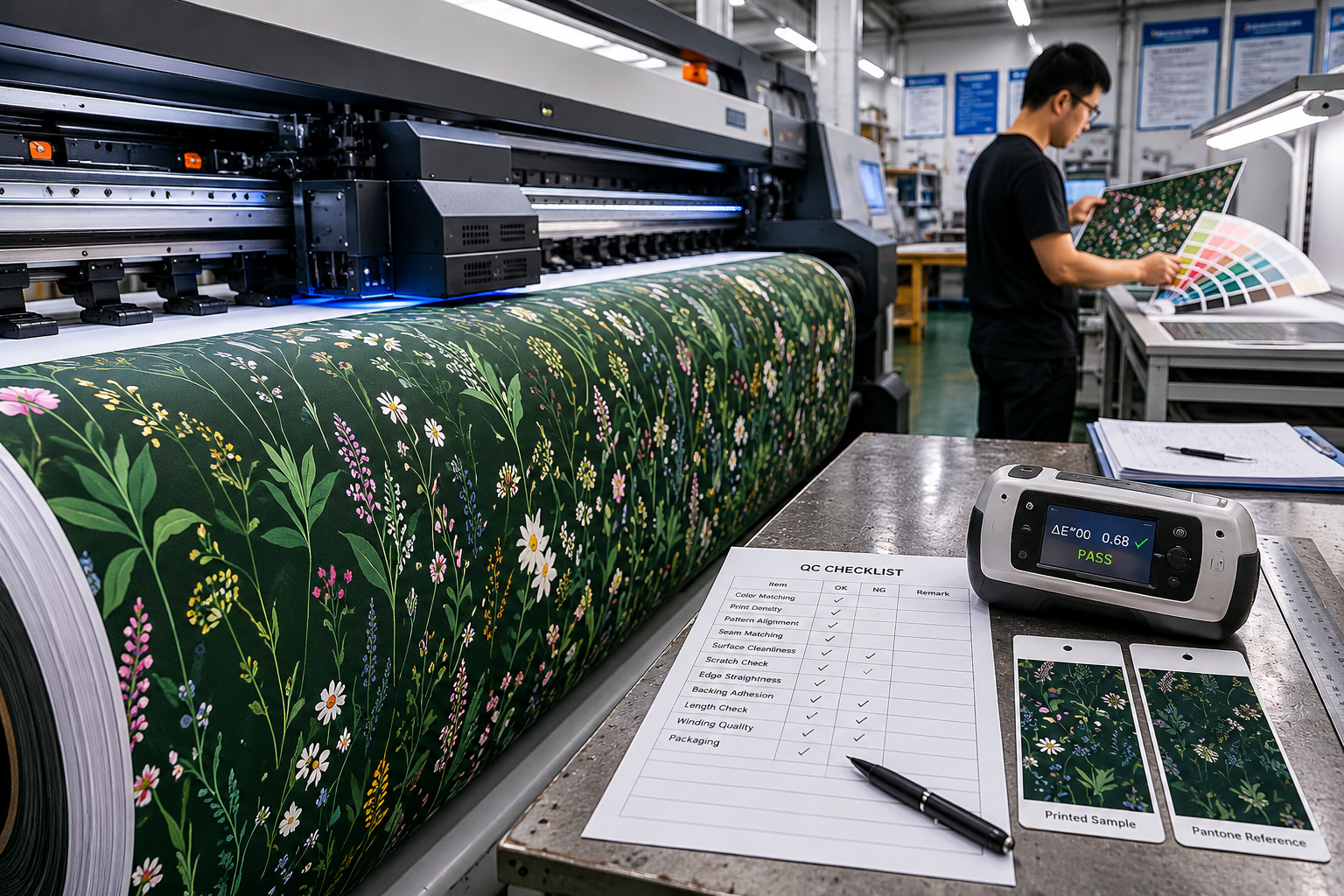
Questa lacuna è ben documentata nel più ampio spazio della produzione di stampe personalizzate. L'analisi della tecnologia di stampa digitale della Commissione per il Commercio Internazionale degli Stati Uniti identifica il fattore chiave che differenzia i produttori di stampa digitale di massa dalle operazioni di livello commerciale: l'integrazione del sistema di gestione della qualità, specificamente la presenza di una gestione del colore calibrata (allineamento G7), la qualifica documentata del supporto e la verifica di conformità da parte di terzi. Nella produzione di carta da parati, queste distinzioni separano una fabbrica private label da una copisteria che vende ad acquirenti private label.

Parte 2 · Il quadro di valutazione a 9 criteri
Cosa richiede un acquirente B2B professionista prima di impegnarsi con una fabbrica partner?
La differenza tra un acquirente private label alle prime armi e uno esperto non è il numero di fabbriche che ha contattato, ma i criteri che valuta prima che finisca la prima conversazione. Ecco la checklist professionale.
|
Criteri |
Via libera |
Lasciare perdere |
|
Velocità campionatura fisica |
Spedizione in 48h da file approvato |
Oltre 5 giorni lavorativi |
|
MOQ per private label |
0–50 rotoli per iniziare |
Primo ordine da 500+ rotoli |
|
Sistema precisione colore |
Calibrato G7, ΔE ≤ 2.0 per iscritto |
Nessuna specifica di tolleranza |
|
Supporto commerciale |
Vinile su base tessile 0.25mm+ |
Solo carta sottile |
|
Documenti conformità antincendio |
ASTM E84 Classe A o B su richiesta |
Non disponibili |
|
Certificazione VOC / eco |
Basso VOC, materiali eco-certificati |
Nessuna documentazione |
|
Clausola IP design |
I vostri file restano vostri, per iscritto |
Vaga o assente |
|
Consegna contenuti |
Foto + render inclusi |
Costo extra o assenti |
|
Tempi produzione personalizzata |
15 giorni lavorativi dall'ordine |
Citati 30+ giorni |
I tre criteri che eliminano immediatamente la maggior parte delle fabbriche
In pratica, la maggior parte dei designer e degli stager può filtrare il panorama delle fabbriche fino a ottenere una lista molto breve ponendo tre domande iniziali. Non perché gli altri criteri non siano importanti (lo sono), ma perché questi tre hanno il tasso di fallimento più alto sul mercato ed eliminano più velocemente il campo più ampio.
• Campione fisico in 48 ore. Non è una richiesta di comodità, è un test di capacità operativa. Una fabbrica con un sistema di produzione di stampa digitale maturo spedisce i campioni entro 48 ore. Una che ha bisogno di due settimane per organizzare un campione vi sta dicendo tutto sulla loro coda di produzione, sulla gestione della qualità e sulla struttura delle priorità dei clienti. Nel 2026, la consegna dei campioni in 48 ore è raggiungibile. Se non avviene, la fabbrica non è configurata per il servizio B2B private label.
• Specifica di tolleranza colore ΔE ≤ 2.0 scritta. Chiedete il documento, non l'assicurazione verbale. Una fabbrica con gestione del colore calibrata G7 produce questo come deliverable standard di controllo qualità. Chi risponde con "i nostri colori sono molto accurati" o "possiamo abbinare qualsiasi colore" non ha un sistema di tolleranza documentato: il che significa che la vostra collezione private label avrà una variazione cromatica visibile tra le ristampe, tra i lotti e tra i pannelli sulla stessa parete.
• Clausola IP design per iscritto. I vostri file di design originali sono un bene. Prima di sottoporre un singolo file alla produzione, confermate per iscritto: la fabbrica non può riprodurre, dare in licenza, rivendere o utilizzare i vostri design per nessun altro acquirente. Una fabbrica che non può fornire questa garanzia è una fabbrica che potrebbe vendere i vostri pattern sotto un altro marchio il trimestre successivo.
La domanda sulla proprietà intellettuale è quella che la maggior parte dei designer salta perché sembra imbarazzante sollevarla presto in una conversazione con un fornitore. È quella che conta di più. Una collezione private label costruita su design che non potete proteggere non è un marchio: è un vantaggio competitivo temporaneo con una data di scadenza che non controllate.

Parte 3 · Cosa fornisce effettivamente la fabbrica partner giusta
Oltre il prodotto: cosa fornisce una fabbrica private label full-service?
Una fabbrica che può stampare il vostro design su vinile e attaccare un'etichetta sul tubo non è un partner private label. Quello è un fornitore di stampa con imballaggio. Una vera fabbrica private label per professionisti dell'interior design e dello staging fornisce sei cose che un fornitore di stampa non può offrire.
1. Infrastruttura di design: 100+ nuovi SKU mensili
Per i designer e gli stager che costruiscono un catalogo invece di un singolo prodotto, la freschezza del design è importante quanto la qualità della produzione. Un produttore full-service con un team di design interno dedicato genera nuove opzioni di pattern mensilmente — botanici, geometrici, murales, texture, revival storico — calibrati sui dati estetici attuali del mercato statunitense. Ciò significa che un acquirente private label che si rifornisce tramite JIFFDIFF non sceglierà mai da un catalogo che ha raggiunto il suo apice due anni fa.
Il team di design interno di 12 persone di JIFFDIFF lancia oltre 100 nuovi SKU ogni mese, con pattern basati su dati di vendita reali dal mercato statunitense. Per un designer che costruisce una collezione private label, questa è l'infrastruttura di intelligence che mantiene la collezione commercialmente rilevante senza richiedere al designer di tracciare e rispondere autonomamente ai cicli di tendenza.
2. Supporto di livello commerciale e conformità
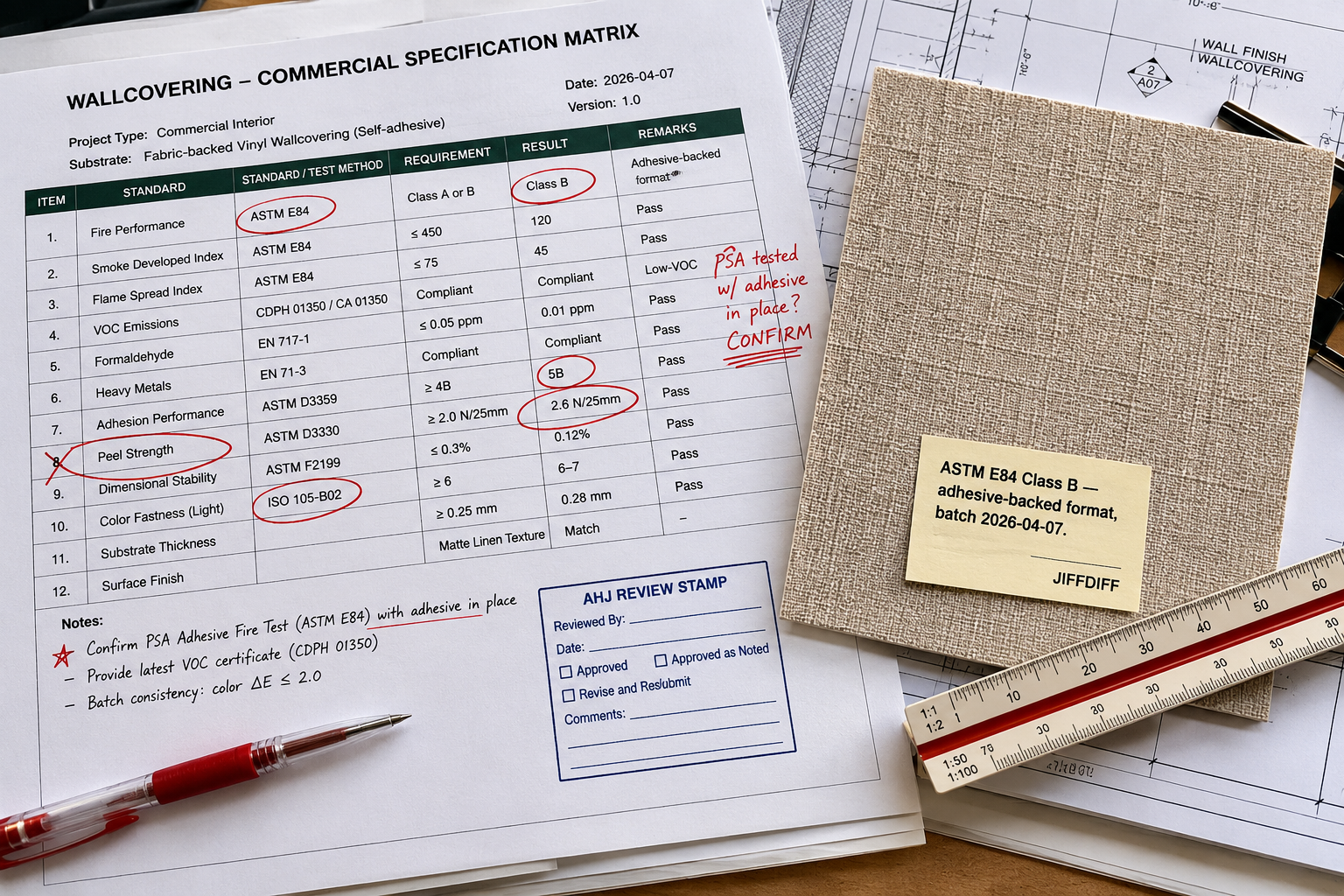
Una carta da parati private label che fallisce nello spazio di un cliente non è un problema di fornitura, è un problema di reputazione sotto il tuo nome. La produzione private label di grado commerciale richiede supporti in vinile rinforzato o spesso (minimo 0,25 mm), adesivo acrilico PSA commerciale testato a un'umidità relativa del 65%+, rivestimento superficiale lavabile e documentazione antincendio ASTM E84 per qualsiasi specifica commerciale.
Questo è il livello di specifica che distingue un prodotto private label che un designer può inserire con sicurezza in un hotel, un salone o una boutique, da uno che può essere venduto solo in un progetto residenziale senza requisiti di conformità. La documentazione di conformità non è opzionale: è la differenza tra un prodotto B2B e un prodotto di consumo con un'etichetta personalizzata.
3. Consegna dei Contenuti come Standard — Non come Extra
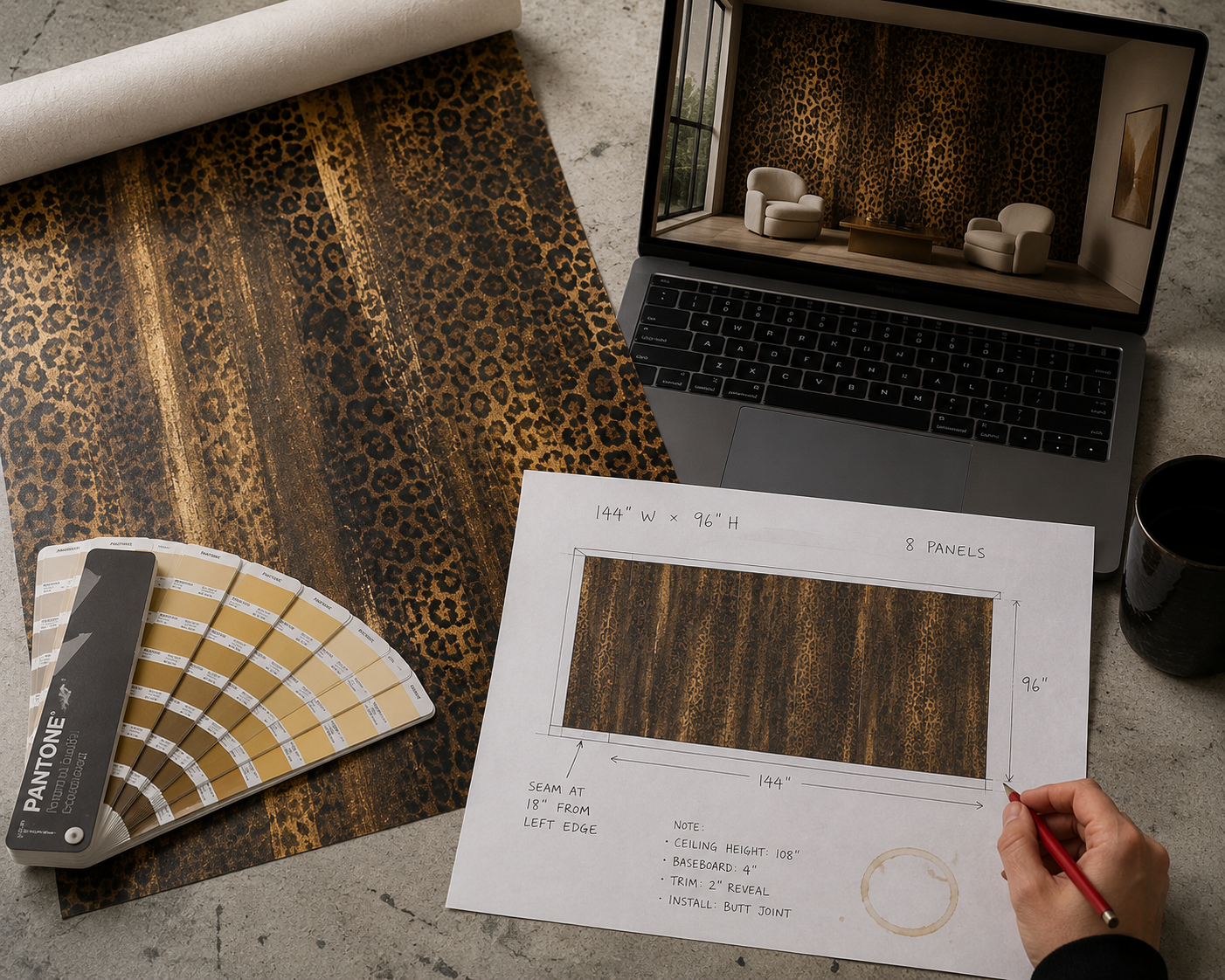
Un prodotto private label che arriva in un tubo marchiato senza materiale fotografico è un problema commerciale. La tua inserzione e-commerce ha bisogno di immagini lifestyle. La presentazione del tuo studio ha bisogno di render degli ambienti. I materiali per i tuoi clienti hanno bisogno di documentazione per l'installazione. Una fabbrica private label a servizio completo fornisce tutto questo insieme al prodotto — flat-lay stilizzati, fotografie degli ambienti in contesto, guide alle dimensioni, schede di installazione — perché capisce che i contenuti non sono una scelta estetica, ma un requisito dell'infrastruttura di vendita.
Il pacchetto di contenuti di JIFFDIFF è incluso in ogni ordine del programma B2B dello studio: fotografia di prodotto, render spaziali e documentazione di installazione forniti insieme al primo lotto di produzione. Non reperiti separatamente, non fatturati come extra. Il prodotto e i mezzi per venderlo arrivano insieme.
4. Coerenza del Lotto nelle Riammissioni
Una collezione private label è forte solo quanto l'affidabilità dei suoi riordini. Un cliente che ha amato la stampa botanica nel suo soggiorno e ne vuole altri due rotoli per la camera degli ospiti ha bisogno che quei rotoli corrispondano a ciò che è già sulla parete. La produzione coerente del lotto con una tolleranza documentata ΔE ≤ 2.0 è la specifica che rende possibili i rapporti di riordine. Senza di essa, ogni riordine è una scommessa sul colore — e una discrepanza di colore sulla parete di un cliente con il tuo marchio sopra è un problema di fidelizzazione del cliente, non un problema del produttore.

Parte 4 · La Prova Commerciale — Caso Studio Salone di Bellezza
Cosa fa il giusto prodotto private label per un cliente commerciale?
L'argomento private label più convincente per i designer che lavorano con clienti commerciali — saloni, caffè, boutique — non riguarda l'estetica. Riguarda il fatturato. Ecco il caso documentato.
Catena di Saloni di Bellezza Phoenix: Parete Feature con Stampa Leopardata — Risultati a 8 settimane
Un partner dello studio JIFFDIFF ha specificato un murale di carta da parati adesiva personalizzata con stampa leopardata sulla parete di 3,6 metri dietro le postazioni di styling di un salone di bellezza di Phoenix. La carta da parati è stata fornita tramite il programma private label B2B di JIFFDIFF — branding dello studio del designer sulla confezione, produzione OEM dalla linea in vinile rinforzato di JIFFDIFF, consegnata con fotografia dei contenuti inclusa. Costo totale del materiale: $340.
|
Metrica |
Prima |
8 Settimane post-installazione |
Variazione |
|
Clienti senza appuntamento al mese |
~180 |
~247 |
+37% ↑ |
|
Tag Instagram/sett |
3–5 |
28–35 |
+560% ↑ |
|
Valore medio scontrino |
$62 |
$79 |
+27% ↑ |
|
Tasso di ritorno |
41% |
58% |
+17 punti ↑ |
|
Fatturato mensile |
$11,160 |
$19,513 |
+$8,353 ↑ |
|
Costo totale murale |
— |
$340 |
ROI: 24.5× |
Il meccanismo: ogni selfie allo specchio dei clienti durante un appuntamento di 45–90 minuti nel salone ora includeva automaticamente la stampa leopardata come sfondo. I clienti hanno pubblicato senza sollecitazione. Ogni post è stato una raccomandazione di un pari di fiducia alla propria rete — la forma più efficace di scoperta di un'attività locale esistente, a costo media zero per il salone.
Un designer che può presentarsi a un incontro con un cliente commerciale con questi dati — 'la parete giusta si ripaga 24 volte in 8 settimane' — sta avendo una conversazione diversa rispetto a chi propone solo un argomento estetico. La capacità di offrire private label con un prodotto di grado commerciale è ciò che rende possibile quella conversazione.
+560% Tag Instagram a settimana Salone Phoenix, settimane 1–8 post-installazione
24.5× ROI su $340 di materiale per murale $8,353 di fatturato mensile aggiuntivo
$0 spesa di marketing durante il periodo di crescita di 8 settimane Scoperta pura guidata dagli utenti (UGC)

Parte 5 · Il Programma di Fabbrica JIFFDIFF — Specificamente
Come si presenta il programma private label di JIFFDIFF in termini concreti?
Questa sezione è inequivocabile. Se JIFFDIFF è il partner che vale la pena valutare — e per la maggior parte degli studi di interior design e allestitori di case che costruiscono un programma private label, lo è — ecco esattamente ciò che il programma offre, senza astrazioni.
Specifiche di Produzione
• Supporto: Vinile rinforzato su tessuto, 0.25mm+ — grado commerciale, superficie lavabile, testato contro l'umidità
• Adesivo: PSA acrilico commerciale, testato a un'umidità relativa del 65%+, protocollo di rimozione documentato a 12–24 mesi
• Gestione del colore: Produzione calibrata G7, tolleranza lotto ΔE ≤ 2.0, specifica scritta
• Conformità antincendio: Documentazione ASTM E84 Classe A e Classe B disponibile su richiesta
• VOC: Materie prime eco-certificate, formulazione a basso contenuto di VOC, documentazione fornita
Accesso al Programma e Tempistiche
• MOQ: MOQ 0 per la fase di campionatura — i campioni fisici di un singolo rotolo vengono spediti entro 48 ore dall'approvazione del file
• Produzione: 15 giorni lavorativi dall'ordine confermato alla disponibilità per la spedizione, tasso di puntualità documentato al 100%
• Libreria di design: 100+ nuove SKU lanciate ogni mese; accesso all'intero catalogo ODM per la selezione private label
• Supporto OEM: Accettazione di file forniti dal designer; team interno di 12 persone disponibile per la collaborazione nello sviluppo del design
• Packaging private label: Design personalizzato dell'etichetta e dell'inserto con il marchio del tuo studio, incluso nel prezzo del programma
• Consegna dei contenuti: Fotografia di prodotto stilizzata, render spaziali, documentazione di installazione — consegnati con il prodotto
Percorso di prova: i prodotti JIFFDIFF sono disponibili su Amazon e TikTok Shop per l'acquisto di un singolo rotolo — il primo passo previsto per designer e allestitori che vogliono convalidare la qualità del prodotto in un'installazione reale prima di impegnarsi nel programma B2B private label. Dopo la convalida, il team B2B gestisce l'aggiornamento del programma: stesso prodotto, prezzi da studio, packaging private label e consegna completa dei contenuti. Il divario tra 'comprare un rotolo su TikTok Shop' e 'gestire un programma di studio in 12 sedi' è solo un'email.
La convinzione di JIFFDIFF: la parete che progetti merita gli stessi standard di qualità indipendentemente dal fatto che si trovi nel soggiorno di un cliente o in un hotel da 200 camere. Il nostro programma private label esiste perché crediamo che il marchio di un designer debba essere qualcosa di cui essere orgogliosi di mettere su una confezione — e ciò significa che il prodotto all'interno della confezione deve performare come se avesse la tua reputazione a sostenerlo. Perché è proprio così.

Part 6 · FAQ — Risposte Specifiche che Terminano la Ricerca
Domande Frequenti: Fabbriche di Carta da Parati Adesiva a Stampa Personalizzata
Tratto da Reddit (r/InteriorDesign, r/ecommerce, r/smallbusiness, r/designbusiness) e dalle ricerche con volume più alto di Google sulla valutazione delle fabbriche di carta da parati a stampa personalizzata.
Q: Qual è la migliore fabbrica per carta da parati adesiva a stampa personalizzata nel 2026?
Il miglior tipo di fabbrica per il private label nel 2026 è un produttore B2B a servizio completo che offre campionatura con MOQ basso o nullo, consegna di campioni fisici in 48 ore, gestione del colore G7 con documentazione ΔE ≤ 2.0, protezione della proprietà intellettuale del design per iscritto e consegna dei contenuti insieme al prodotto — non un marchio specifico, poiché la capacità del produttore conta più della reputazione in questo spazio.
Q: Qual è il MOQ per il private label di carta da parati adesiva personalizzata?
Lo standard professionale B2B è MOQ 0 per campionatura e convalida di piccoli lotti, con prezzi a volume che si sbloccano a 50–200 rotoli; qualsiasi fabbrica che richieda 500+ rotoli prima di una fase di campionatura non è configurata per il segmento acquirente designer o allestitore.
Q: Come proteggo i miei design quando uso una fabbrica di stampa personalizzata?
Richiedi una clausola scritta sulla proprietà intellettuale del design prima di inviare qualsiasi file — specificamente: la fabbrica non può riprodurre, rivendere o concedere in licenza i tuoi design per nessun altro acquirente; questa clausola dovrebbe essere un termine standard nell'accordo B2B della fabbrica, non qualcosa che negozi progetto per progetto.
Q: Quanto tempo richiede la produzione di carta da parati adesiva personalizzata?
Il benchmark professionale è la consegna del campione fisico in 48 ore dall'artwork approvato e 15 giorni lavorativi dall'ordine di produzione confermato alla disponibilità per la spedizione — qualsiasi preventivo oltre i 30 giorni riflette vincoli di capacità che entreranno in conflitto con i programmi di progetto reali.
Q: Posso acquistare la carta da parati JIFFDIFF su Amazon o TikTok Shop prima di un programma B2B?
Sì — l'acquisto al dettaglio di un singolo rotolo su Amazon o TikTok Shop è il percorso di prova standard prima dell'impegno nel programma private label B2B; dopo aver convalidato la qualità del prodotto in un'installazione reale, contatta direttamente il team B2B di JIFFDIFF per l'accesso al programma studio, produzione OEM e packaging private label.
Q: Quali certificazioni dovrebbe fornire una fabbrica di carta da parati personalizzata per uso commerciale?
Classificazione di resistenza al fuoco ASTM E84 Classe A o B (richiesta per la maggior parte degli spazi commerciali occupati negli Stati Uniti), certificazione a basso contenuto di VOC o GREENGUARD per la qualità dell'aria interna e documentazione della tolleranza cromatica ΔE: richiedere sempre i rapporti di prova originali rilasciati dal laboratorio, non riferimenti di marketing alle certificazioni.
D: Come posso garantire la coerenza cromatica per una collezione private label durante i riordini?
Richiedere una specifica scritta di tolleranza del lotto ΔE ≤ 2,0 e confermare che la fabbrica blocchi tutti i rotoli di un singolo ordine su un unico lotto di produzione; per le collezioni con più varianti di colore, richiedere la documentazione del numero di lotto su tutte le etichette dei cartoni per consentire un abbinamento preciso dei riordini.
D: Quale ROI possono aspettarsi i clienti commerciali da una parete d'accento ben progettata?
I dati documentati dei casi di studio mostrano che i saloni di bellezza con pareti d'accento audaci (stampa leopardata, grandi motivi botanici) generano un aumento del 37%+ degli ingressi senza appuntamento e una crescita del 500%+ dei tag sui social media entro 8 settimane: un caso di studio di un salone di Phoenix mostra che 340$ di materiale per murales hanno generato 8.353$ di ricavi mensili incrementali, un ROI di 24,5 volte.

Commenta
Questo sito è protetto da hCaptcha e applica le Norme sulla privacy e i Termini di servizio di hCaptcha.