Le migliori tendenze di carta da parati adesiva per il 2026 che gli acquirenti B2B dovrebbero avere in magazzino ora
Nel 2026, il mercato della carta da parati non è solo in crescita: si sta differenziando.
Le ricerche su Google per "mural wallpaper" sono aumentate di oltre l'1.150% nel 2025. I rivenditori online segnalano un incremento delle vendite di carta da parati adesiva superiore al 50% rispetto all'anno precedente. E con un mercato globale della carta da parati che si prevede supererà i 3 miliardi di dollari entro il 2034, le categorie di design che trainano questa crescita sono già visibili nei dati di ricerca, nei contenuti social e nei pattern di richiesta degli acquirenti proprio ora.
Per gli acquirenti B2B — buyer retail, brand di e-commerce, studi di interior design, gestori di affitti a breve termine — la questione non è se rifornirsi di carta da parati autoadesiva. Si tratta di quali design scegliere e come approvvigionarsene in modo da non ritrovarsi con uno stock che raggiunge il picco tra due mesi e resta fermo per i dieci successivi.
Questo post è il brief sulle tendenze 2026 di JIFFDIFF: un'analisi categoria per categoria dei design che mostrano il segnale commerciale più forte al momento, con un chiaro framework di approvvigionamento affinché tu possa agire su queste informazioni, non solo archiviarle.
Parte 1 · Contesto di mercato
Perché il 2026 è l'anno giusto per puntare sulla carta da parati adesiva?
La categoria della carta da parati rimovibile ha raggiunto un punto di svolta strutturale. La carta da parati adesiva rappresenta oggi quasi il 31% di tutte le nuove installazioni residenziali di carta da parati negli Stati Uniti — un aumento rispetto a una quota trascurabile di cinque anni fa — e l'adozione commerciale in hotel, uffici e spazi retail sta accelerando man mano che gli operatori riconoscono il vantaggio economico di un formato che si rinnova senza manodopera professionale.
I due comportamenti d'acquisto che guidano questo fenomeno meritano di essere menzionati direttamente. In primo luogo, l'economia degli affitti: con le abitazioni in affitto negli Stati Uniti a livelli record, la carta da parati autoadesiva è una delle poche opzioni di interior design significative disponibili per gli inquilini, una fascia demografica con una forte propensione alla spesa e un comportamento attivo di condivisione social. In secondo luogo, l'effetto Airbnb: i gestori di affitti a breve termine oggi scelgono la carta da parati come facevano un tempo i boutique hotel, trattandola come un servizio che genera entrate piuttosto che come una scelta estetica.
Anche l'orientamento cromatico è importante. Il Pantone Color Institute — l'autorità di riferimento globale per l'intelligence sulle tendenze del colore — definisce l'orientamento della palette che si diffonde nei cicli d'acquisto dell'arredamento per 12-18 mesi. Nel 2026, i toni caldi della terra, il terracotta, l'argilla tenue e i verdi botanici profondi dominano la narrazione cromatica commerciale. Qualsiasi buyer che stia costruendo un catalogo di carta da parati adesiva senza ancorarlo a questa palette è già in ritardo.

Parte 2 · Le tendenze di design 2026 — Classificate per segnale commerciale
Quali categorie di design stanno generando una reale domanda B2B in questo momento?
Non ogni tendenza che appare su una rivista di design si converte in domanda B2B all'ingrosso. Le categorie sottostanti sono classificate in base alla combinazione di velocità di ricerca, dati sulle richieste dei buyer e performance di vendita — i segnali che predicono effettivamente le decisioni di stoccaggio, non la copertura editoriale.
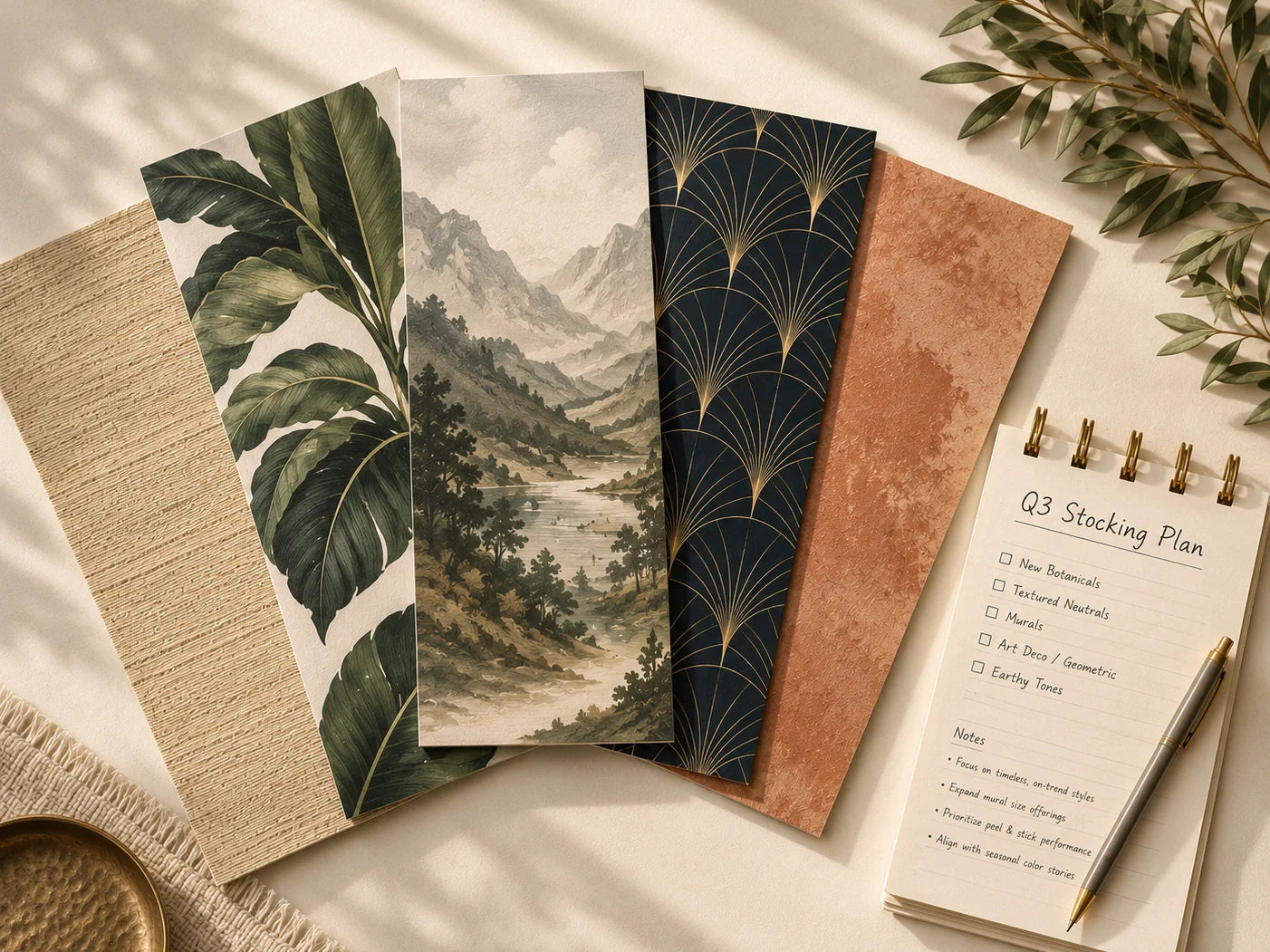
① Texture tattile — Grasscloth, lino, intonaco, finta pietra
Questo è il segnale commerciale più forte in assoluto nel 2026. Le pareti piatte e minimaliste vengono sostituite da superfici che appaiono stratificate e architettoniche, ma i consumatori non vogliono il costo e la permanenza del vero grasscloth o dell'intonaco. La texture adesiva colma esattamente questo vuoto. I design più richiesti: intreccio effetto lino, simulazione di grasscloth in sisal, effetto stucco veneziano ed effetto cemento liscio.
Per gli acquirenti B2B, i design con texture offrono un importante vantaggio commerciale: sono meno sensibili alle tendenze rispetto ai motivi grafici. Un pannello effetto grasscloth acquistato per una camera da letto nel 2024 risulta attuale anche nel 2026. Tale stabilità rende la texture una scommessa di magazzino più sicura per i buyer che non possono assorbire cicli di tendenza rapidi da "fast fashion".
• Segmenti migliori: Brand di e-commerce, gestori Airbnb, catene retail di fascia media
• Priorità colore: Sabbia calda, bianco caldo, salvia, argilla terracotta, ardesia profonda
• Stato JIFFDIFF: Disponibile in oltre 20 SKU, campionatura in 48 ore
② Murales panoramici — Pareti d'impatto di grande formato
La carta da parati in stile murale — un'unica immagine continua su un'intera parete anziché un motivo ripetuto — sta crescendo più velocemente di qualsiasi altro formato nella categoria. L'aumento delle ricerche Google di oltre l'1.150% nel 2025 non è un errore di battitura. Il motivo è fotografico: una parete con murale è il modo più semplice per creare un momento di "scroll-stop" in una foto di un annuncio Airbnb, su Instagram di un negozio retail o come sfondo per le foto di prodotto di un e-commerce.
Per gli acquirenti B2B, i murales richiedono un fornitore in grado di produrre stampe su misura con un allineamento preciso dei pannelli e colori coerenti in tutti i lotti. Il rischio di approvvigionamento è reale: un murale che non si allinea perfettamente alle giunture è una lamentela del cliente in attesa di accadere. L'infrastruttura di stampa digitale di JIFFDIFF è costruita proprio per questo: produzione a dimensioni personalizzate in 15 giorni, gestione completa del colore con ΔE ≤ 2.0.
• Motivi principali: Foresta / paesaggio botanico, acquerello astratto, arcata architettonica, cielo/nuvole
• Segmenti migliori: Studi di interior design, boutique hospitality, brand lifestyle DTC
• Stato JIFFDIFF: Produzione murale personalizzata, consegna in 15 giorni, pacchetto contenuti incluso
③ Botanico e floreale di grandi dimensioni — La categoria sempreverde
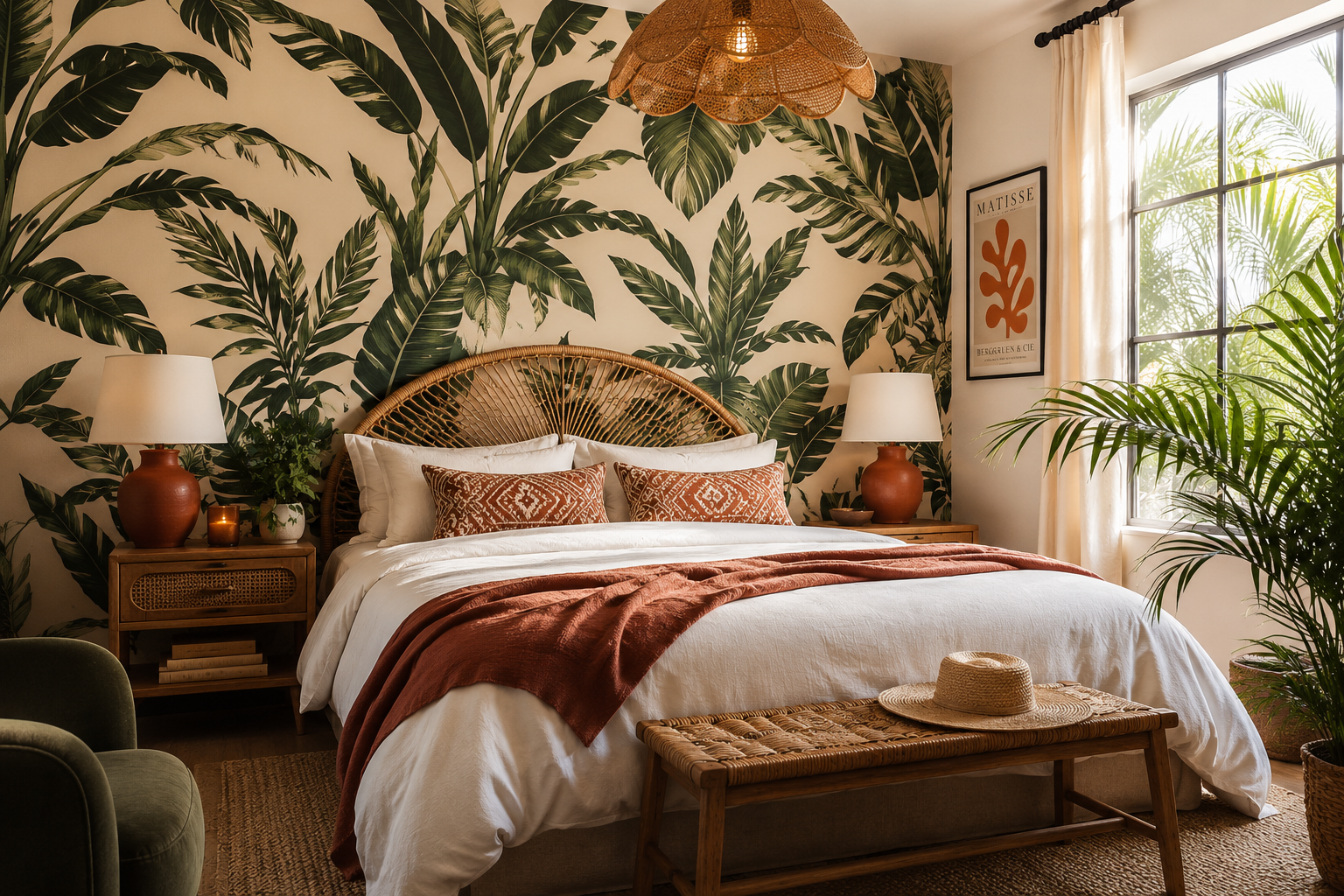
La stampa botanica è stata la categoria costantemente più performante nella carta da parati autoadesiva per tre anni consecutivi — e il 2026 non è l'anno in cui raggiungerà il picco. Il cambiamento è nella scala e nella palette: i motivi botanici a piccola ripetizione stanno lasciando il posto a stampe con foglie tropicali sovradimensionate e floreali da giardino di grande formato in toni caldi della terra anziché i verdi primari brillanti del 2022-2023.
Questa è la categoria core più forte di JIFFDIFF. Il nostro team di design interno composto da 12 persone monitora mensilmente i dati sulle preferenze estetiche del mercato statunitense e il botanico rimane la categoria con le vendite più elevate tra la nostra base di clienti B2B. Le combinazioni di colori che si stanno muovendo più velocemente: verde foresta profondo su crema, terracotta su bianco caldo, salvia e rosa cipria.
• Direzione colore: Toni terra — terracotta, salvia, crema caldo, verde foresta profondo
• Segmenti migliori: Tutti i segmenti B2B — la scommessa più sicura per volumi elevati nella categoria
• Stato JIFFDIFF: Ampia gamma di SKU, molteplici varianti colore, oltre 100 nuovi design al mese
④ Art Déco e Heritage Revival — Il livello sofisticato
Il design ispirato alla tradizione — il linguaggio dei motivi di William Morris, la cineseria, la toile delicata, la geometria Art Déco in oro e blu navy — sta vivendo un significativo revival commerciale nel 2026. Il motore è la stanchezza dei consumatori verso il minimalismo: le persone vogliono spazi che sembrino ricchi di storie, stratificati e personali piuttosto che semplicemente "arredati". Questi design si vendono a prezzi più alti e offrono margini maggiori per gli acquirenti retail.
La nota critica per l'approvvigionamento in questa categoria: la precisione del design conta. I motivi tradizionali che sono visivamente errati — proporzioni sbagliate, combinazioni di colori anacronistiche, stampa a bassa risoluzione — risultano immediatamente "economici" a un acquirente esperto di design. Il team di design di JIFFDIFF realizza questi motivi con la direzione artistica basata su riferimenti d'epoca originali, non su derivati generati da algoritmi.
• Direzione colore: Blu navy e oro, salvia e ottone, rosa cipria e terracotta, toni gioiello profondi
• Segmenti migliori: Studi di interior design, boutique hotel, brand premium DTC
• Stato JIFFDIFF: Campionatura in 48 ore, colori personalizzati disponibili su grandi volumi
⑤ Palette colori terra caldi — La narrazione cromatica intercategoriale
Questa non è una singola categoria di design, è il linguaggio cromatico che attraversa tutto quanto sopra descritto. Argilla, terracotta, beige caldo, oro tenue e verde botanico profondo sono la palette del 2026. L'implicazione commerciale per gli acquirenti B2B è diretta: qualsiasi design nel tuo catalogo che non sia stato aggiornato per riflettere questo orientamento cromatico è di fatto in vendita nel mercato dell'anno scorso.
L'aggiornamento del catalogo JIFFDIFF opera su base mensile — oltre 100 nuovi SKU ogni mese — proprio per garantire che l'attualità cromatica sia mantenuta. Un buyer che si approvvigiona da un catalogo statico lanciato due anni fa e mai aggiornato sta correndo un rischio di tendenza che si aggrava ad ogni stagione.
Parte 3 · Priorità di stoccaggio per segmento B2B
Quali tendenze dovresti effettivamente prioritizzare per il tuo catalogo?
Non ogni tendenza merita lo stesso impegno di inventario. La tabella sottostante mappa ogni tendenza di design del 2026 rispetto ai segmenti di acquirenti B2B con la più forte intenzione d'acquisto e alla capacità di approvvigionamento di JIFFDIFF per ciascuna categoria.
|
Tendenza |
Priorità |
Segmento acquirente migliore |
Disponibilità JIFFDIFF |
|
Texture tattile / Grasscloth |
★★★★★ |
E-commerce, Airbnb, Retail |
Aggiornamento 100+ SKU/mese |
|
Murales panoramici |
★★★★★ |
Interior Design, Brand DTC |
Consegna personalizzata in 15 gg |
|
Botanico e grandi fiori |
★★★★☆ |
Tutti i segmenti B2B |
A catalogo, varianti multiple |
|
Art Déco / Heritage Revival |
★★★★☆ |
Boutique hotel, Retail |
Campionatura in 48 ore |
|
Toni terra caldi |
★★★★☆ |
STR, Brand residenziali |
Palette completa in stock |
|
Geometrico tenue / Righe |
★★★☆☆ |
Uffici, Co-working, Retail |
Catalogo standard |
|
Carta da parati per soffitti |
★★★☆☆ |
Brand orientati al design, Hotel |
Formato personalizzato su richiesta |
Modello di approvvigionamento JIFFDIFF: 0 MOQ per la validazione del campione su qualsiasi design in qualsiasi categoria di tendenza. Una volta testate le vendite su 5-10 unità, è possibile effettuare ordini di volume in 15 giorni dalla conferma. Il catalogo si rinnova con oltre 100 SKU al mese: non ti approvvigionerai mai basandoti su dati di tendenza obsoleti.
Parte 4 · Come procurarsi un inventario in linea con le tendenze senza sovraesposizione
Qual è la strategia di stoccaggio corretta per una categoria guidata dai trend?
L'errore più grande che commettono gli acquirenti B2B nelle categorie guidate dai trend è impegnarsi su grandi volumi prima di aver convalidato la domanda. Un design che sembrava forte durante un'anteprima in fiera può avere performance inferiori nella tua specifica base clienti per ragioni che non hanno nulla a che fare con il trend stesso: disallineamento del prezzo, estetica del canale, dati demografici del pubblico.
Il framework di stoccaggio a tre fasi
• Fase 1 — Campionamento e convalida (MOQ 0). Ordina campioni fisici di 8–12 design su 3–4 categorie di tendenza. Installali o esponili nel tuo ambiente di vendita reale. Per l'e-commerce: inseriscili come schede prodotto con le fotografie fornite da JIFFDIFF. Per il retail: esponili in negozio per 2–3 settimane e monitora l'interazione dei clienti. Questa fase non ha costi significativi e produce dati di mercato reali.
• Fase 2 — Ordine di prova in piccoli lotti (10–50 unità). Per i design che superano la Fase 1, effettua un piccolo ordine commerciale. Questo ti fornirà dati reali sulla velocità di vendita su una scala significativa, sufficienti a pianificare un ordine di volume con sicurezza. I tempi di produzione di 15 giorni di JIFFDIFF ti consentono di passare dalla Fase 1 alla Fase 2 e a un ordine di rifornimento completo nel giro di un solo mese.
• Fase 3 — Impegno sui volumi con blocco del lotto. Una volta ottenuti i dati di vendita dalla Fase 2, impegnati sui volumi. In questa fase, richiedi la conferma della produzione in un unico lotto, in modo che tutte le unità appartengano allo stesso lotto colore: un aspetto fondamentale per gli ordini di più unità dove la coerenza dell'esposizione è importante.
Il team di progettazione interno di 12 persone di JIFFDIFF fornisce briefing mensili sulle tendenze agli account B2B attivi — non solo notifiche sui nuovi SKU, ma anche la logica progettuale dietro ogni lancio: a quale segnale del consumatore risponde, a quale canale si adatta e quale combinazione di colori sta performando nell'attuale mercato statunitense. Questo è il vantaggio dell'intelligence di approvvigionamento che deriva dall'essere un partner manifatturiero piuttosto che un semplice fornitore da catalogo.
FAQ — Cosa chiedono gli acquirenti B2B sui trend del 2026
Domande frequenti: Tendenze carta da parati adesiva 2026 per acquirenti all'ingrosso
Compilate da Reddit (r/ecommerce, r/smallbusiness, r/InteriorDesign, r/dropship) e dalle principali query di ricerca sui trend delle carte da parati 2026 di Google.
D: Quali design di carta da parati adesiva vendono meglio all'ingrosso nel 2026?
Le texture tattili (effetto tessuto, lino), i motivi botanici su larga scala in toni della terra e i murales panoramici sono le tre categorie all'ingrosso a maggiore velocità di vendita nel 2026, in questo ordine di volume commerciale.
D: Con quale frequenza dovrei aggiornare il mio catalogo B2B di carta da parati?
L'accesso mensile ai nuovi SKU è lo standard competitivo: i partner di approvvigionamento che aggiornano solo stagionalmente lasciano gli acquirenti esposti ai ritardi dei trend; JIFFDIFF lancia oltre 100 nuovi design ogni mese esattamente per questo motivo.
D: Quale tavolozza di colori sta vendendo meglio nella carta da parati adesiva quest'anno?
I toni caldi della terra — terracotta, argilla, verde salvia, crema caldo e verde foresta intenso — sono la tavolozza commerciale dominante per il 2026 in tutte le categorie di design e in tutti i segmenti di acquirenti B2B.
D: Vale la pena tenere in magazzino carta da parati murale per un piccolo catalogo B2B?
Sì: i murales garantiscono prezzi di vendita più elevati e tassi di reso inferiori rispetto ai motivi ripetuti, rendendoli aggiunte ad alto margine anche a volumi inferiori; la chiave è rifornirsi da un fornitore che garantisca l'allineamento dei pannelli e la coerenza del colore su dimensioni personalizzate.
D: Come posso testare i nuovi design di carta da parati adesiva prima di impegnarmi in un acquisto all'ingrosso?
Il modello di campionamento con MOQ 0 è lo standard professionale: richiedi campioni fisici, convalida con i clienti reali o nel tuo canale di vendita, quindi effettua ordini di volume solo sui design con dati di vendita confermati.
D: Quali sono i tempi di consegna per carta da parati adesiva personalizzata o di tendenza?
48 ore per l'invio dei campioni fisici e 15 giorni per la produzione personalizzata dalla conferma dell'ordine sono i parametri di riferimento per un partner di produzione con serie capacità B2B.
D: I pattern Art Deco e heritage stanno effettivamente vendendo o sono solo di tendenza su Pinterest?
Stanno vendendo, in particolare nei segmenti degli studi di interior design e dell'hotellerie di fascia alta; presentano prezzi e margini più elevati rispetto ai motivi di massa, ma richiedono l'approvvigionamento da un fornitore con una reale accuratezza nel design, non da derivati generati tramite template.

Commenta
Questo sito è protetto da hCaptcha e applica le Norme sulla privacy e i Termini di servizio di hCaptcha.